
II
Two weeks before arrival, a message appears.
Messenger notification. Radosław Witek. Host. Soon to be met, not yet known.
"Hey, you'll need the Spain Travel Health form."
Link follows. Spanish government website. Instructions: vaccine certificates, test results, codes to enter. Required for entry. Easy to miss. Catastrophic to lack.
One message. Five minutes to complete. Saved the entire trip.
This is where hospitality begins — not at the threshold, but in the invisible architecture of arrival. The guest who looks calm at check-in? Someone removed obstacles they'll never know existed.
Ten years behind a hotel reception desk taught me this. I spent a decade being that someone.
I'd never been the guest who needed it.
The flight lands at 23:30.
Alicante Airport. April 2021. Pandemic winding down but protocols still rigid. Long queue at border control. People in full protective suits like film scenes of contagion. Medical gowns. Face shields. Document verification stations.
My wife grips my arm. "The forms. Where are the forms?"
I have them. Radek's link. Screenshots ready.
We approach. Show documents. Show certificates. The official scans, stamps, waves us through.
Relief: complete.
Phone rings before we reach baggage claim.
"Where are you? I'm already waiting."
Most AirBnB hosts text a lockbox code. Radek is waiting. In person. At midnight.
He's standing near arrivals. Polish expat. Maybe forty. Relaxed posture. No sign visible. Just recognition — he knows who we are because we're the ones looking lost.
"Radosław?"
Handshake. Smile. "Radek. Welcome to Spain."
The car is ordinary. Clean. AC already running. He loads our bags like it's 2 PM, not almost 1 AM.
"Forty minutes to Arenales," he says, pulling onto the highway. "I'll show you the area tomorrow. Tonight, just rest."
Through the window: darkness. Highway lights. Occasional glimpse of something that might be hills or might be nothing. We're too tired to ask. Too grateful he's here to question why.
"You picked good timing," he continues. "Pandemic restrictions lifting. Beaches opening. Perfect week."
He doesn't mention he bought the property a month ago.
Doesn't mention we're his first guests ever.
Doesn't mention he's learning this as he goes.
We don't know any of this yet.

The road climbs.
We feel it before we see it — ears popping, pressure shifting. Then curves. Serpentines cutting through darkness. Radek navigates like he knows every turn.
"Almost there," he says.
Avenida America appears suddenly. Street lights. Palm trees. White buildings. The car slows, turns, stops.
"We're here."
The house sits in a row of four. Terracotta exterior. White trim. Small garden barely visible. Radek unlocks the door, flicks lights.
Inside: warm.
Not temperature — atmosphere. Terracotta walls the color of late sun. Wooden furniture, functional but considered. Clean white linens on the bed. Kitchen compact but complete. Everything ready. Everything placed.
"Bedroom there," he points. "Kitchen through here. Bathroom is small but works. And patio — that's the best part. You'll see in the morning."
Then he lifts a bag from his shoulder. Elegant. Deliberate.
"For you. Welcome."
Inside: local wine. Red. From the region. Two beers. Tea bags. Not generic hotel minibar selections — choices. Local, specific, real.
"You're my first guests," he says.
The statement hangs.
"I bought this place in March. One month to prepare. You're the first people to stay."
My wife looks at me. I look at the wine bottle.
Everything we just experienced — documents, pickup, welcome gifts, this carefully prepared space — this is him doing it for the first time.

First-time hospitality, done as if he'd been doing it for years.
The patio reveals itself slowly.
First: tiles. Terracotta waves in geometric patterns, blue and cream flowing underfoot. Then: white balustraded edges, Spanish-style, classic. Ceramic plates mounted on walls — decorative touches, traditional, hand-selected. Ceiling fan hanging still. No breeze yet.
And the garden.
Lemon tree closest. Yellow fruit glowing under porch light. Pine behind it, tall and dark. Palms beyond. The smell from the drive — watermelon, pine, citrus — makes sense now. It's growing here. All of it. Real.
Two chairs wait.
We take the wine outside. 01:00 AM. Arenales Del Sol sleeps. We sit. Pour. Drink.
The wine tastes like Spain probably tastes. We have nothing to compare it to.
"We did it," my wife says.
Simple. True.
We did.


IV
Morning arrives through closed shutters.
I wake at 7 AM thinking it's raining. Dark. Heavy air. Pre-storm pressure.
First trip abroad and it's already ruined.
I open the door.
Sunlight hits like a wall. 25°C. Zero clouds. The air smells like watermelon cut with pine.
Not rain. Shutters.
In Spain, they close shutters against the sun.

In Poland, 7 AM is punishment. Alarm. Groan. Coffee before consciousness. Ten years of Front Office morning shifts taught me never to trust people who are happy before 9.
Here: 7 AM, fully awake. Alert. Like someone swapped my body overnight.
The holiday begins. I wake up voluntarily.
Radek mentioned shops. 100 meters. I find sandals, wallet, go.
The complex is quiet. Other houses still shuttered. Asphalt warm underfoot already.
Fifty meters. Seventy-five.
That's when I see it.
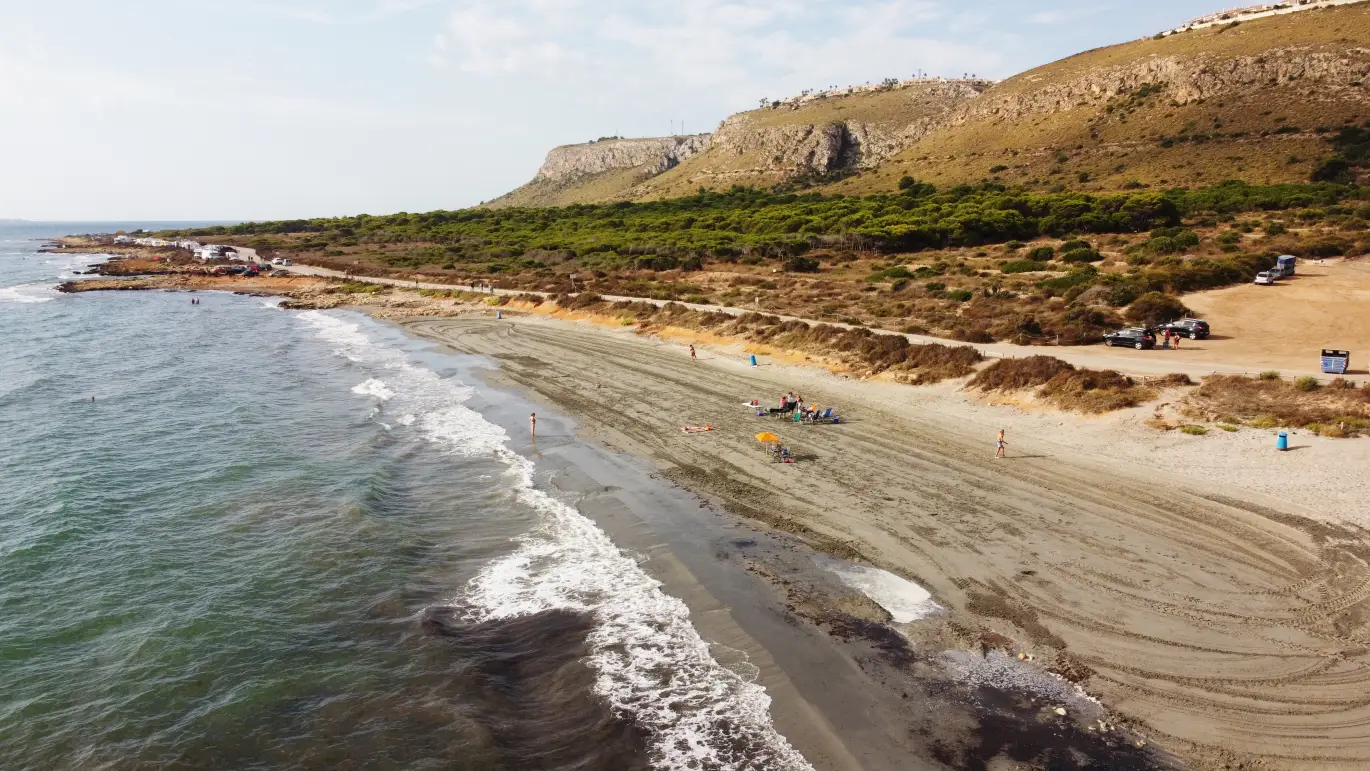
The road doesn't continue flat. It drops. Sharply. Serpentines cutting down the cliff face toward invisible beach below.
We're not "near" the beach. We're suspended 200 meters above it.
Mental adjustment: horizontal becomes vertical. Everything here negotiates gravity.

The shop is small. Local. Real.
Woman at counter: "Buenos días."
Me: [gesture at bread, eggs, milk]
Her: [Spanish price]
Me: [shows money]
Her: [smile, change, gracias]
First purchase abroad. First conversation without shared language. Success.
Receipt shows: €6 total. Bread, eggs, milk, orange juice.
As Front Office Manager, I know hotel breakfast costs. €25 per person minimum.
This: €6 for two. Real food. Local shop.
Mental note: budget travel works when you shop where locals shop.
Walk back. Sun climbing. Heat building. Bread warm in bag.
The house looks different in daylight. Garden explodes — lemon, pine, palm, olive. Patio tiles vibrant under sun. The view opens: neighboring houses, hills, Mediterranean somewhere beyond the serpentines.
My wife is awake. On patio. Coffee waiting.
"I found the shop," I say. "And we're on a cliff. Beach is way down there."
She looks at the warm bread. Local bakery. Still warm from morning baking.
"Worth the climb?" she asks.
"Every meter."

V
Seven days on Avenida America teaches this:
Cliff living has rhythm. Morning: descent. Two kilometers down serpentine road. Beach. Mediterranean. Heat. Afternoon: ascent. Two kilometers up. Each turn revealing more view. Each meter earning perspective.
The house waits at top. Patio in shade. Lemon tree. Cool tiles. Rest.
This is what Radek understood when he chose elevation.


The space itself is not luxury. No marble. No brand. No announcement of premium. The bedroom is simple. The kitchen functional. The furniture assembled, not designed.
But every decision is considered.
Lemon tree planted where morning sun hits patio. Shutters that actually block heat. Tiles that stay cool underfoot. Welcome wine that's local, not generic. Garden that smells before you see it.
This is luxury that feels inherited, not announced.
On day three, Radek stops by. Checking in. Seeing how we're managing. Asks if we found beach, if shops are clear, if anything needs fixing.
"Everything is perfect," my wife says.
He smiles. Relieved. "Good. Good. This is all new for me."
"We couldn't tell," I say.
It's true. The documents assistance, the midnight pickup, the welcome gifts, the prepared space — nothing felt like first attempt. Everything felt like practice perfected.
"You worked in hospitality?" I ask.
"No. But I stayed in enough places to know what works."
This is the secret of independent hospitality.
Corporate hotels have manuals. Training programs. Brand standards. Systems that scale. They teach what to do, when to do it, how to measure success.
Independent hosts have something different. They have: memory of what mattered when they were the guest.
Radek never worked Front Office. Never trained in service protocols. Never studied hospitality management.
But he remembered: how it felt arriving late and tired. How relief flooded when someone actually showed up. How small touches — local wine, real welcome — made foreign space feel chosen.
He remembered being the guest.
Then became the host.
We leave on day seven. Morning departure. Radek arrives to drive us to airport. Returns the favor. Completes the circle.
In the car, I ask: "More guests coming?"
"Three bookings next month," he says. "Building slowly."
"They'll love it," my wife says.
They will. Because Radek learned the most important lesson in hospitality on his first attempt:
It's not about perfection. It's about showing up.
Avenida America sits on a cliff for a reason.
The easy choice is ground level. Beach access. Simple. Convenient. No explanation needed.
The right choice is elevation. View earned. Perspective gained. Beauty that requires effort.
Radek chose right.
Not because he knew hospitality.
Because he understood: the best things wait at the top.
You just have to be willing to make the climb.


