PART I — Ready for publication · Residences · escaleprivee.com
Some addresses merely locate you. Others define you — quietly, without asking permission.
Praça Luís de Camões belongs to the second kind.
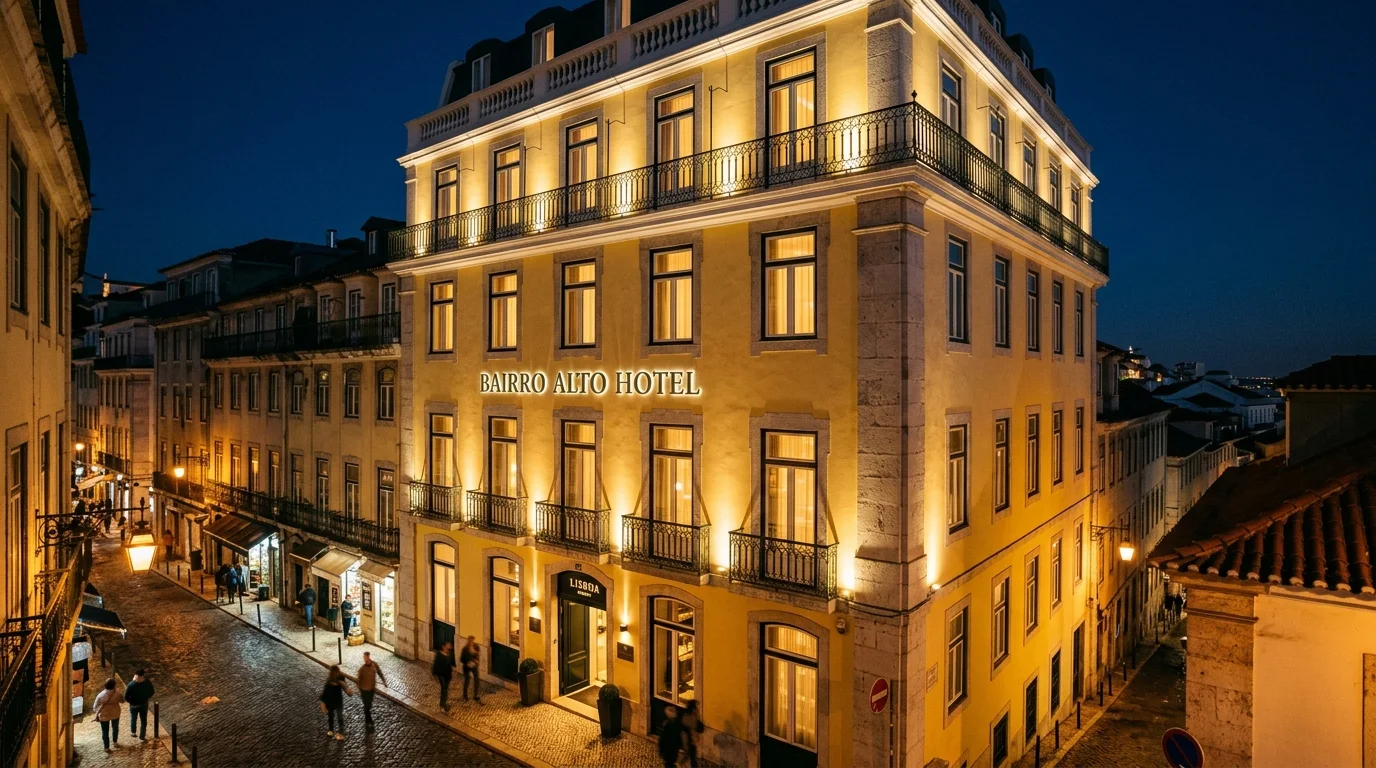
Stay here for a moment — long enough for the light to settle, long enough to feel how two worlds press in from either side at once. To the right, Chiado: polished stone, bookshops with a slow and particular gravity, a café where espresso arrives without ceremony and disappears just as quickly. To the left, Bairro Alto: fado lifting from a half-open door, laundry softening in afternoon heat, a city that never needed to explain itself. The square holds the tension between them — and holds it beautifully, refusing to choose.
This is precisely where Bairro Alto Hotel decided to exist. Not on a grand boulevard. Not beside a marina designed for Instagram. Here. On the seam between two temperaments, two ways of being Portuguese, two different silences.
That decision, made in 2005, tells you more about this house than any number of stars ever could.
A building that carries its history lightly
There is something in Lisbon’s way of arranging itself over time that no other European capital quite repeats. The city does not restore — it layers. Plaster over plaster, century over century, language over language. The buildings that survive do so not through resistance, but through an aristocratic capacity to absorb change.
The building that holds Bairro Alto Hotel wears those layers with unusual grace. Its beginnings reach back to the eighteenth century, and for years this address housed the Grand Hôtel de L’Europe — one of Lisbon’s icons — until 1980, when the city started changing faster than the building could follow.
When the hotel reopened in 2005, the owners chose to work with Eduardo Souto de Moura — the Porto-born architect who would receive the Pritzker Prize in 2011, the most exacting distinction in architecture. Souto de Moura’s signature is restraint: he does not impose; he listens. His intervention here carries the same quality — you feel the effect more than you see it. Proportions that seem inevitable. Materials that belong. Light that enters as if it has always known the way.
The 2018 expansion added 32 rooms, a new restaurant concept, event space, and a gym — not as visible growth, but as a deepening. More rooms did not dilute intimacy. They made it more precise.
Today, the house offers 87 rooms and suites: private in scale, boutique in practice — and closer to a personal address than a place of transit.
The art of being small
Eighty-seven rooms do not happen by accident at the top end of the market. It is a decision — a decision to remain legible, human in scale, a place where a team can know your name before you reach the desk.
Forbes Travel Guide described the hotel as “effortlessly luxurious”. The word effortlessly is worth keeping. It is the opposite of display. It suggests that quality here does not tense its shoulders. It does not announce itself across the lobby. It waits for you in the light behind a linen curtain, in the particular softness of midnight silence, in the weight of a door handle chosen — not merely specified.
This is a house for guests who have been everywhere and now know what they are looking for. Not volume. Not height. Not spectacle.
Precision. Privacy. The feeling that you are exactly where you should be.
Suites that read like residences
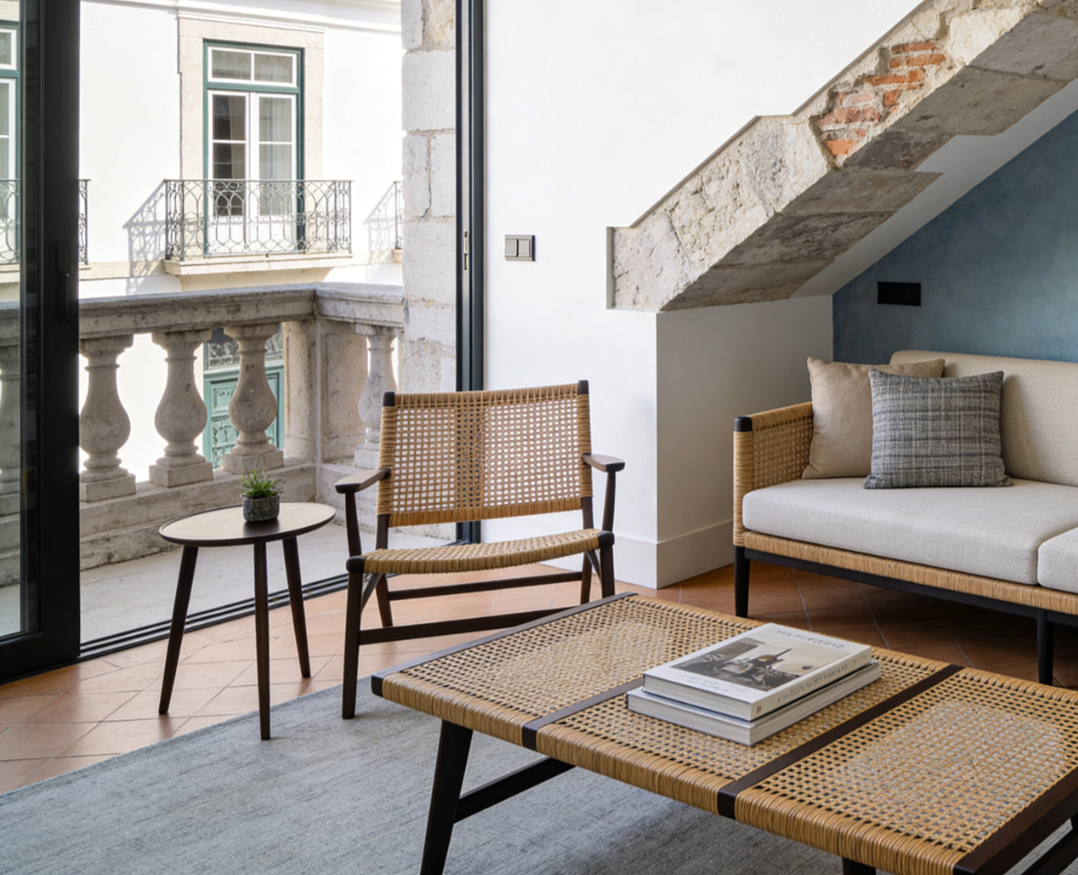
The language of Residences — this section of Escale Privée — rests on a simple thesis: some places can be inhabited, not merely stayed in. The highest categories at Bairro Alto Hotel speak that language fluently.
Signature Suites exceed 700 square feet — not as a measurement, but as territory. Facing the river, they arrive with their own logic: dedicated in-room service, airport transfers as a quiet gesture of welcome and farewell, and the rare feeling that the space has been designed for someone who actually knows how to live in a room.
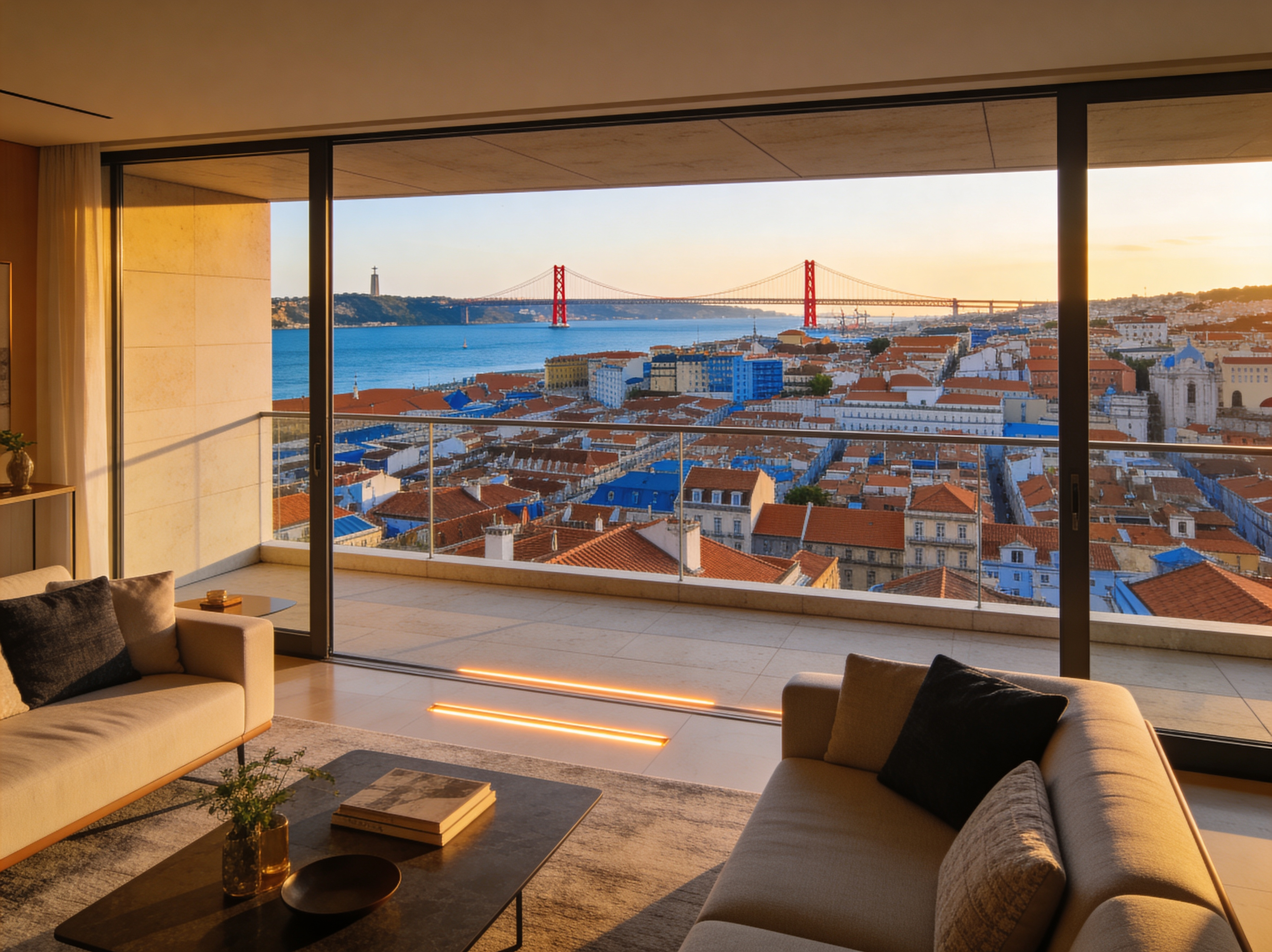
Junior Suites move in a different register, but with no less thought: Le Labo amenities (a scent language of quiet refinement), heated bathroom floors that turn the first step of morning into something you anticipate, afternoon tea served as ritual rather than service, and a minibar assembled with a host’s sensibility rather than a purchasing department’s.
These are not rooms you check into. These are rooms you arrive to — and begin to settle.
“There is a kind of luxury that reveals itself slowly — a warm floor at six in the morning, Le Labo scent that follows you onto the terrace, silence in a suite that is not empty but full. Bairro Alto Hotel understands that luxury flawlessly.”
A terrace as the city’s best room
Lisbon is a city of viewpoints — miradouros cut into its hills, each offering a slightly different angle on the same roofs, the same light, the same slow arrival of evening. But a viewpoint and a terrace are two different propositions.
A viewpoint is something you visit. A terrace is a place you return to.
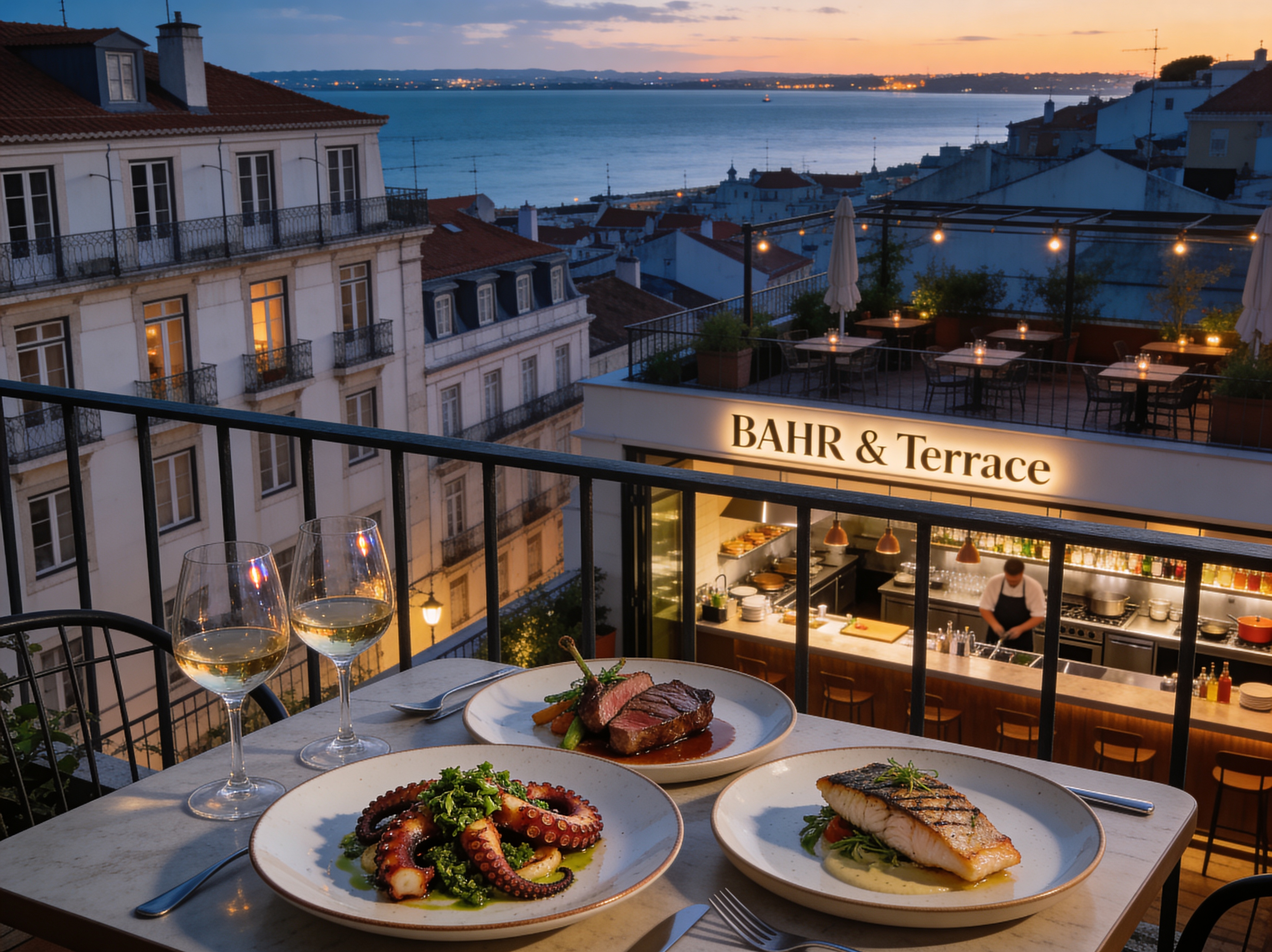
BAHR & Terrace, on the fifth floor, is the kind of space that turns a hotel into a home. The house says it plainly: “Lisbon has many terraces, but none like this one.” It is not marketing bravado so much as a description of what a rooftop becomes when it is designed with the same intention as a private room; when the menu changes with the season, not with the calendar; when cocktails taste as if they were composed for this exact light, this city, this river.
From here, the Tagus reveals itself slowly — not in the full dramatic arc you get from a ferry, but more quietly: a glint between rooftops, water as context rather than subject. Just enough to remember that Lisbon is always a city with its feet near the sea.
For a guest staying three nights or seven, the terrace becomes a personal geography — the first evening you orient yourself, the second you watch, the third you already know. This is what a residence gives you: the luxury of familiarity.
Gastronomy as a daily rhythm
A hotel that understands residence understands food not as service, but as a structure for the day.
At street level, The Patisserie faces the square and opens onto the city’s morning. Portuguese sweets — with that particular alchemy of butter, custard, and sugar no other tradition quite repeats — arrive each day with the light. Sitting here with coffee in hand, watching Praça Luís de Camões accept the day, is exactly the kind of ordinary morning from which extraordinary journeys are made.
Above the lobby, Mezzanine works like the hotel’s quiet interior: a bar on the mezzanine, equally good for a solo traveller opening a laptop at eleven as for a couple ending the afternoon with something cold and lightly alcoholic. A room that belongs to no single hour — and therefore belongs to all of them.
And finally upstairs, BAHR & Terrace: the most elevated expression of the hotel’s appetite for quality — seasonal, precise, rooted in the Portuguese landscape yet not limited by it. Dinner here is not a hotel obligation. It is a reason to be in Lisbon.
The full arc — a pastry at dawn, a quiet lunch above the lobby, cocktails and dinner above the city — is a day lived well. Without leaving the building. Without needing to.
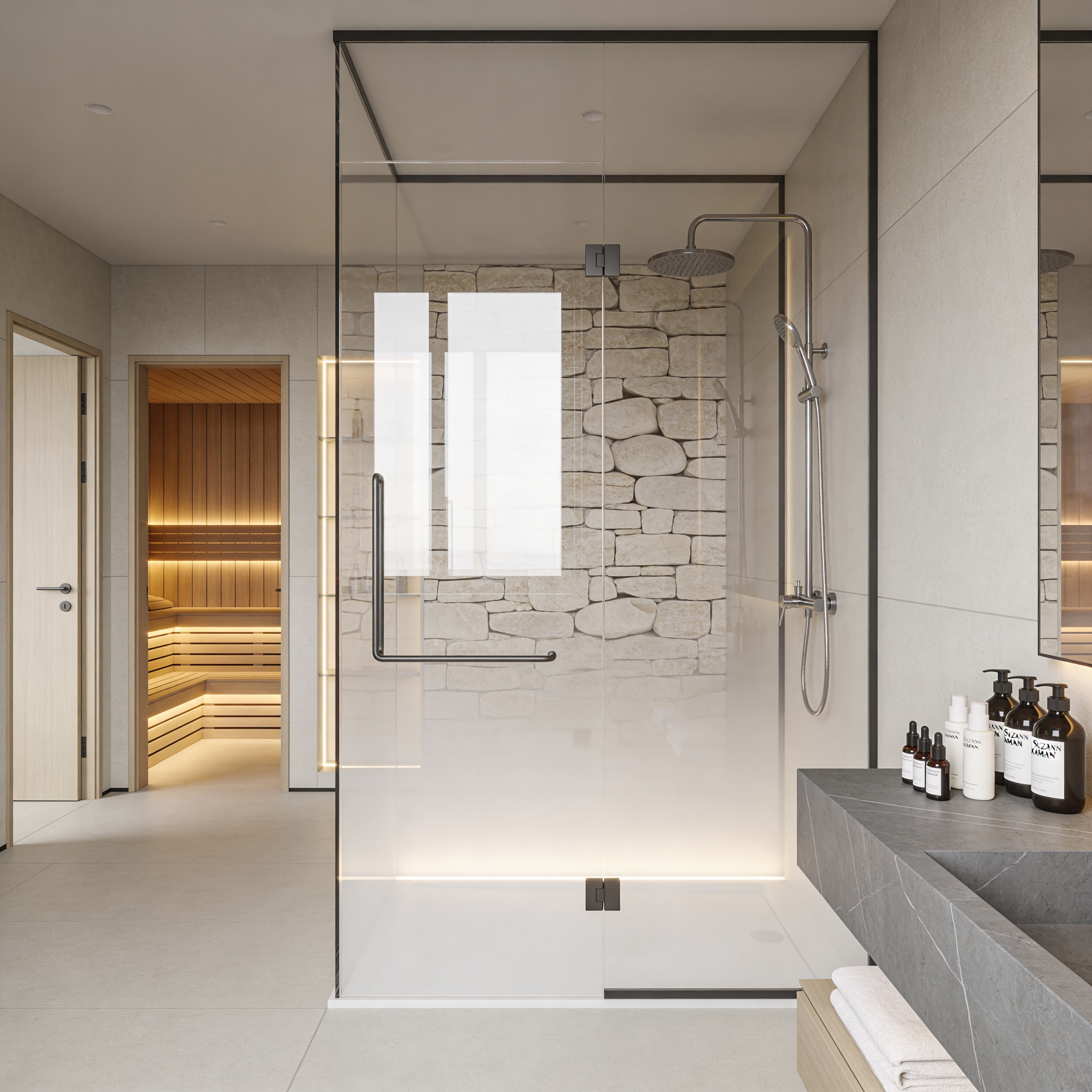
Wellness as private architecture
There is a category of hotel wellness designed primarily to photograph well. Bairro Alto Hotel belongs to a different one.
Its wellness area — with sauna, sensory shower, therapeutic body treatments, and a Kinesis training wall — follows the logic of purposeful recovery. Not spectacle. Not scale. Specific tools that return the body and mind to their best working version after an Atlantic flight, a series of meetings, or simply the particular fatigue that comes from walking a city with full attention.
The sensory shower deserves a sentence of its own: it is one of those amenities that sounds incidental until you use it — and then becomes the detail you mention to someone when you talk about the stay. A test of real quality: not what impresses before arrival, but what remains after departure.
Why this belongs in Residences
The editorial logic of Residences is simple: there are places you visit, and places you inhabit — briefly, but completely. Bairro Alto Hotel belongs to the second category not through a single feature, but through the coherence of its entire proposition.
It gives an irreplaceable address — a square that carries the city’s literary and poetic soul. It gives a scale that makes personal service not a promise but an inevitability. It gives a suite that becomes a private world within minutes. It gives a terrace that turns one of Southern Europe’s most visited cities into something that feels discovered, personal, quiet.
For Escale Privée readers — moving through the world with high expectations and an increasingly exact definition of what rest truly is — Bairro Alto Hotel is Lisbon reduced to essence.
Not a hotel in a city. A city, held inside a hotel.
Bairro Alto Hotel, Praça Luís de Camões 2, Chiado, Lisbon, Portugal.
Residences from — Signature Suites. The Leading Hotels of the World.