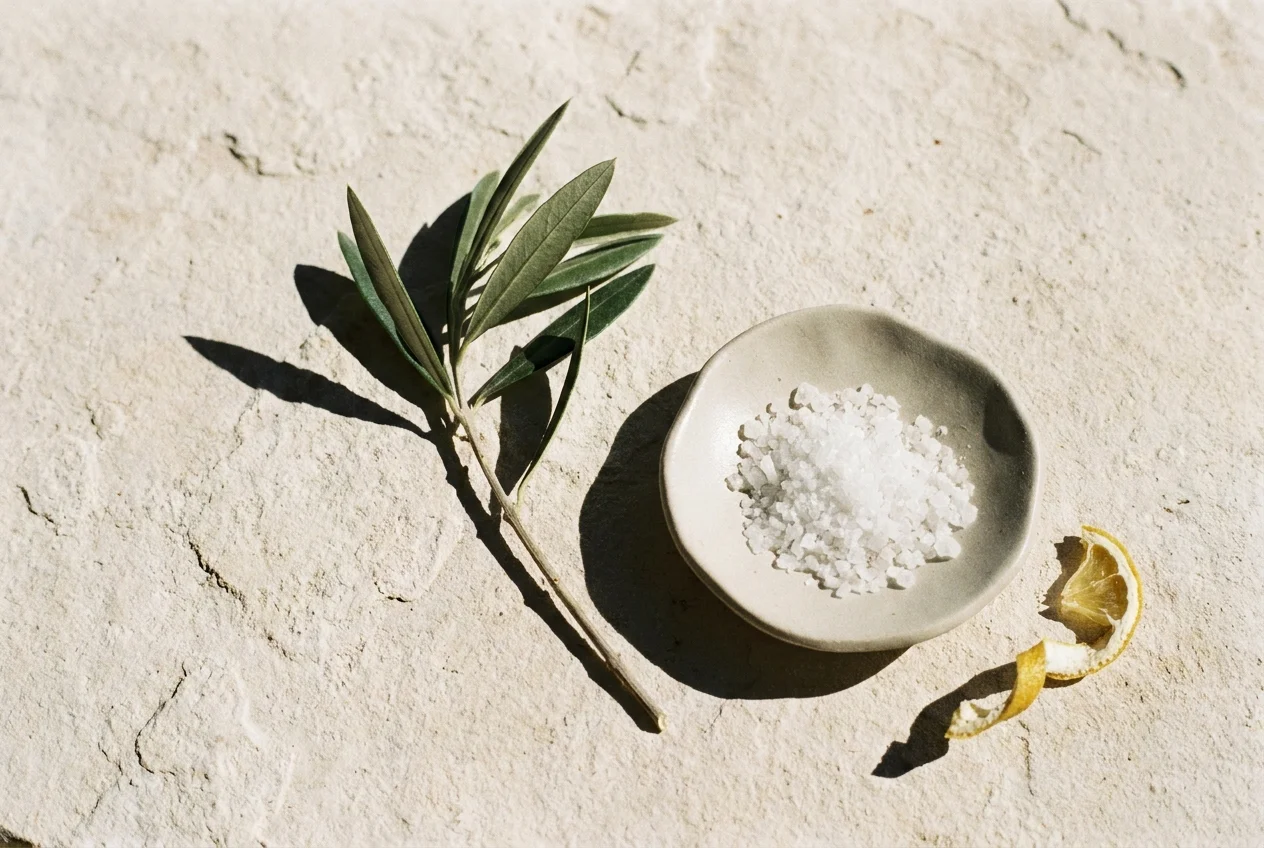
There are places where food begins before the kitchen does.
In the Balearics, it begins with the air: it carries a light bitterness of salt and something else — as if the memory of stone warmed yesterday were giving back its heat slowly, without display. It begins with the sound of a saucer set down on the bar, with a glass of water beading on the outside, with the first coffee taken not to get going, but to return to oneself.
Here, ritual has no ceremony. It is a practice. It leaves little trace, yet holds the day together.
Morning is simple, almost austere. In the shade of an awning, someone unfolds a newspaper, not entering it as news so much as habit. The coffee is short, precise, made by the same hand that remembers hundreds of mornings. Beside you, someone orders something that sounds like a repetition — and in that repetition there is meaning. In the Balearics, eating and drinking are rarely an “occasion”. They are more often what keeps the tempo: a soft metronome marking the hours without haste.
Bread arrives first. Not because it is a prelude, but because it is the foundation. Sometimes it has a thick crust, sometimes it is warmer than the air. Sometimes it is only a slice, making room in the mouth for the rest of the day. With it, tomato — grated, not sliced, as if no one wished to leave sharp edges. And olive oil: dense, serious, with a taste that reminds you a tree can survive almost anything, given time.
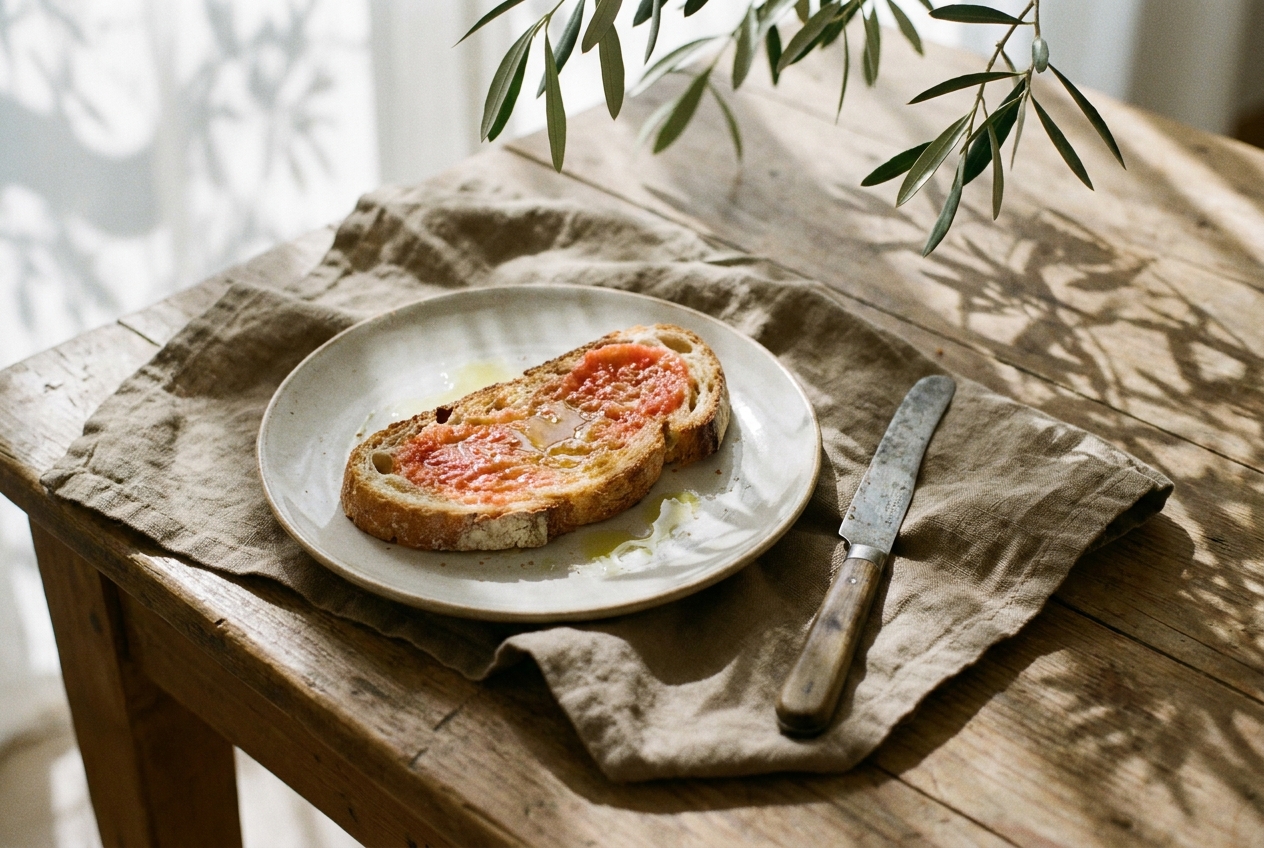
There is no talk here of the “best olive oil”. Instead there is a recognition that, in these parts, oil is not a condiment but a language. It speaks of land that looks dry and still sustains life. It speaks of gardens that spare water. It speaks of hands that make no unnecessary gestures.
Later comes the market, even if you do not call it that. In the Balearics, food has temperature. Everything meant to be eaten exists in a particular coolness or a particular warmth. Fish lie on ice, but that ice is not merely technique. It is a promise that the sea is still near — even if you are standing under a roof, even if the town is already deep into the day. Citrus smells like peel torn away in one movement. The herbs are greener than they ought to be in such sun.
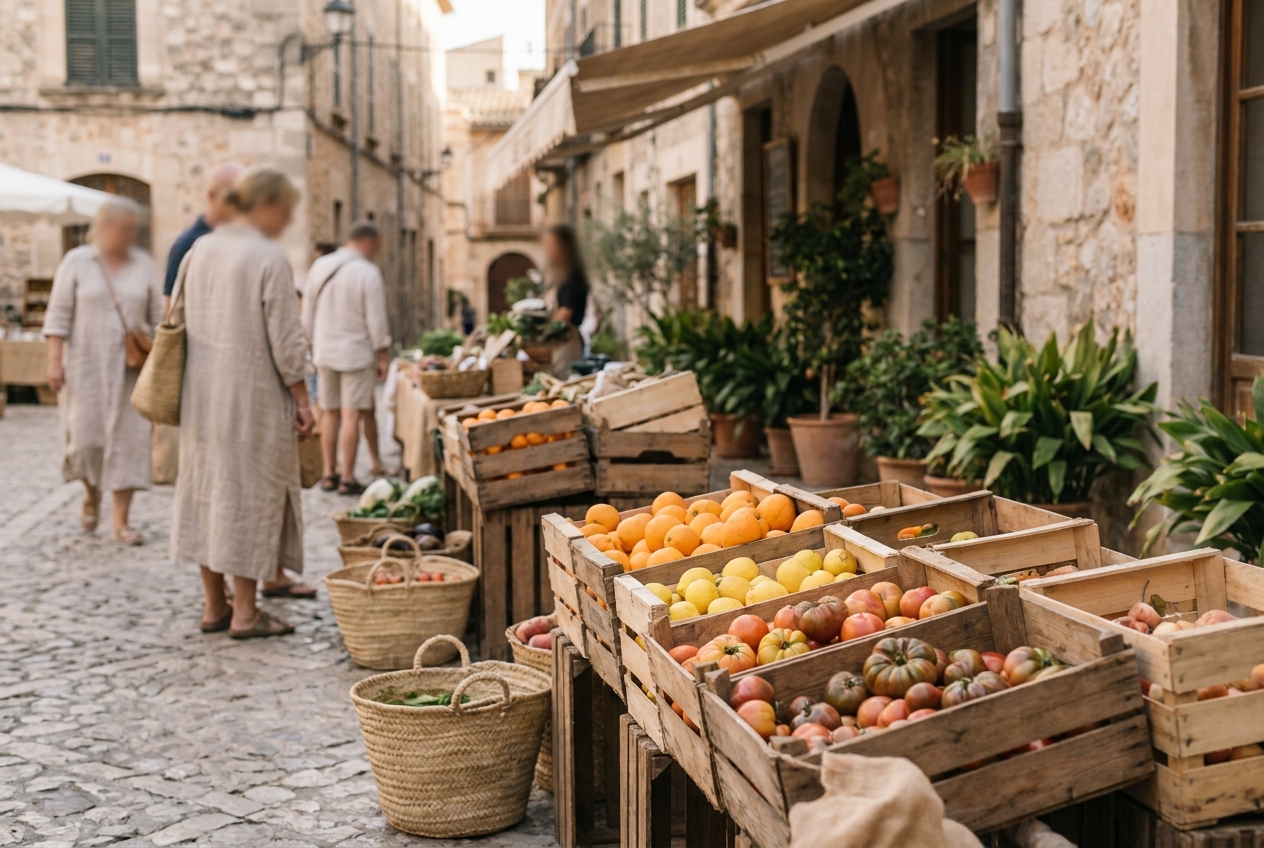
And there is something else: conversation that has no wish to hurry. The vendor has no need for excess words. Nor do you. It is enough to point. Enough to nod. What elsewhere can feel like a game is here a daily practice.
On the island, the sea is always present — though not always in sight. Sometimes it is in the taste. In a plain plate holding something white and delicate, touched with lemon as sparingly as if lemon were light. Sometimes it is in grill smoke, where the fish pretends to be nothing else. Sometimes it is in the salt that stays on your fingers and reminds you that food need not be immaculate. It may be real.
At midday, the Balearics do something that saves people from living too loudly: they slow down.
Not as an attraction. Not as folklore. As a decision. As if the island were saying: now is the hour of quiet, even if you do not call it quiet. The streets grow emptier. Shutters draw in like eyelids. The water in the glass is colder than thought. Digestion becomes part of the day, not a break from it. You feel the body has a right not to chase.
This is the moment when you understand that ritual is not a set of actions. It is an architecture of time.
Then, somewhere in the late afternoon, the island opens again. It changes its skin. The temperature drops by a shade; the shadow lengthens. This transition cannot be hurried — and that is a good thing. There is something in the Balearics that makes a person stop pretending they “have to” in a moment. Suddenly one can sit for no reason.
The first wine is not night yet. It is a gesture in between. The glass may be small, but that is not economy. It is intention: one does not come here to end the day with a single heavy accent. One comes to enter the evening gradually — as one enters water whose temperature must be learned.
And here the small plates begin.
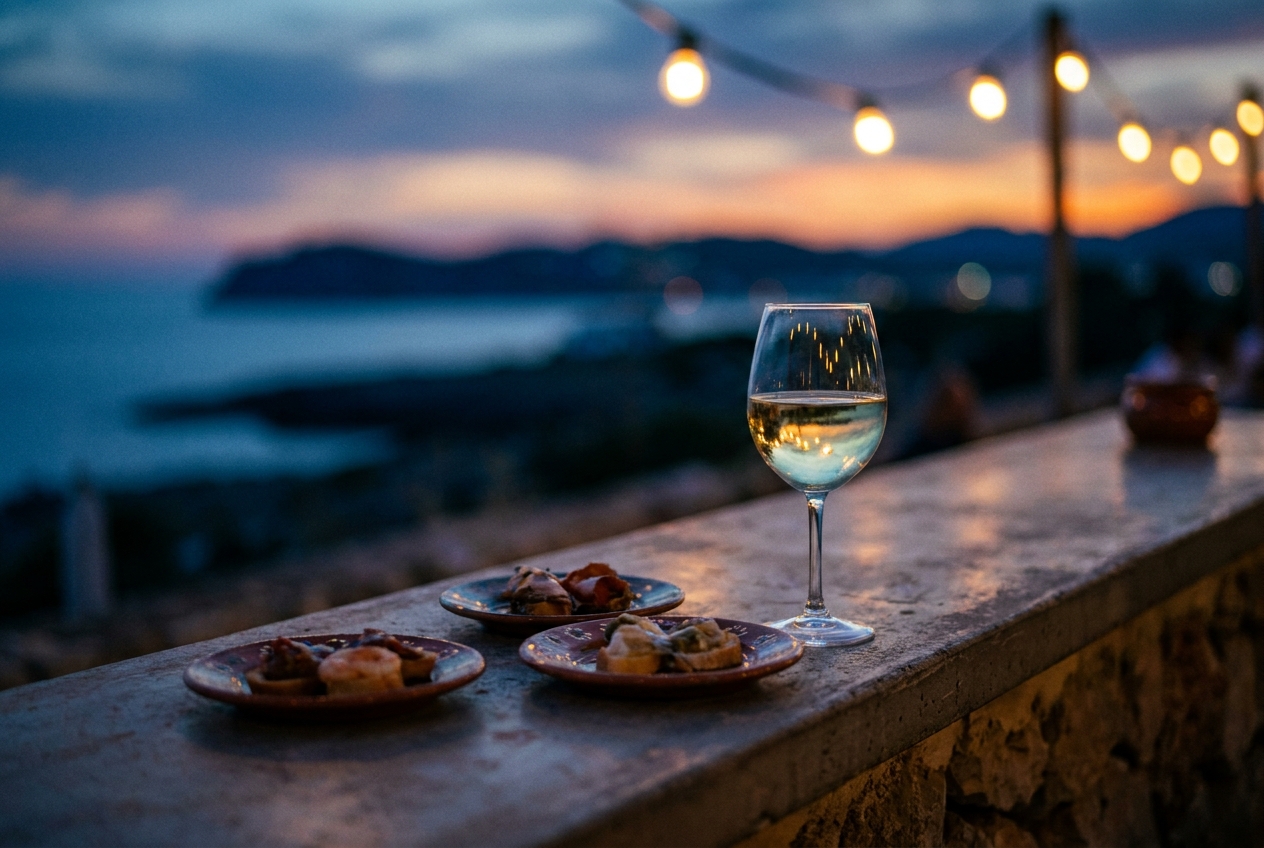
In the Balearics, tapas are not “small” in the sense of size. They are small in the sense of form: you understand they are not meant to keep you in one place. They are meant to keep you moving. In rhythm. They are like short sentences that let you breathe between longer ones. A bite and a sip. A bite and conversation. A bite and a silence that is not awkward.
Sometimes it is only a few olives that taste like sunlight sealed in skin. Sometimes something from the sea — simple, fresh, prepared as though the kitchen had one rule: not to disturb the ingredients. Sometimes something from the land, warmer, with a note of smoke or paprika, but without theatrics. Someone brings bread, someone else brings one more thing “to share”, though it is not a grand sharing, more a way of remaining together.
The ritual lies in the order. In not ordering everything at once. In leaving room for surprise — not in order to be dazzled, but to let the evening lead. The Balearics teach that a good meal is not a construction that must be closed. It is a road that must be walked.
And when night falls, the island grows softer. Sounds do not bounce back so sharply. Conversations become calmer, even when it is loud. In the bar, someone laughs briefly, as if unwilling to overstate the feeling. Someone else looks out onto the street as though it were a scene that needs no comment.
At the end, something sweet often arrives, but sweetness in the Balearics need not be sugary. Sometimes it is in fruit. Sometimes in a small portion of something cold. Sometimes in a single sip of something that tastes of herbs and evening. This is not a finale like a curtain. It is the last bar — one that lingers in the mouth a little longer than it should.
What matters most in all of this, though, is what happens after.
You step out into the street, and the city — or the small town — still smells of food, but differently now: like skin after sun when the cool begins to return. You feel salt on your lips. Olive oil on your fingers. You feel that time may be arranged differently than usual — and that no one is hurrying you here. Not even yourself.
The Balearics do not promise “experiences”. They offer rhythm. They offer a simplicity that is not lack but precision. They offer food as a way of being in a place: without excess words, without the need for names.
And when you return, you do not remember the list. You remember the pace.
Coffee. Shade. Market.
First wine.
Small plates.
And that calm, insistent thought that silence, too, is an ingredient.
The Balearics — the ritual of the day: coffee in the shade, the market in the cool, a pause in the light, the first wine at dusk, small plates in the rhythm of conversation.