There is a city in the Alentejo that the Romans built, the Moors held, the Portuguese kings favoured — and that has since been quietly left to itself. Not abandoned. Not forgotten. Simply allowed to remain what it is, which is a great deal more than most cities are permitted to be.
Évora sits at the centre of a plain that in summer turns the colour of old paper and in autumn holds a particular golden light that seems to come from below the earth rather than above it. The city is enclosed by medieval walls that the Romans first raised and successive centuries have repaired. Within those walls, the streets are narrow enough that two people with luggage cannot pass without one of them turning sideways. The houses are white with yellow borders. The cobblestones are irregular. The cats are numerous and unhurried.
You arrive by road from Lisbon — ninety minutes east, the motorway thinning to regional roads, the landscape emptying itself of everything except cork oaks and silence — and you feel, entering through the old gates, that the city has not been waiting for you specifically, but is not surprised you came.
I. Two Thousand Years Without Apology
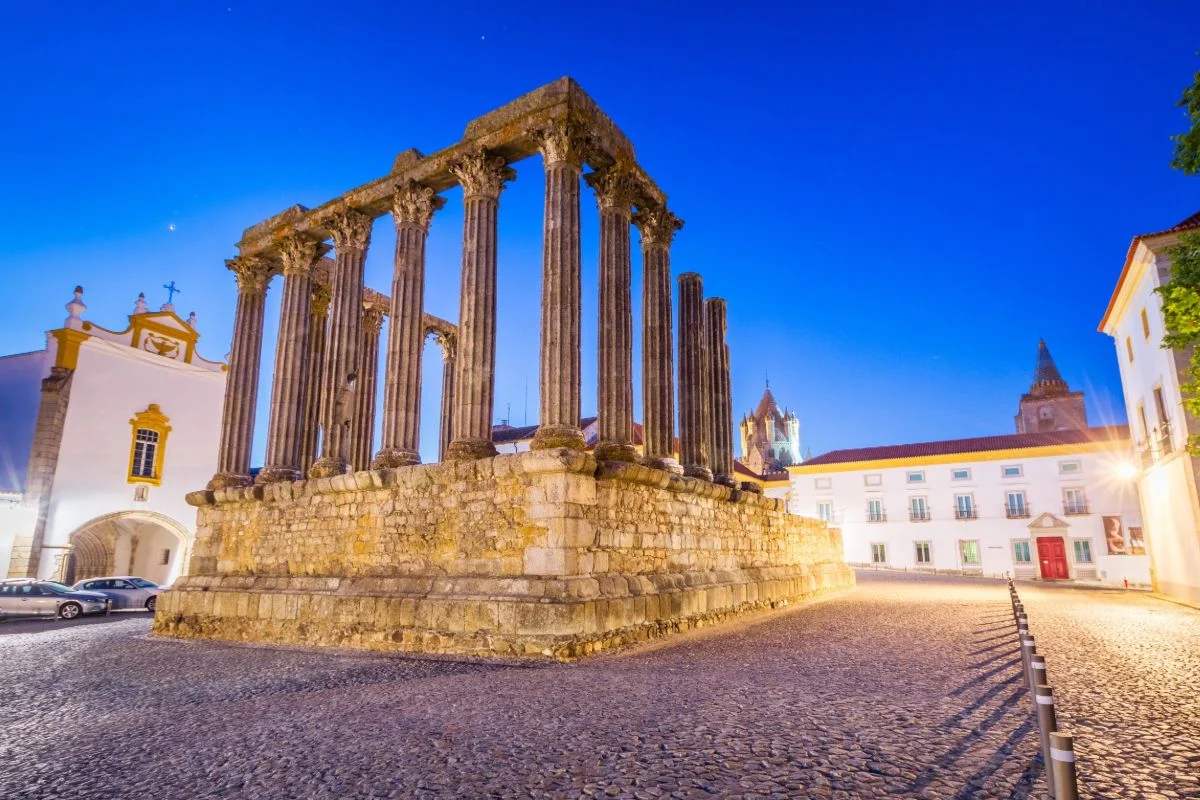
The Roman Temple stands in the centre of the city, on elevated ground, open to the sky. Fourteen Corinthian columns, marble from Estremoz, still carrying their capitals. Around them: a terrace, a view over the rooftops, the sound of a fountain somewhere below. The temple dates to the first or second century AD and was dedicated — perhaps to Diana, though no one is entirely certain. What is certain is the scale: the podium alone rises more than three metres from its granite base, and the columns rise further still, and nothing around them has been built to diminish them.
This is the particular quality of Évora. It does not place its Roman inheritance behind glass. The temple stands in the open air because it has always stood in the open air. In the Middle Ages it served as a slaughterhouse, its columns used to hang meat. In the nineteenth century it was restored to something approaching its original form. The city absorbed all of this without commentary.
Walk south from the temple and you will find the aqueduct. The Aqueduto da Prata — Silver Water Aqueduct — enters the city not discreetly at its edge but directly through its streets, its arches rising above the rooflines, continuing for kilometres into the Alentejo plain toward a source that lies eighteen kilometres away. It was built in the sixteenth century over Roman foundations. The city grew around it. In certain neighbourhoods, the houses are built into the aqueduct itself — windows cut through the arches, flower pots balanced on the spans. Two thousand years of engineering, domesticated into someone's kitchen wall.
II. The Inscription at the Chapel Door
There is a sentence written above the entrance to the Chapel of São Francisco that stops you before you enter. Nós ossos que aqui estamos pelos vossos esperamos. We bones that are here, for yours we wait.
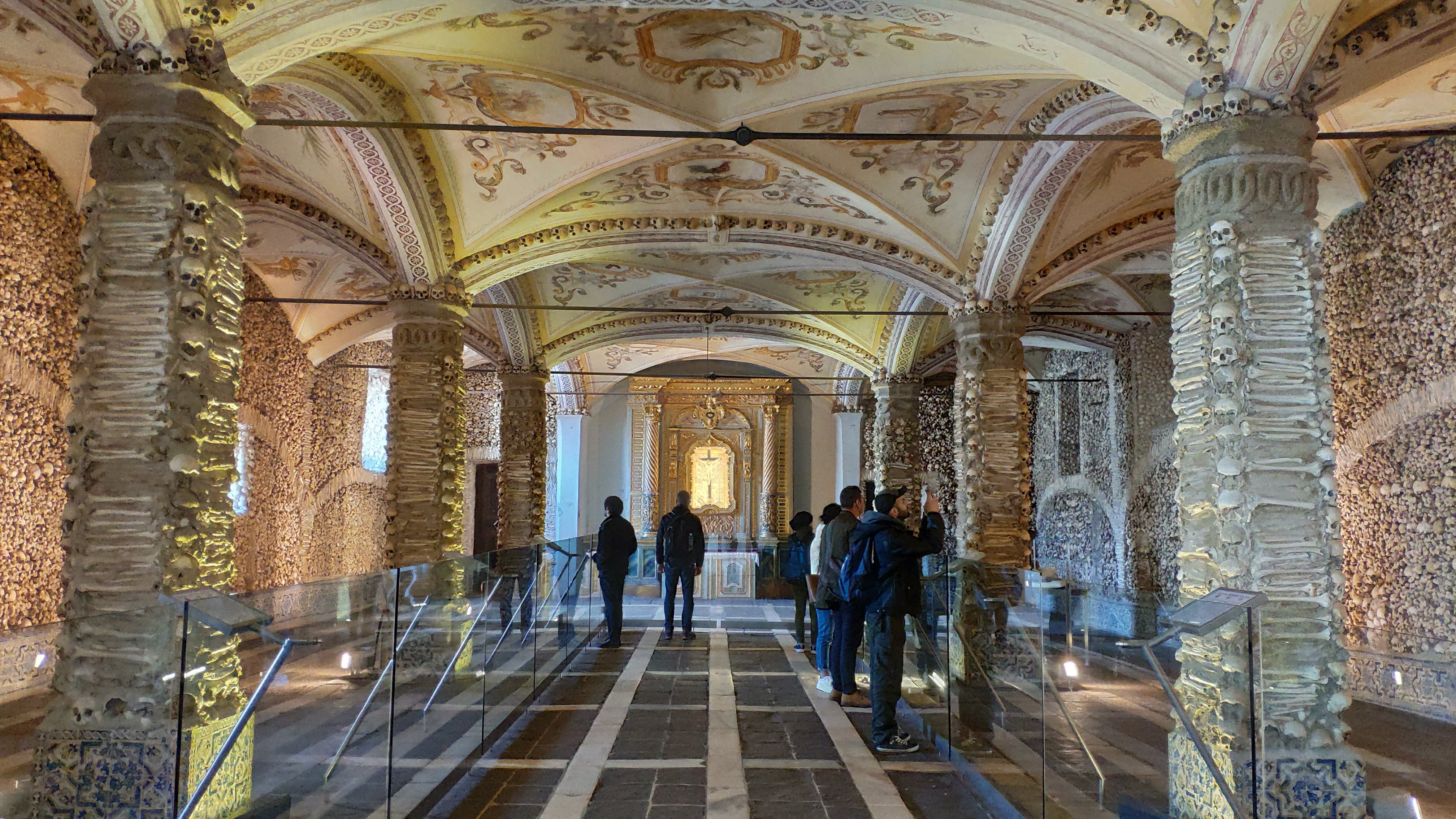
The chapel was built in the sixteenth century by Franciscan monks who faced a practical problem: the city had forty-two monastic cemeteries, and space was being exhausted. Their solution was to exhume the bones — approximately five thousand human skulls, and the bones that accompanied them — and use them as building material. The columns are wrapped in bone. The walls are lined with skulls set in careful rows. The vaulted ceiling is painted with death motifs in white against brick.
The atmosphere is not what you expect. It is not morbid. The chapel is small and dim and lit by three high windows, and the bones have been arranged with a precision that reads less as macabre and more as considered — as if someone thought carefully about the weight of mortality and decided that the appropriate response was not horror but contemplation. Visitors tend to be quiet. The silence here is a different texture from the silence of the streets outside.
Two mummies are encased near the altar: a middle-aged woman, a young girl. They are listed on no information placard. They are simply there, as they have been for centuries, and you are not required to know who they were.
You leave through the same door. The inscription reads the same on the way out.
III. The City at the Hour It Belongs to Itself
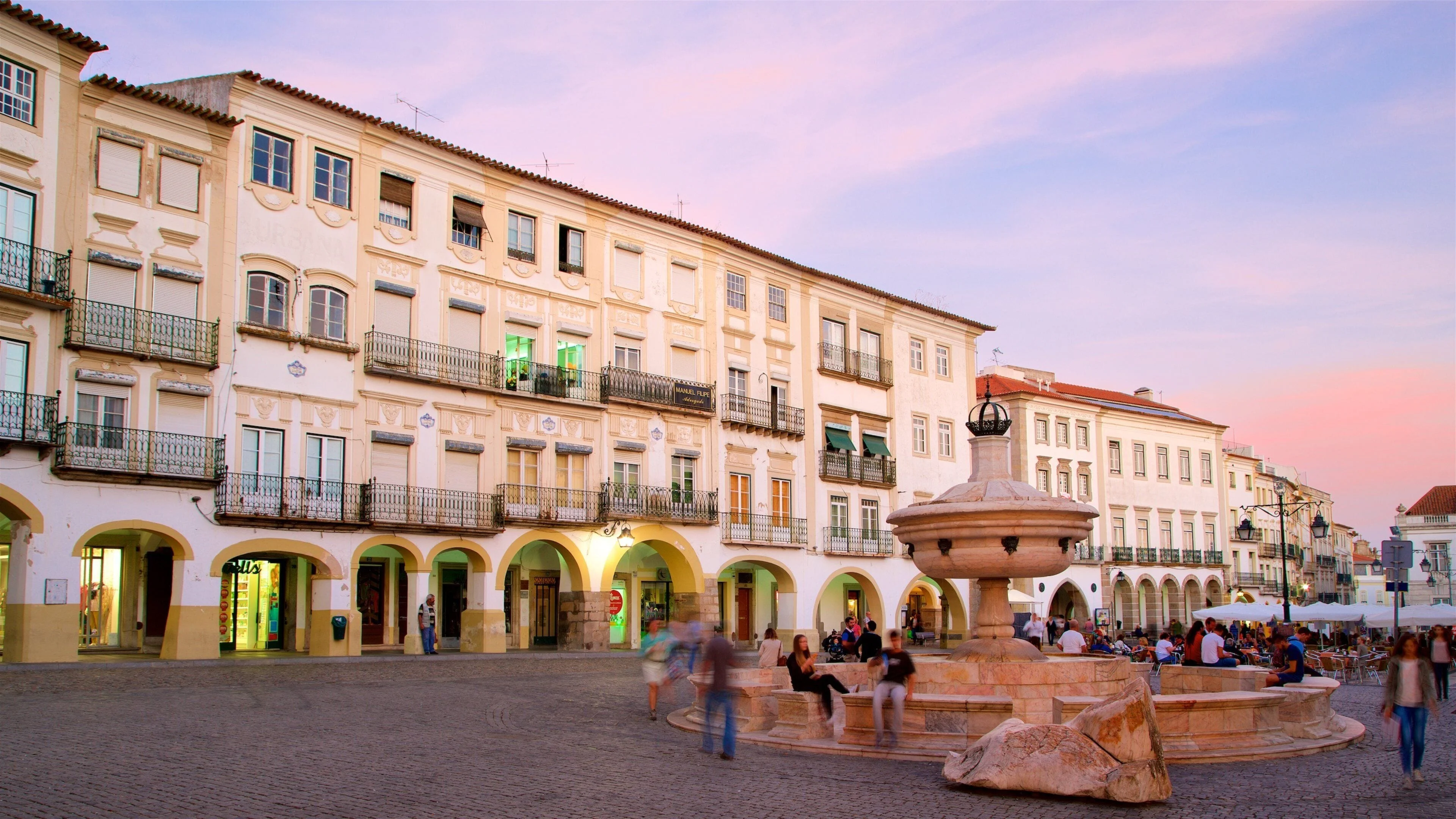
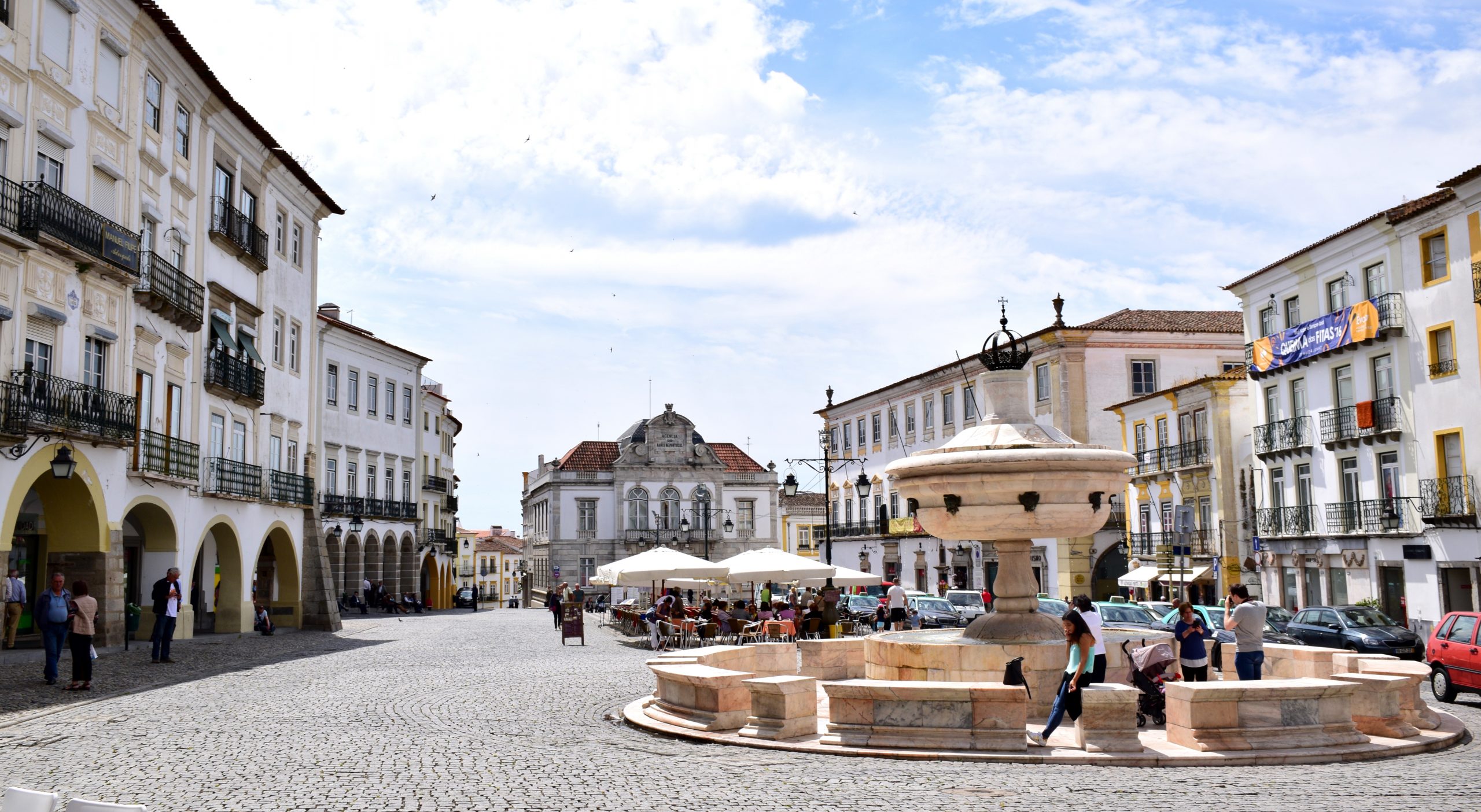
Évora has a university, founded in 1559 by the Jesuits and suppressed in 1759 and reopened in 1979, and the students give the city a rhythm that its monuments alone could not provide. In the evenings, the Praça do Giraldo fills without filling — it is large enough that even a crowd leaves space, its arcades running along two sides, its sixteenth-century marble fountain at the centre, the church of Santo Antão closing one end with a façade that the afternoon light touches at precisely the angle it was designed to be touched.
The cafés here serve galão in tall glasses and Alentejo wine by the half-carafe. The wine is worth more than the price suggests. The Alentejo produces whites that carry the warmth of the plain they were grown on — full, dry, carrying a mineral quality that smells of limestone and dry grass. The reds are older in character than they are in age, slow and earthy, the kind of wine that tastes better in a terracotta mug than in crystal.
The best hours in Évora are the hours the guidebooks do not schedule. Early morning, before the tourist coaches arrive from Lisbon: the streets belong to the bakers and the pigeons and the old men who sit outside the tobacconist on folding chairs. Late evening, after dinner: the temperature drops quickly in the Alentejo, even in summer, and the streets emit the heat they have stored all day, and the city smells of warm stone and jasmine and the faint woodsmoke from someone's kitchen.
Wander without a map. The city is walled and compact and you cannot truly become lost. What you will find, if you allow it, is that the streets here reward a particular kind of attention — the corner with the Manueline doorframe, the courtyard glimpsed through iron gates, the mosaic pavement worn smooth by feet that have been walking this particular route for four centuries.
IV. The Plain Beyond the Walls
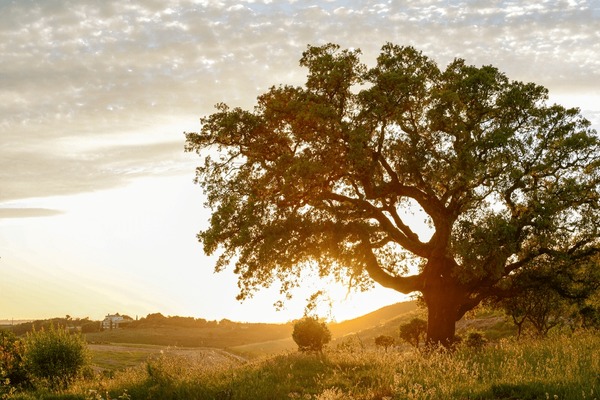
The Alentejo makes up almost a third of Portugal's land area and holds a small fraction of its population. It is a landscape of cork oaks — montado, the technical term for this managed woodland — where the trees stand in open rows across rolling terrain, their lower trunks stripped of bark in the ten-year cycle that produces cork for the world's wine bottles. The stripped trees are marked with numbers: the year of the last harvest, painted in red. They stand among pale grasses and dry scrub and the occasional megalith — this is Stonehenge country, if Stonehenge were plural and unhurried, the stones distributed across the plain without apparent logic.
Seventeen kilometres from Évora, the Cromeleques dos Almendres: ninety-five granite standing stones arranged in an oval that predates the Roman temple by several thousand years. There is a car park, a dirt path, and then the stones themselves, standing in a field without fencing, without interpretation panels, without anyone asking you to be quiet. The site asks for quiet on its own terms.
The light in the Alentejo at evening is the region's most consistent luxury. It arrives horizontally, gilding the cork oaks from the west, turning the red earth briefly amber. It lasts perhaps twenty minutes. Then the sky moves through violet to a blue so deep it reads almost as colour rather than darkness, and the first stars appear over a landscape that has contained human life for six thousand years and seems entirely indifferent to the fact.
V. Where the Night Is Quiet
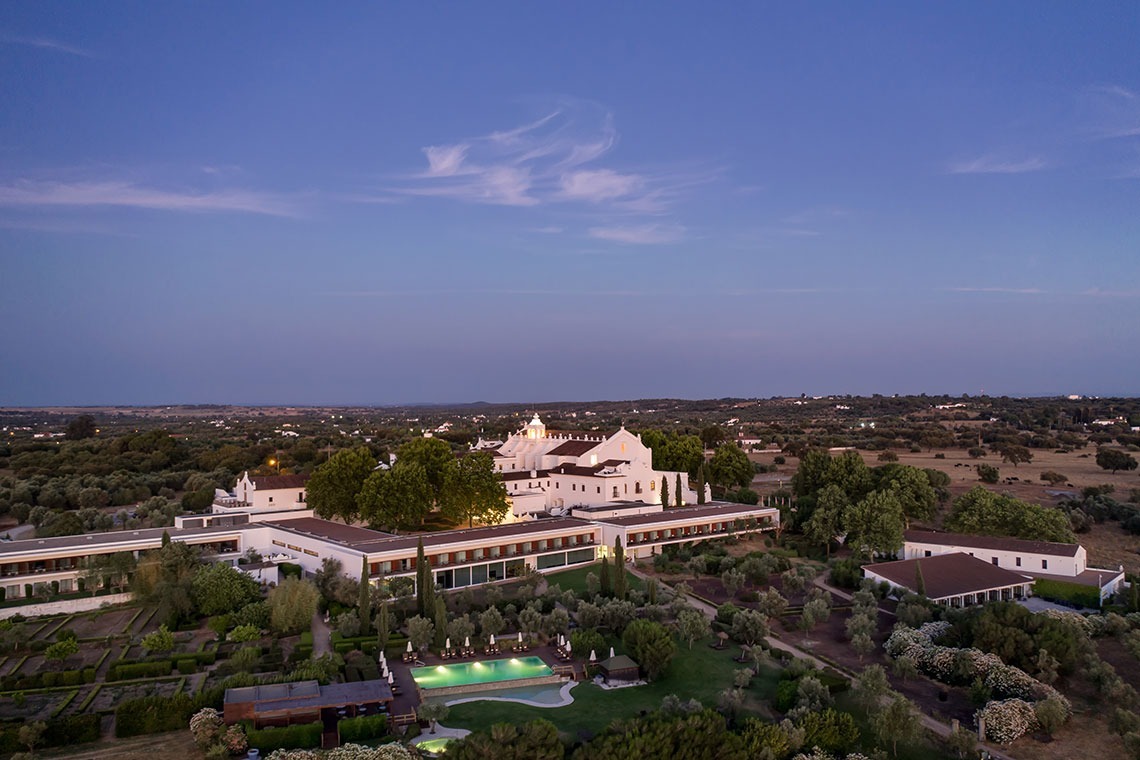
Convento do Espinheiro, five minutes by car from the walls, is a fifteenth-century convent converted into a hotel with the care that such a project requires and rarely receives. The cloister is intact. The chapel is intact. The cells have become rooms of a size that would have startled the monks who first occupied them. The corridors are long and stone-flagged and the sound of your footsteps follows you with the particular echo of buildings that were built for reflection.
Within the walls, the city also holds smaller addresses — the kind that appear in no ranking but are known by the kind of travellers who send letters rather than reviews. A pousada in a converted palace. A family-run house in a quarter where the aqueduct passes overhead and the rooms cost less than an airport hotel in Lisbon and come with a breakfast of local cheese and honey and bread baked the same morning.
Stay at least two nights. One night is enough to see the temple and the chapel and the square. Two nights is enough to understand that Évora is not a city you visit — it is a city you begin to know. The difference matters.
VI. What the City Keeps
Évora will be European Capital of Culture in 2027. This is an honour, and it will bring attention, and the attention will bring the usual accompaniments of attention. It is worth going before. Not because the city will change — it has endured too much to change quickly — but because there is a particular quality to a place before it becomes aware of being looked at.
The Roman Temple will still be standing when the coaches have left and the square has emptied and the cats have returned to their preferred positions on the warm stones. The inscription at the chapel door will read the same at dusk as it does at noon. The aqueduct will continue its passage through someone's kitchen wall, indifferent as water, older than patience.
Évora does not ask to be approved of. It has been here longer than approval has mattered. What it offers, quietly, to those who arrive without urgency, is something rarer: the sensation of standing inside time rather than observing it from a comfortable distance.