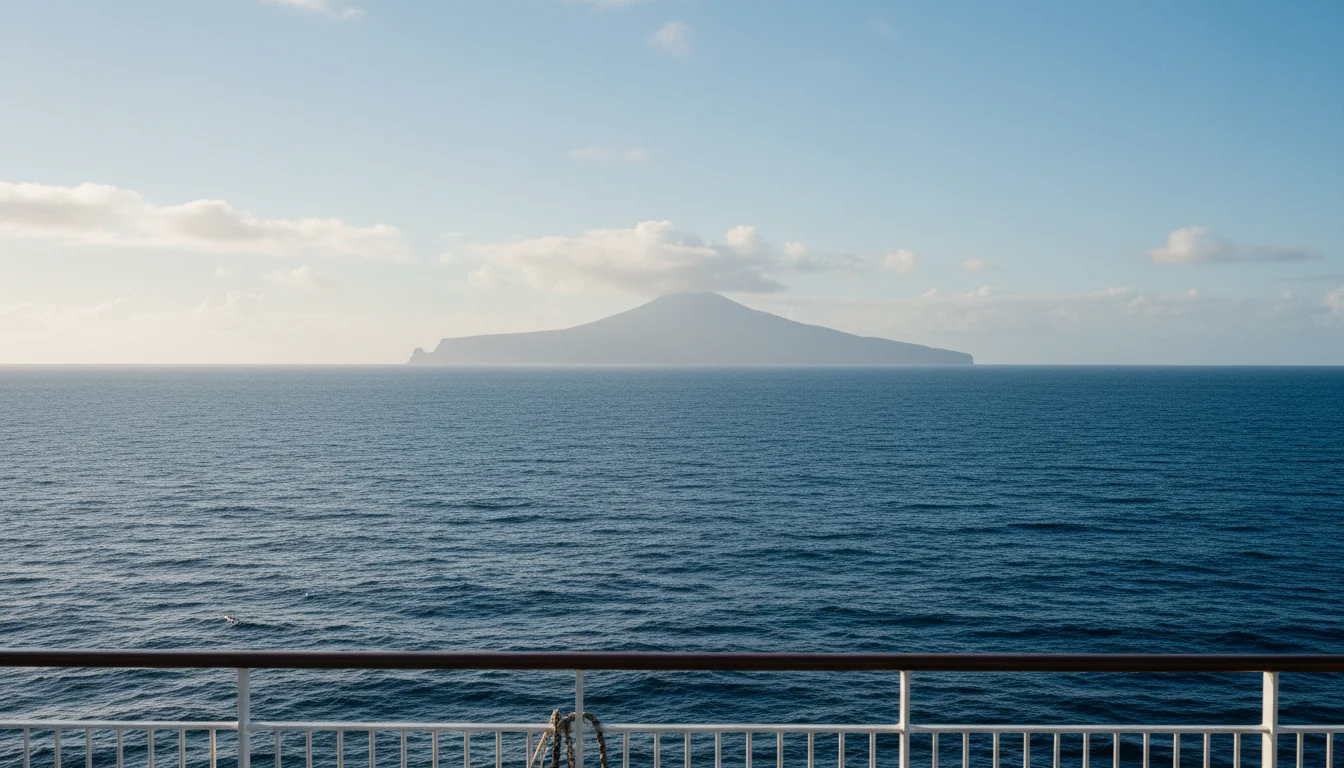
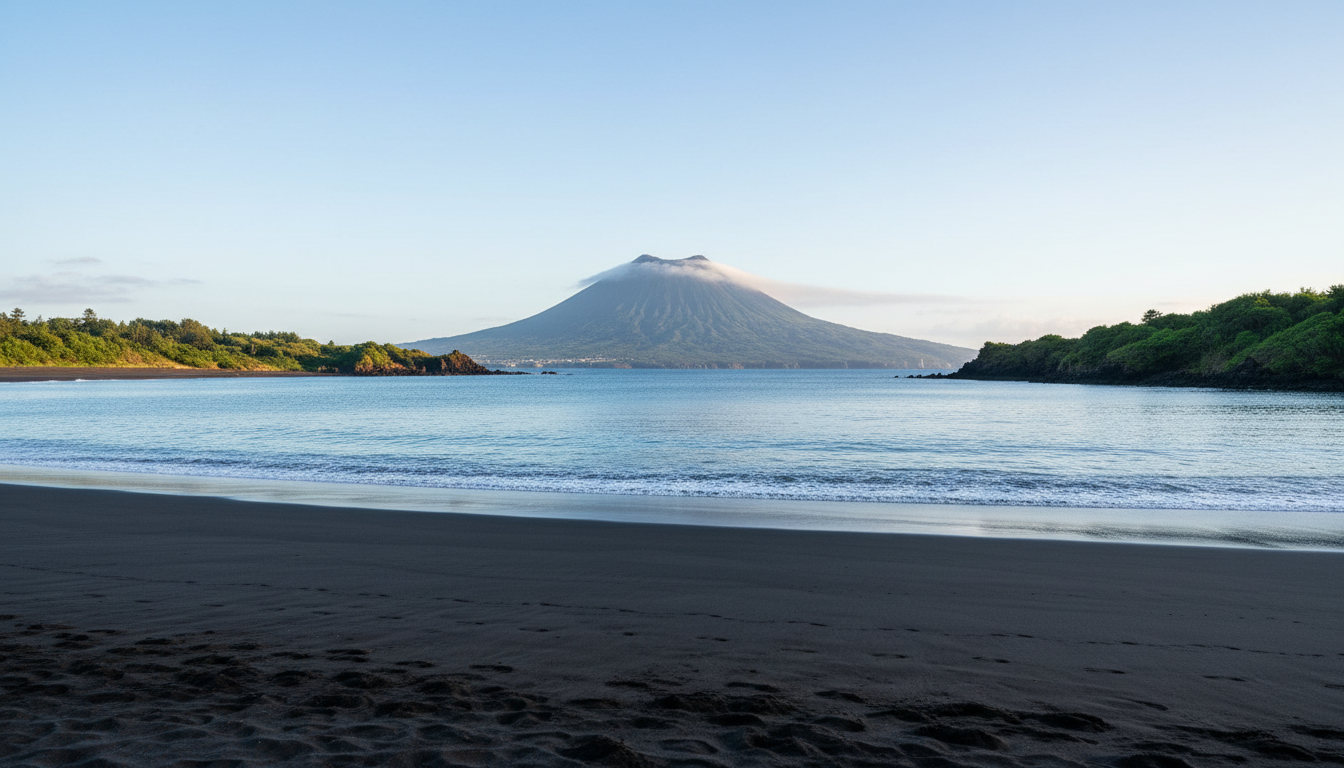
The ferry from Pico takes twenty minutes. In that time, the island does not announce itself. It simply appears — a dark mass against the Atlantic, edged in blue.
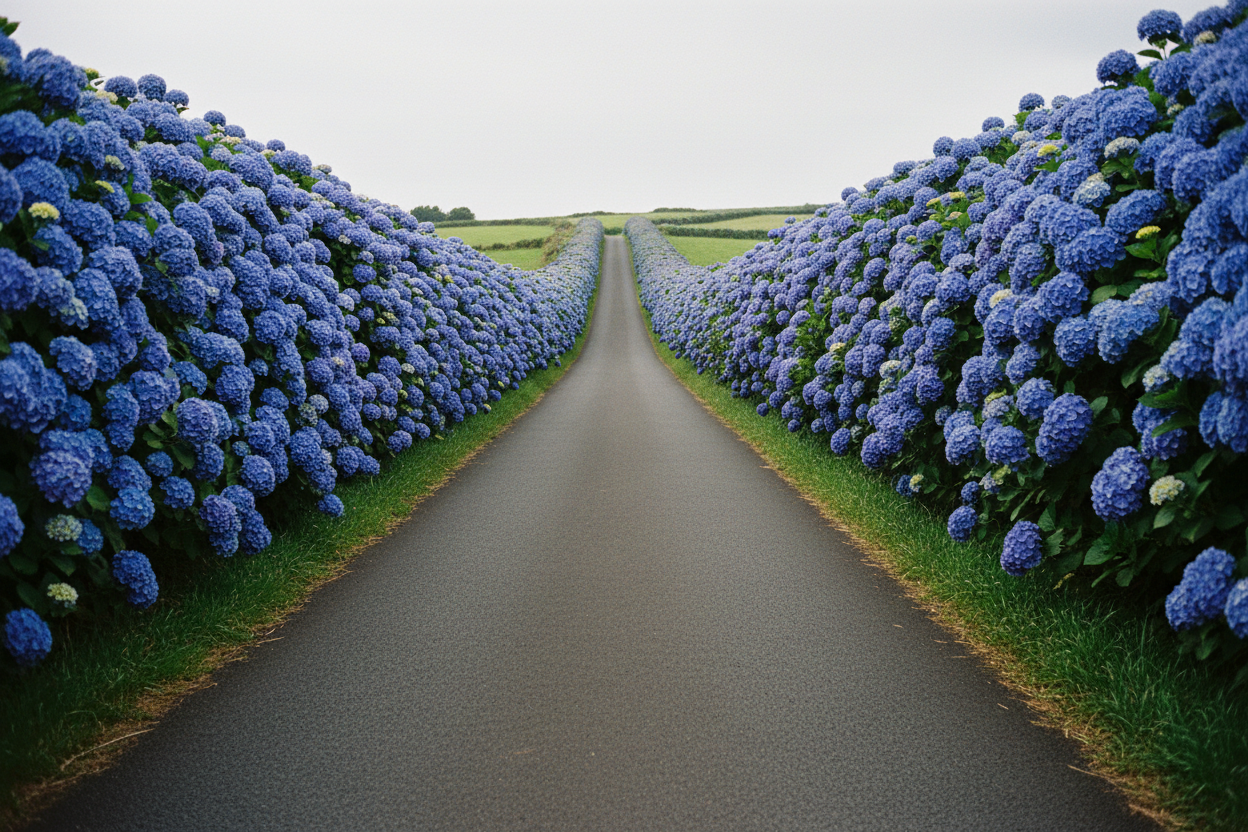
Blue is not a metaphor here. Every August, the hydrangeas that line the roads of Faial bloom in such density that the island seems to earn its name not from the sea but from itself. A Ilha Azul. The Blue Island. A place that has decided, quietly, to be exactly what it is.
The island that hasn't learned to perform
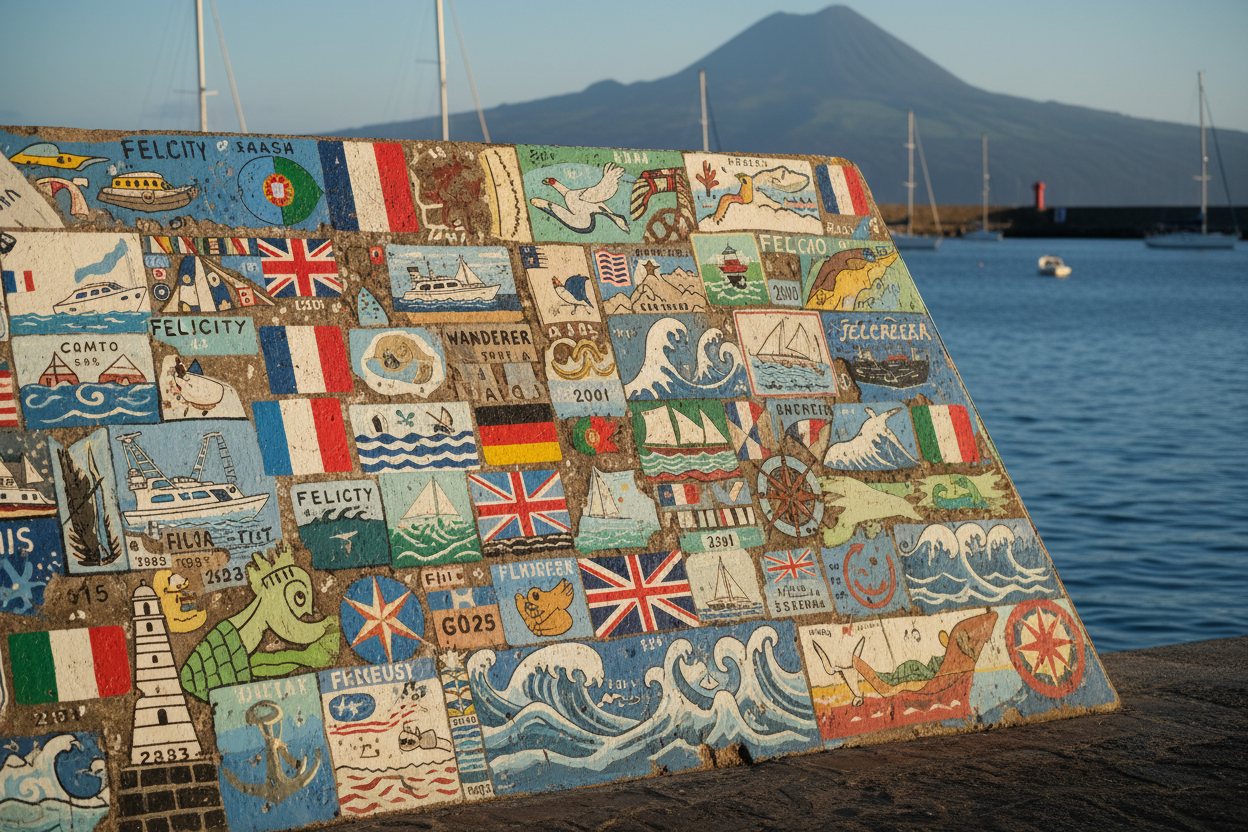
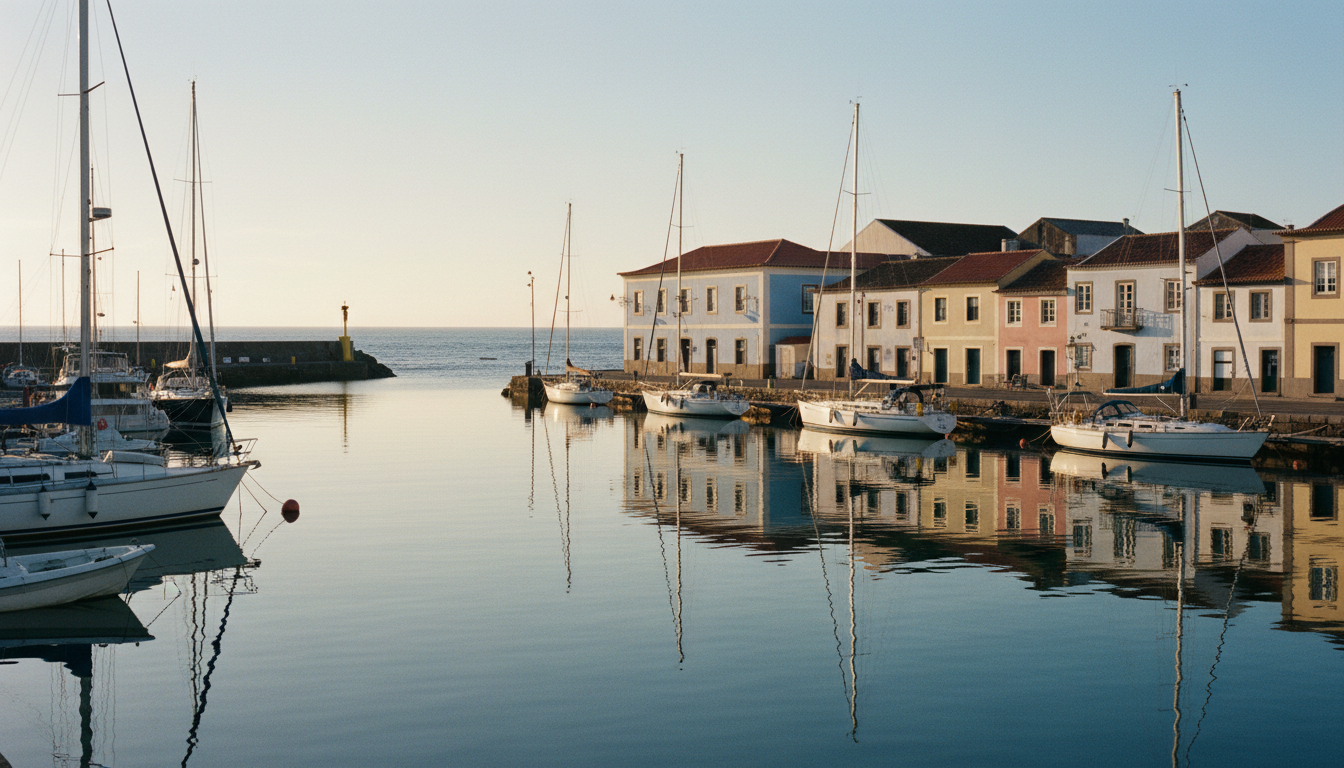
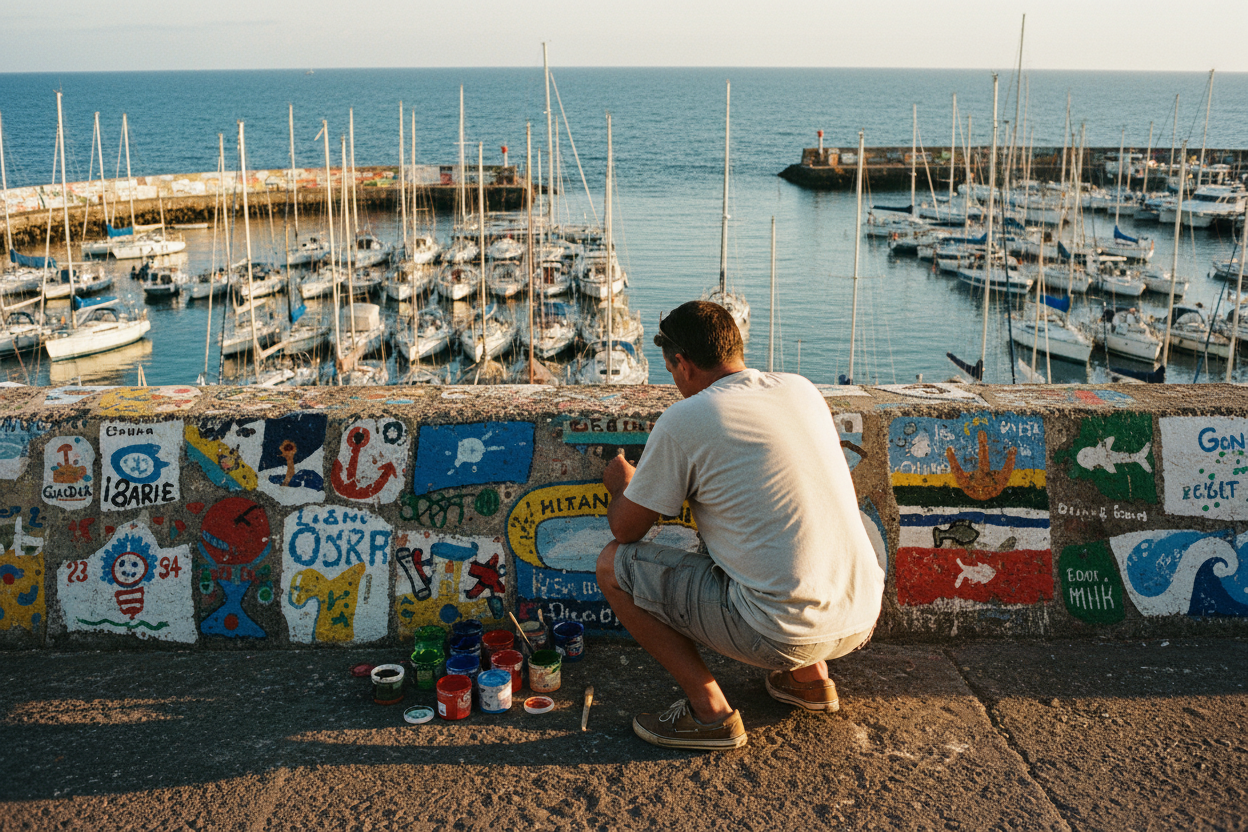
Horta, the capital, is a port town of seven thousand people and several hundred years of Atlantic crossings. Sailors have been stopping here since the fifteenth century — to resupply, to rest, to wait for weather. The harbour wall is painted in murals left by crews of every vessel that has anchored here: a tradition that began in the 1980s and has since become a living archive of the sea. To leave without painting is considered bad luck. The wall does not curate. It accumulates.
Peter Café Sport has stood at the edge of the harbour since 1918. It is not a notable café in any design sense — wooden shelves, gin bottles, the kind of light that flatters no photograph. But in 1939, when HMS Lusitania II anchored after being struck by a depth bomb, the café became something else: a waystation, a meeting point, a place where the Atlantic contracts to the size of a bar stool. The famous gin is served in a single, undemonstrative glass. You drink it watching the water.
Capelinhos — the last thing the earth made here
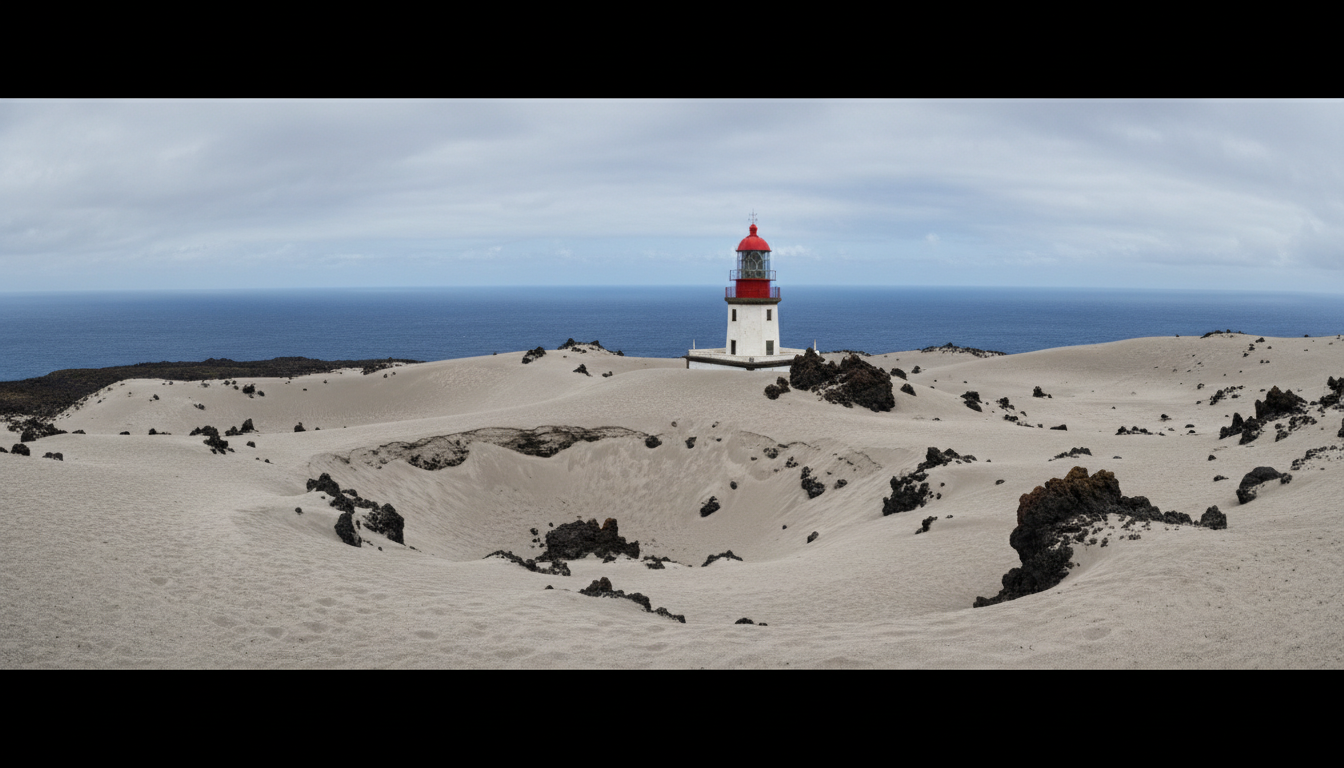
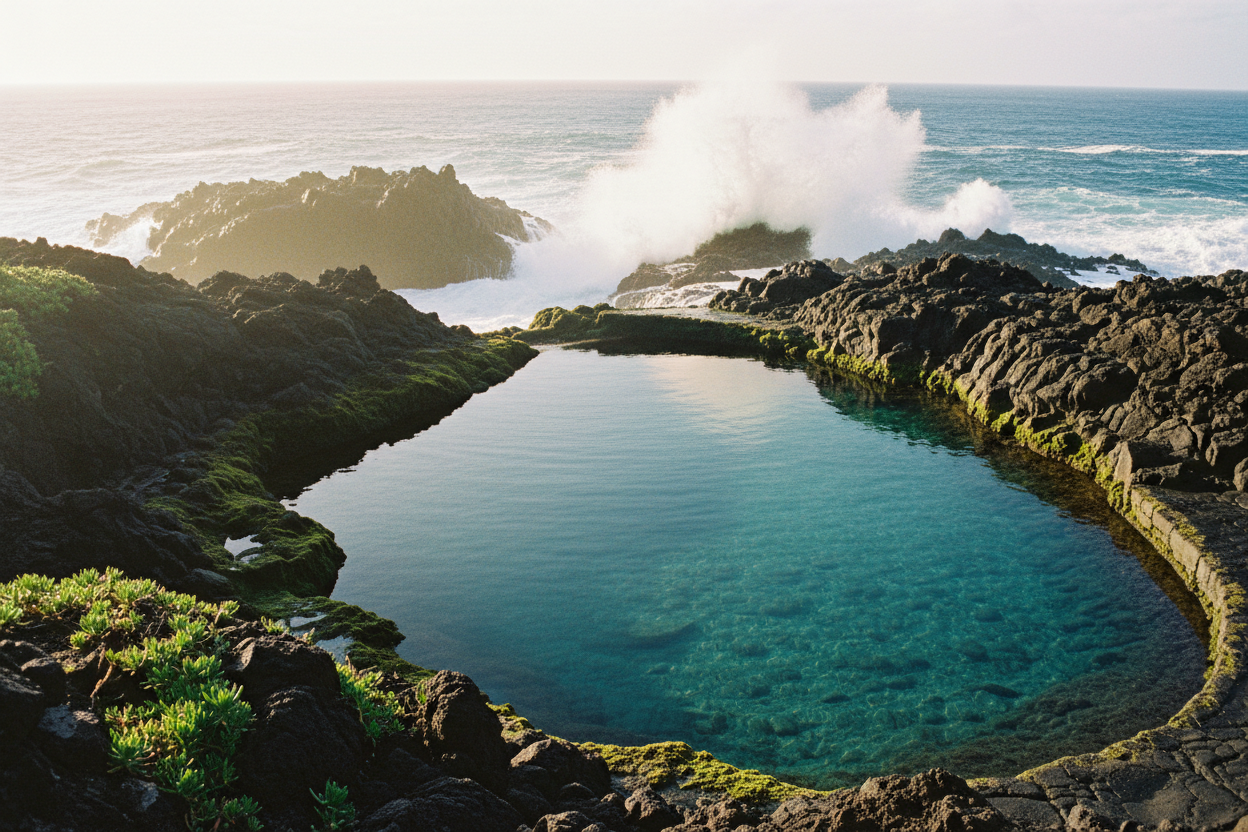
In 1957, the ocean floor off the western tip of Faial opened. For thirteen months, a submarine volcano built itself above the waterline — slowly, violently, indifferently. When it stopped, it had added two square kilometres to the island and displaced two thousand people. The lighthouse that once stood at the tip of the island is now buried to its shoulders in volcanic ash.
The Capelinhos Interpretation Centre, designed by Nuno Melo Sousa, sits half-underground at the base of the ash fields: restrained, dark-lit, precise. The exhibits do not dramatise. They document. Outside, the landscape is lunar — pale grey ash, black basalt, a horizon where the sky and ocean meet without ceremony. No cafés. No souvenir stands. A parking area and then silence.
This is where you understand what Faial is: an island built on forces it did not choose, still absorbing them.
The Caldeira
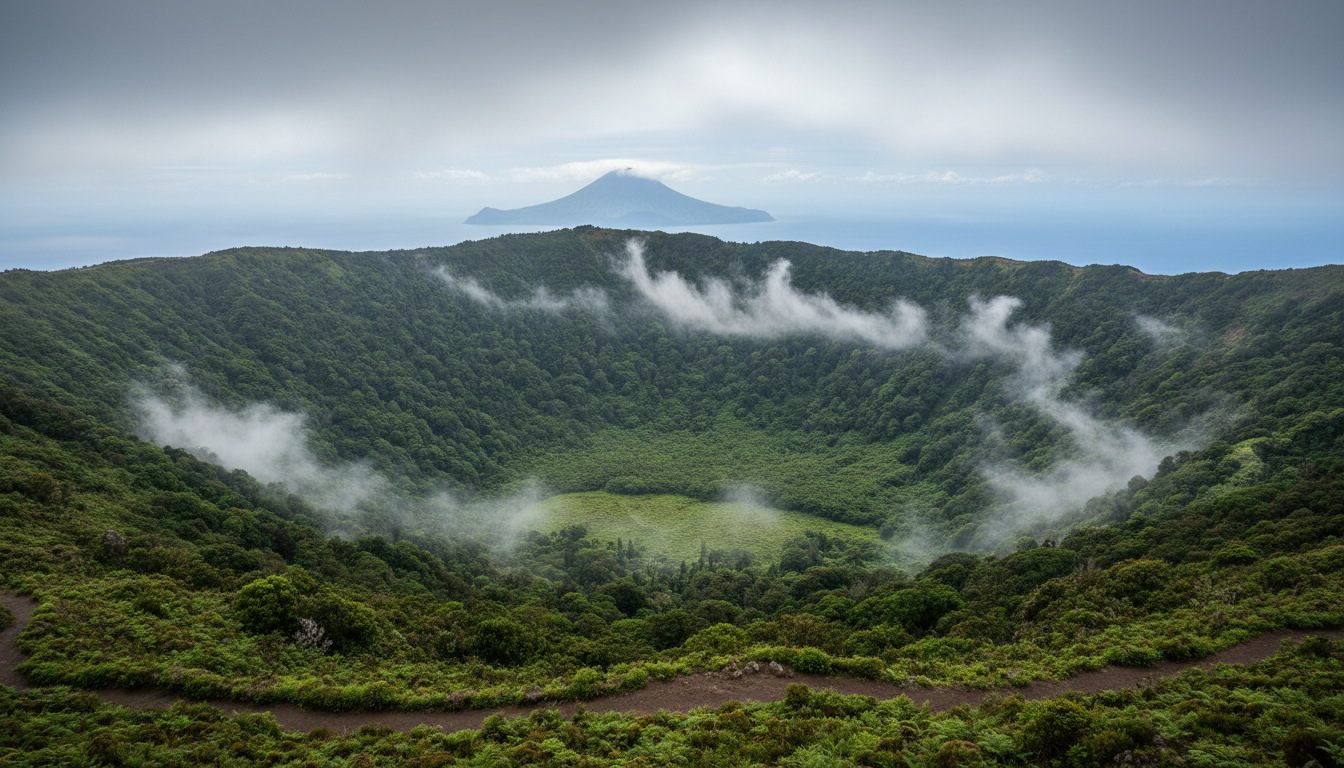
At the centre of the island, the old volcano left a crater two kilometres wide and four hundred metres deep. The Caldeira is now a forest — laurel, mosses, ferns in a hundred shades of green — wrapped in cloud for much of the year. A path circles the rim in roughly ninety minutes. On clear days, you can see across to Pico, which rises 2,351 metres from the water in an almost perfect cone. On foggy days, you hear the wind through the trees and nothing else.
There is a particular quality to the silence inside the Caldeira: it is not absence of sound but presence of something older than sound. The kind of quiet that requires geological time to produce.
Water and its patience
Faial's water is the reason sailors have always stopped here. The island rests on volcanic rock that filters precipitation into underground springs of exceptional purity — soft, cold, tasting of nothing. The same water feeds the hydrangeas, fills the reservoirs, and gives the island its particular quality of green.
The most valuable thing about a place is often the thing that cannot be photographed — the element that flavours everything else without declaring itself.
Between these interiors — ash, crater, spring — the island teaches a single lesson: geology is not scenery here, it is temperament.
A note on timing
The Azores recorded more than 4.5 million overnight stays in 2025 — another record year. Almost none of it comes to Faial. The crowds that fill São Miguel from June to August largely bypass the western islands. Faial receives its sailors, its whale-watching boats (the Atlantic between Faial and Pico is among the most reliable cetacean corridors in Europe), and a small number of travellers who have specifically sought distance from the places that are currently being discovered.
September and October are the months the island keeps for itself. The hydrangeas are past their peak. The boats have thinned. The café at the harbour stays open.
Where to stay
The Plantation Faial, Feteira — a family-run quinta surrounded by a fruit garden, with views of the sea and the cone of Pico across the channel. Breakfast comes from the property — fresh figs, island cheese, honey that nobody labels — and arrives with the unhurried certainty of someone who has done this for years. This is the kind of hospitality that existed before anyone invented the word "hospitality."
Azul Singular, Horta — a restored townhouse in the heart of the town, rooms quiet as a library after hours. The details — door handles, tiles, the way light enters through the shutters — betray the hand of someone who understands that luxury is the sum of decisions guests only notice on the third day.
Pátio Ecolodge — for those who want proximity to the Caldeira, with the particular silence of altitude. You wake up inside a cloud. Literally.
The boats rest in the harbour. Someone is painting the wall. The Atlantic does not care about any of it, but the Atlantic is not the point — the island is the point, and the island, for now, remains mostly its own.
Faial, Azory — Horta / Capelinhos / Caldeira. Prom z Pico: dwadzieścia minut.