The Island That Chose to Wait
Hydra. Where engines fall silent, and attention returns.
I. The harbour opens ahead
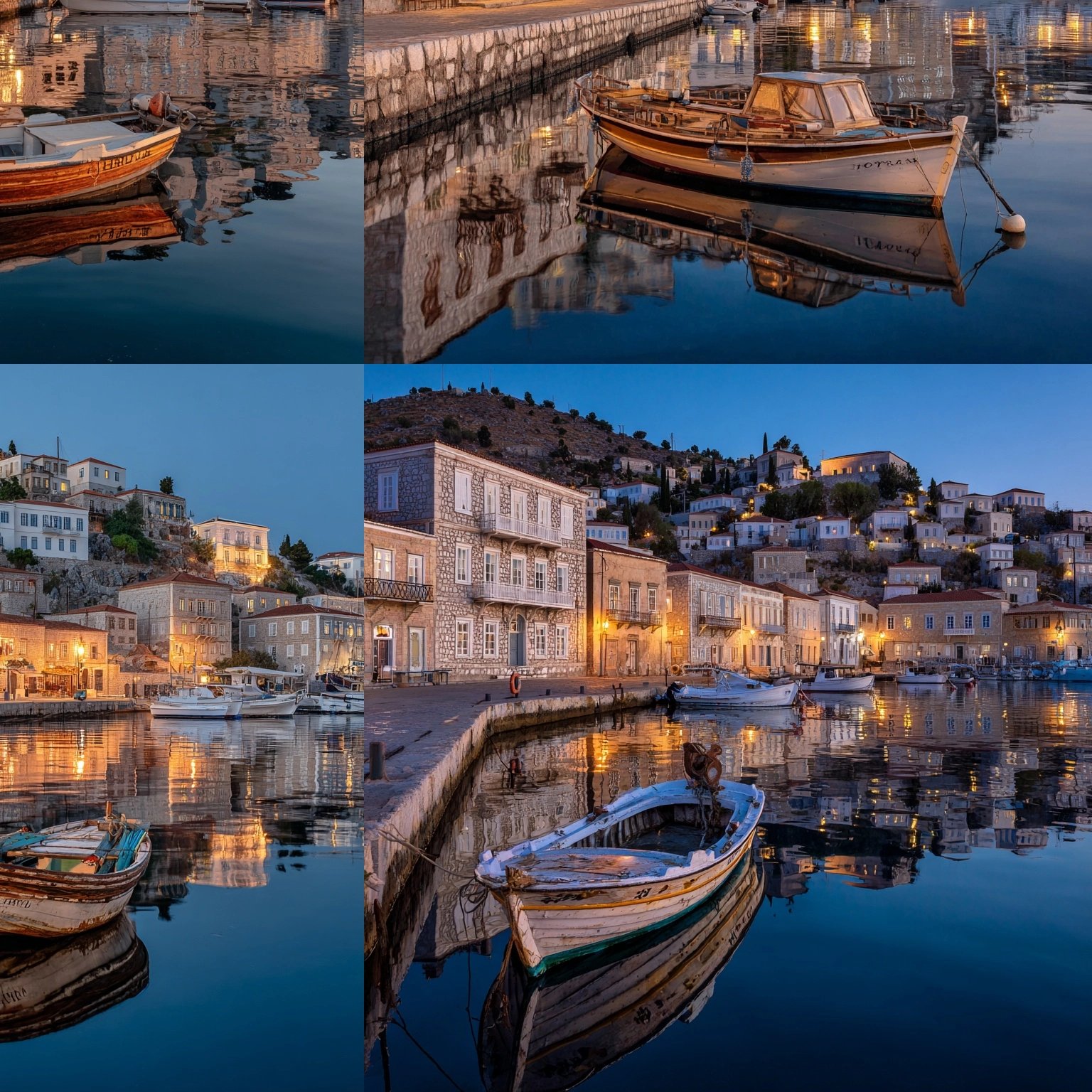
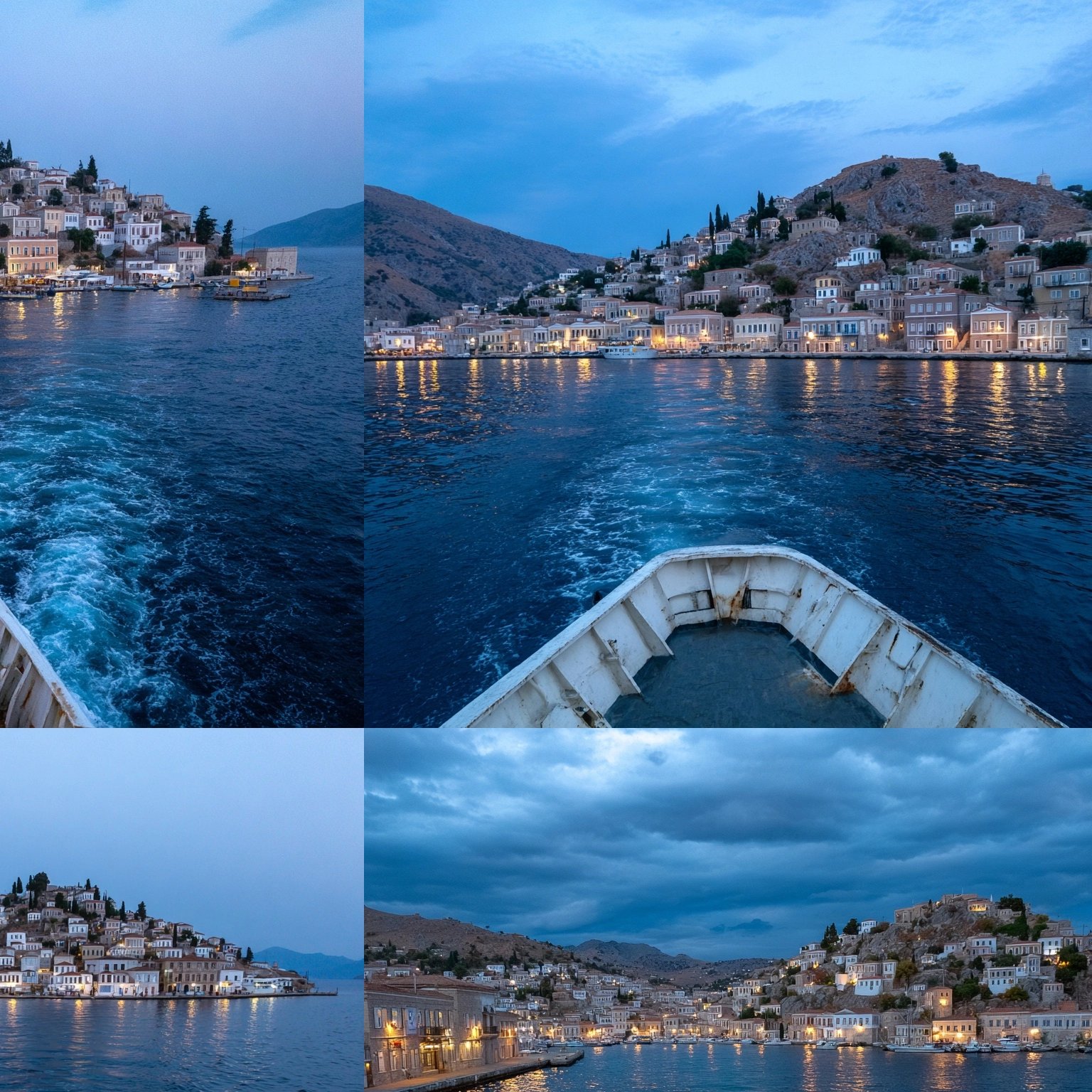
The ferry from Piraeus takes an hour and a half. When the engine slows and the harbour of Hydra opens ahead — stone mansions climbing the hillside, the water flat and dark blue in the morning light — something unusual happens. You look for the road. There is none.
There never has been.
Hydra decided, sometime in the 1950s, that the motor vehicle was not welcome. Not as a statement, not as a tourist attraction — simply as a fact, written into law and then quietly forgotten about, the way islands forget things that never needed remembering. What remains is the sound the Aegean has always made: water against stone, a donkey's hooves on a cobbled path, the creak of a wooden boat shifting at its mooring. The absence of engines is not silence exactly. It is the presence of everything else.
II. Petros takes your bag
A lane with a mule
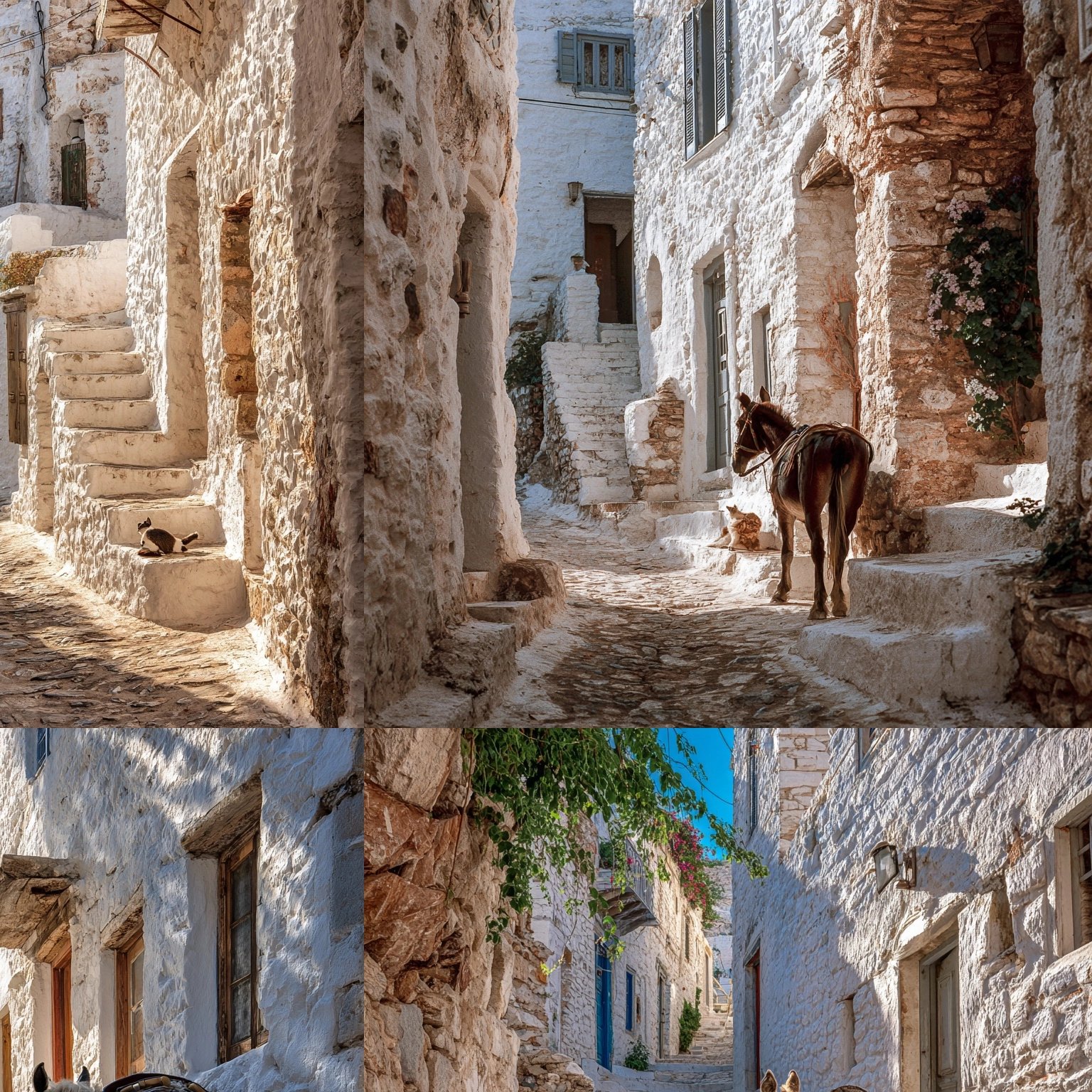
You arrive at the harbour and a porter appears. His name, you later learn, is Petros. He takes your bag without ceremony, tips it into a wooden cart, and sets off uphill through a labyrinth of whitewashed lanes, greeting every second person he passes. You follow, slightly dazed, slightly behind. The steps are uneven. Cats occupy the warmest corners. A mule stands tethered to an iron ring outside a pharmacy, patient as furniture.
You arrive at the harbour and a porter appears. His name, you later learn, is Petros. He takes your bag without ceremony, tips it into a wooden cart, and sets off uphill through a labyrinth of whitewashed lanes, greeting every second person he passes. You follow, slightly dazed, slightly behind. The steps are uneven. After ten minutes you stop pretending you are not winded. Cats occupy the warmest corners. A mule stands tethered to an iron ring outside a pharmacy, patient as furniture.
III. Mansions of the eighteenth century
A mansion facade at sunset
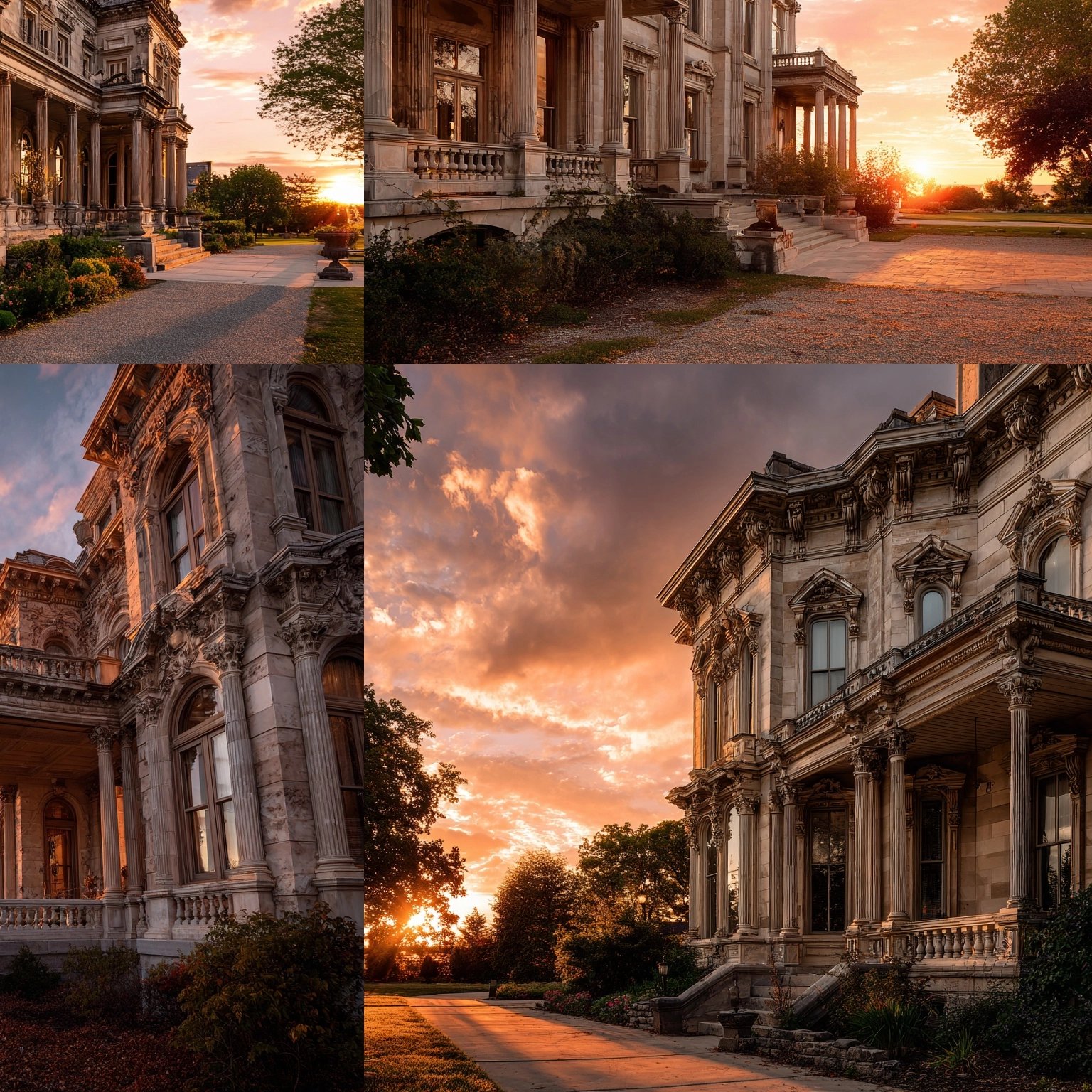
Hydra Town — the island has one real settlement, gathered around its old harbour like a parenthesis — is built in the manner of the eighteenth century, when the island grew rich on seafaring and sponge trade. The mansions of the Koundouriotis, Voulgaris, and Tombazis families still face the water, their facades the colour of old limestone, their interiors long since converted to museums, hotels, private ghosts. The architecture does not perform history. It simply continues to exist, which in Greece is a different thing entirely.
IV. The harbour moves at its own tempo
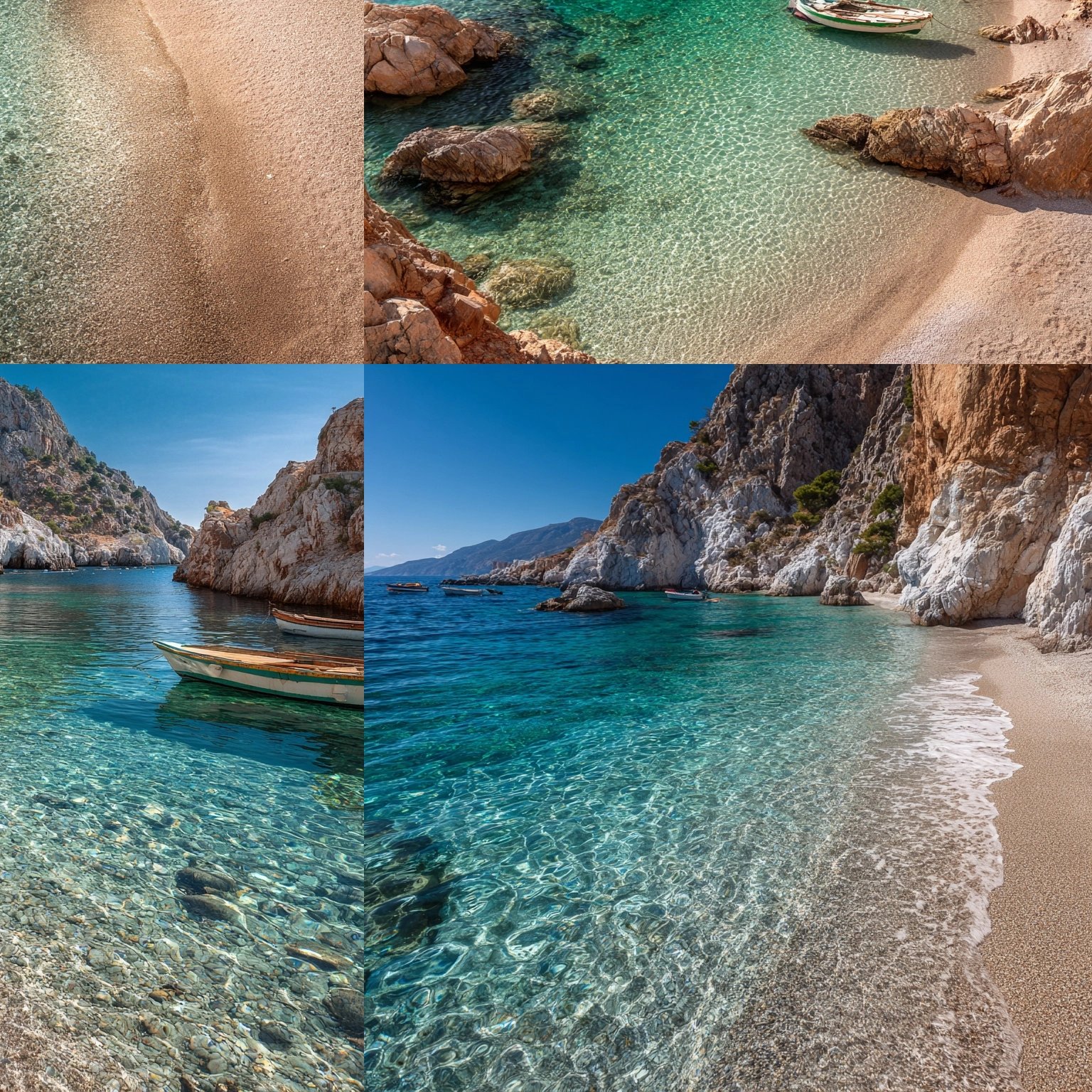
The harbour moves at its own tempo. Fishermen mend nets on the eastern quay in the early morning. By ten o'clock the water taxis are running — small open boats that carry passengers to the beaches that ring the island: Vlychos, Bisti, Agios Nikolaos. Each beach is accessible only by sea or on foot, and each offers a version of solitude that feels increasingly rare: a cove, a few umbrellas, clear water above white rock. Nothing else.
Plaża Vlychos
V. Cohen was living on the island then
Image: Douskos taverna
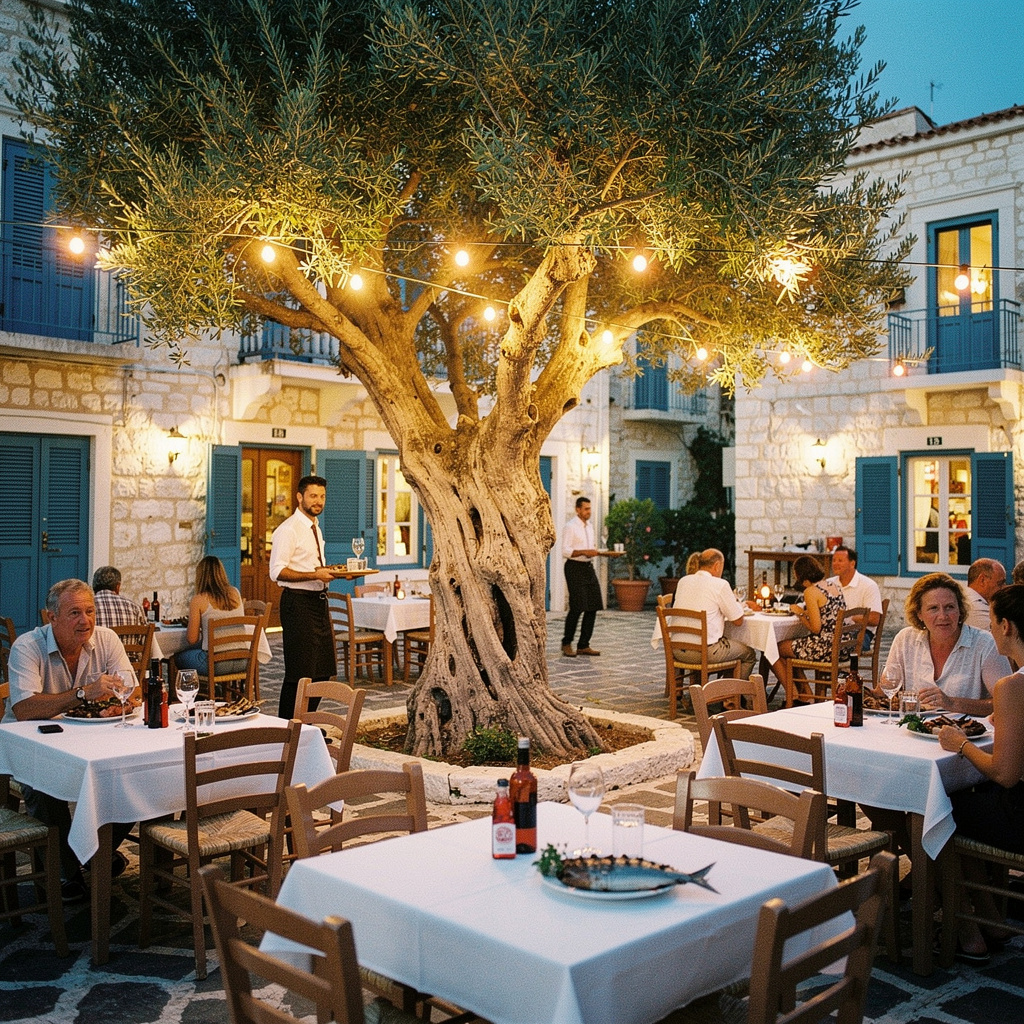
In the square above the port, beneath a canopy of trees strung with lights, stands the taverna known as Douskos — formally Xeri Elia, the Dry Olive, named for the ancient olive tree at its centre that died centuries ago and gave the place its name. The family has been feeding people here for nearly two hundred years. In the 1960s, Leonard Cohen came regularly. He was living on the island then, in a house he had bought for very little money, writing songs in the heat of Greek summers. He was photographed once, outside this taverna, guitar in his lap, not performing — just sitting.
The food is what it has always been: grilled meats, moussaka that holds its shape, fresh fish brought in that morning, house wine that costs almost nothing and tastes of sun. Plates arrive hot. The waiters carry full trays at improbable angles. At lunch on a Tuesday in late September, you wait twenty minutes for a table, and the waiting itself feels like part of the island’s instruction. You do not mind.
VI. The light changes four times a day
The light on Hydra changes four times a day in a manner you begin to track without intending to. Early morning is silver, the sea almost grey, the stone paths damp. By mid-morning the gold has arrived and everything hardens into clarity. The afternoon goes white and still — the deep Greek white of high summer, the light that forces you indoors. And then the hour before sunset, which is the hour the island is made for: the mansions turn amber, the water turns copper, the cats move into the shade of doorways and regard you without expression.
In that hour, the paths above the town are quiet. You can climb to the Monastery of the Prophet Elias, past prickly pear and dry stone walls, and look out over the Saronic Gulf toward the Peloponnese, which sits on the horizon like a low purple cloud. The island stretches behind you — rocky, mostly treeless, its interior a series of silent valleys and chapels without bells.
VII. What Hydra refuses to become
What Hydra refuses to become is as important as what it is. There are no resort developments on its hillsides, no sound systems at its harbour bars, no golf carts — because there are no roads for them. The absence of infrastructure that would elsewhere be considered basic is here experienced as a kind of relief: the privilege of not arriving somewhere that has been optimized for your arrival.
This was not an accident. The islanders voted for it — quietly, without ceremony, the way Hydra does most things. They understood, before the rest of the world had thought to ask the question, that some places are worth more intact than improved.
VIII. You are not on that boat
You carry your own bag, or you follow Petros. You walk, or you hire a mule for the steep climb to your hotel. The island makes small demands. In exchange, it gives you back something that is difficult to name — a quality of attention, perhaps, or simply a morning without notifications, which is what all of us are really looking for when we book the ferry from Piraeus.
The last boat back to Athens leaves in the early evening. On the quay, a group of day-trippers reassembles itself with shopping bags and sunburned shoulders. The water taxi puts out to meet the ferry. The harbour, released from its temporary population, returns to itself: the fishermen, the cats, the sound of a mule somewhere above the town, coming slowly down the steps in the dark.
You are not on that boat. You have decided, without quite deciding, to stay another night.
This is what Hydra does. It does not seduce. It simply waits — with the patience of an island that has been here since before anyone thought to give it a star rating — until you understand that the point was never to leave. And when you do leave, later, the noise of the mainland will sound briefly like a mistake.