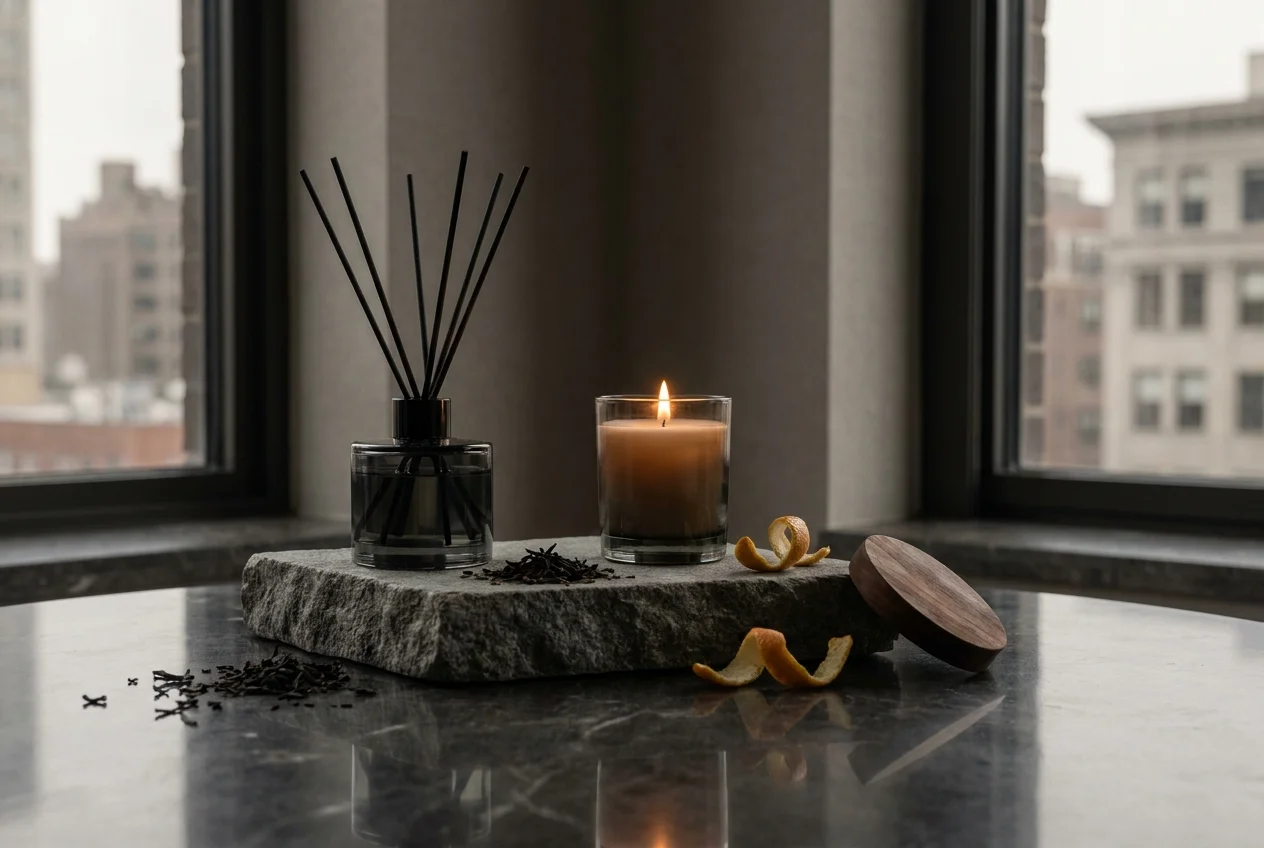
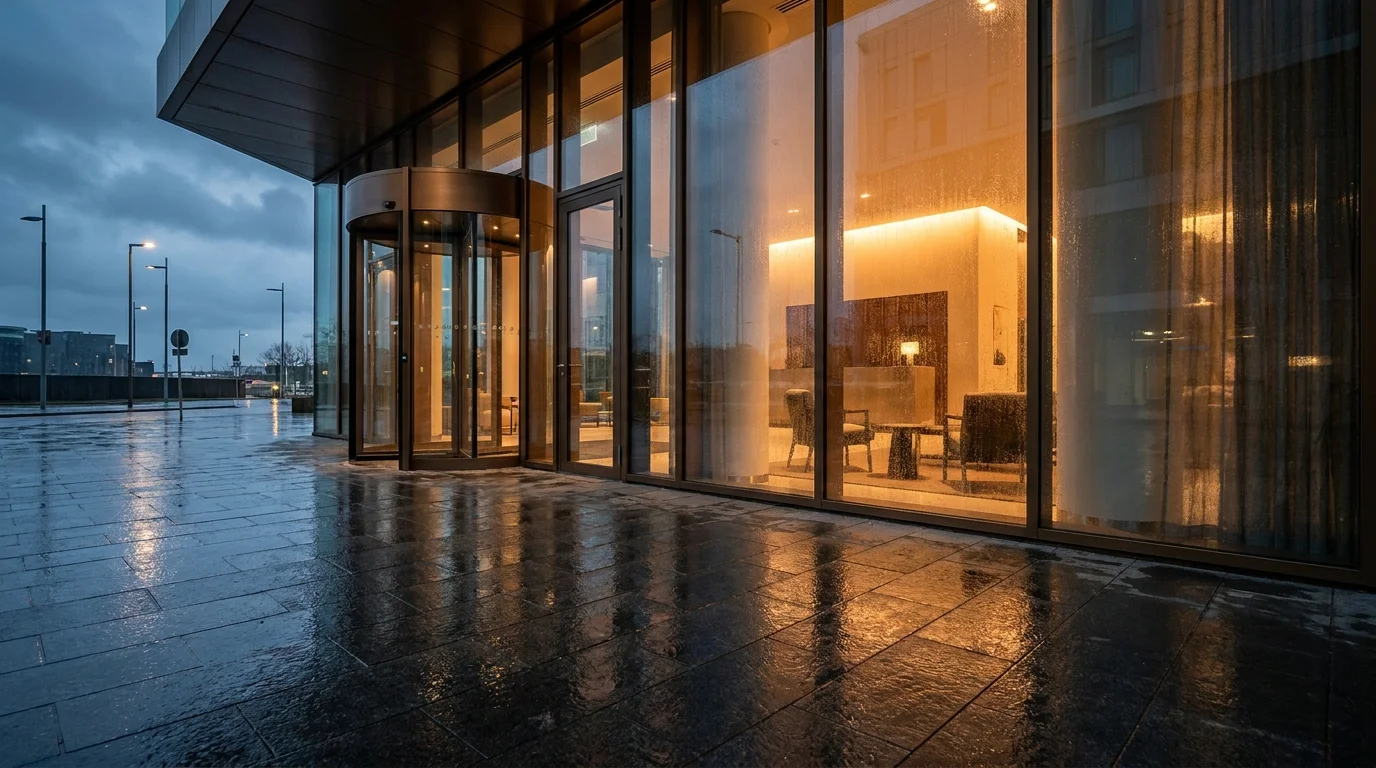
There is a fraction of a second in which a city hotel reveals what it believes comfort should be. The revolving door closes. Traffic loses its edges. Wet wool, brake dust and pavement are replaced by cooler air, softened acoustics, polished stone and a scent that seems to belong to no identifiable object. It is simply there.
The change can feel meteorological. Outside, the city keeps its own weather: rain rising from warm asphalt, exhaust held low between buildings, coffee drifting from a doorway, metal, leaves, refuse, perfume, underground air. Inside, conditions have been edited. Temperature steadies. Humidity becomes less legible. The street is permitted as a view but refused as an atmosphere.
This is private weather: the manufactured climate of spaces that possess the means to decide what the city may bring through the door.

The city has no signature scent
Cities are often described as if each carried a single olfactory identity. Paris is bread and tobacco; New York, hot pavement and steam; London, rain on stone. The shorthand is seductive and usually false. An urban smellscape is discontinuous. It arrives in pockets and currents, altered by season, traffic, time of day, cleaning schedules, food, vegetation and the movement of air.
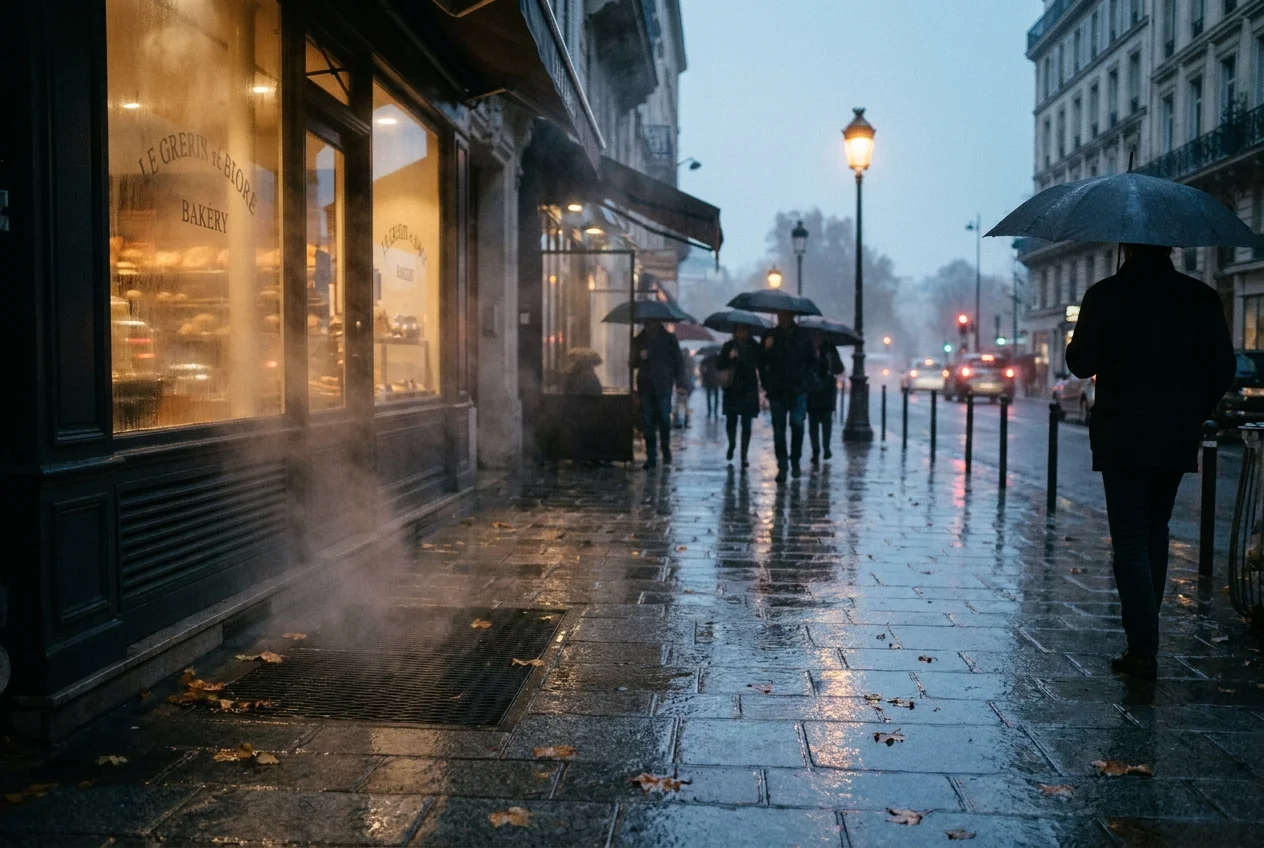
The late urban designer Victoria Henshaw treated smell not as an atmospheric afterthought but as a material of place. Her smellwalks asked participants to move through a city with their attention reassigned, recording where one odour ended and another appeared. Later mapping projects, including the work of Kate McLean and researchers behindSmelly Maps, made the same instability visible: a city does not emit a fixed perfume. It produces events.
Rain makes this especially clear.Petrichor—a term introduced by the Australian researchers Isabel Joy Bear and Richard Thomas in 1964—does not name one molecule but an experience assembled from compounds released by soil and surfaces, including the earthy geosmin associated with microorganisms. Research published inNature Communicationslater demonstrated one mechanism by which scent-bearing material can enter the air: when raindrops strike certain porous, wettable surfaces, trapped microbubbles can burst and throw fine aerosols upward.
The finding is more precise than the romance attached to it. It does not mean that every downpour washes a city into purity, nor that asphalt behaves exactly like dry earth. Urban rain activates a less pastoral mixture: mineral dust, warmed concrete, rubber, vegetation, drains, fuel and whatever the day has left on the pavement. The smell after rain is not cleanliness. It is exposure—the city briefly releasing what its surfaces had held.
A controlled interior begins by interrupting that process.

Air, edited
A hotel’s atmosphere is usually discussed in visual terms: stone selected for the lobby, the temperature of the lighting, the distance between chairs, the height of a floral arrangement. Yet the first luxury may be subtractive. Before the hotel adds a fragrance, it removes variability.
Mechanical ventilation moderates temperature and exchanges air. Filtration reduces particulates and some intrusions from outside. Housekeeping controls the odours of use. Kitchens, bars, flowers, timber, leather, textiles, cleaning products and human bodies supply their own volatile signatures. Sound is absorbed. Light is warmed. Then, in many properties, an ambient fragrance is introduced through a local diffuser or air-handling system.
Private weather is therefore not perfume laid over architecture. It is an atmospheric stack.
Its first layer isexclusion: traffic, damp, heat, cooking smoke, refuse, the unplanned proximity of other lives. The second isclimate: temperature, humidity and circulation held within a narrow band. The third ismaterial: wood, paper, stone, leather, fabric and wax releasing their own quiet evidence. The fourth issignature: a deliberate scent calibrated to the identity of the house. The final layer ismemory—what remains after the nose has stopped reporting the fragrance and the guest has left.
This distinction matters because environmental control is not the same as heightened olfactory ability. A controlled study of healthy participants found no significant change in measured smell performance across the tested range of temperature and humidity. Weather can affect volatility, airflow, nasal comfort and the way odours travel without making the human nose simply “better.” The experience is relational: chemistry, ventilation, material and attention moving together.
The invisible logo
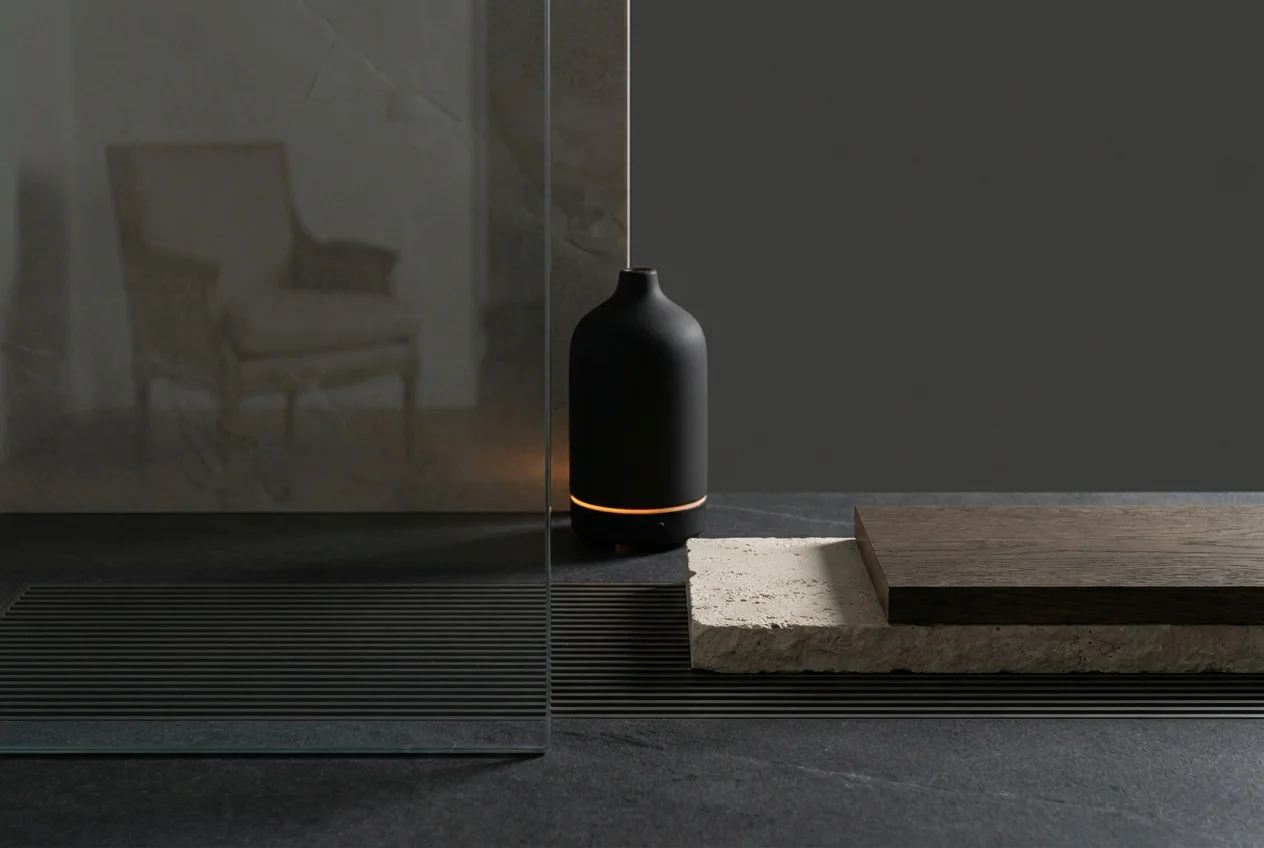
The contemporary hotel scent is often described as an invisible logo. The phrase is useful, but incomplete. A logo identifies. A scent also occupies.
EDITION Hotels worked with Le Labo on a signature built around black tea and bergamot, described by the brand as a source of comfort and exoticism. The accord extends beyond the lobby into bath amenities, candles and diffusers. It is designed to survive a change of address: London, New York, Miami Beach, Rome. The city outside may be different; the sensory passport remains valid.
St. Regis follows another model. Its Caroline’s Four Hundred fragrance, created with Carlos Huber of Arquiste, reconstructs the mythology of Caroline Astor’s Gilded Age gatherings: American Beauty roses, quince blossom, white lilies, green stems and the exotic woods of a ballroom. Here scent is not primarily meteorological. It is historical theatre, an attempt to make a social world breathe again.
At 1 Hotels, the Kindling fragrance translates the brand’s nature-led position into a portable collection of ambient oil, candle, diffuser and eau de parfum. Soho House Hong Kong’s Leather & Oud takes a more local route, drawing on the night-time character of Sheung Wan, its leather note and dark woods presented as an echo of the House and its neighbourhood. Aman’s fine-fragrance collection shifts the proposition again: individual compositions are inspired by destinations, turning place into a library of bottled interpretations rather than one global atmospheric uniform.
These strategies suggest three distinct ambitions. There isscent of brand, repeated across addresses to produce recognition. There isscent of place, developed from a particular material, climate or neighbourhood. And there isscent over place, the point at which a controlled identity becomes so complete that locality can no longer be detected beneath it.
The border between them is where the interesting questions begin.

Congruence, not pleasantness
A fragrance does not work because it is pleasant in isolation. It works when the rest of the room appears to have made it inevitable.
In a field experiment published in theJournal of Retailing, Anna Mattila and Jochen Wirtz found that people responded more positively when the arousal qualities of ambient scent and music were congruent. The study concerned retail rather than hotels, but its more durable lesson belongs to the wider servicescape: atmosphere is perceived as a whole. The senses compare notes.
Black tea and bergamot can register as restrained when met by pale oak, low light and service that does not rush to announce itself. A dense rose accord may acquire credibility among lacquered wood, polished silver and rituals derived from another century. Put either fragrance into the wrong acoustic, material or social setting and it begins to disclose the machinery. The guest no longer feels atmosphere. They detect scenting.
This is why the best-controlled rooms rarely depend on intensity. Their precision lies in agreement: the coolness of stone matching the dryness of the air; the scent of timber meeting an actual timber surface; a floral note arriving with the restraint of the arrangement rather than the volume of a department-store counter. Luxury is not the number of stimuli. It is the discipline with which they decline to contradict one another.

The scent you stop smelling
The signature is most legible at the threshold. Moments later, it recedes.
Olfactory habituation—the decrease in response that follows repeated exposure—can occur quickly. The nose is built to notice change. A constant odour loses its claim on conscious attention, even while it remains part of the environment. This does not mean that the fragrance has vanished. It means that the room has succeeded in converting a signal into a condition.
The mechanism gives the hotel threshold unusual importance. The door, the first current of conditioned air, the shift in reverberation, the brief recognition of tea, wood, rose or smoke: these seconds carry more narrative weight than an hour spent inside. Later, what the guest remembers may not be an identifiable note but a judgment. Calm. Distance. Order. A sense that the place held itself together.
Odour-evoked autobiographical memories are often described as unusually emotional and transporting. Research supports the intensity of that return, but not the idea that scent produces a flawless recording. Olfactory memory is not a photograph. It is closer to weather remembered by the body: partial, associative, able to restore the feeling of a room while misplacing its details.
Hotels understand the opportunity. The candle or diffuser sold downstairs allows a guest to attempt the journey in reverse. First the hotel lends biography to the fragrance. Then the object carries that fragrance home. The domestic room changes for an evening, and the hotel is summoned without the city, the service or the architecture that originally made the accord convincing.
Atmosphere becomes merchandise—not merely because the scent can be sold, but because memory has already supplied it with an address.
What should not be covered
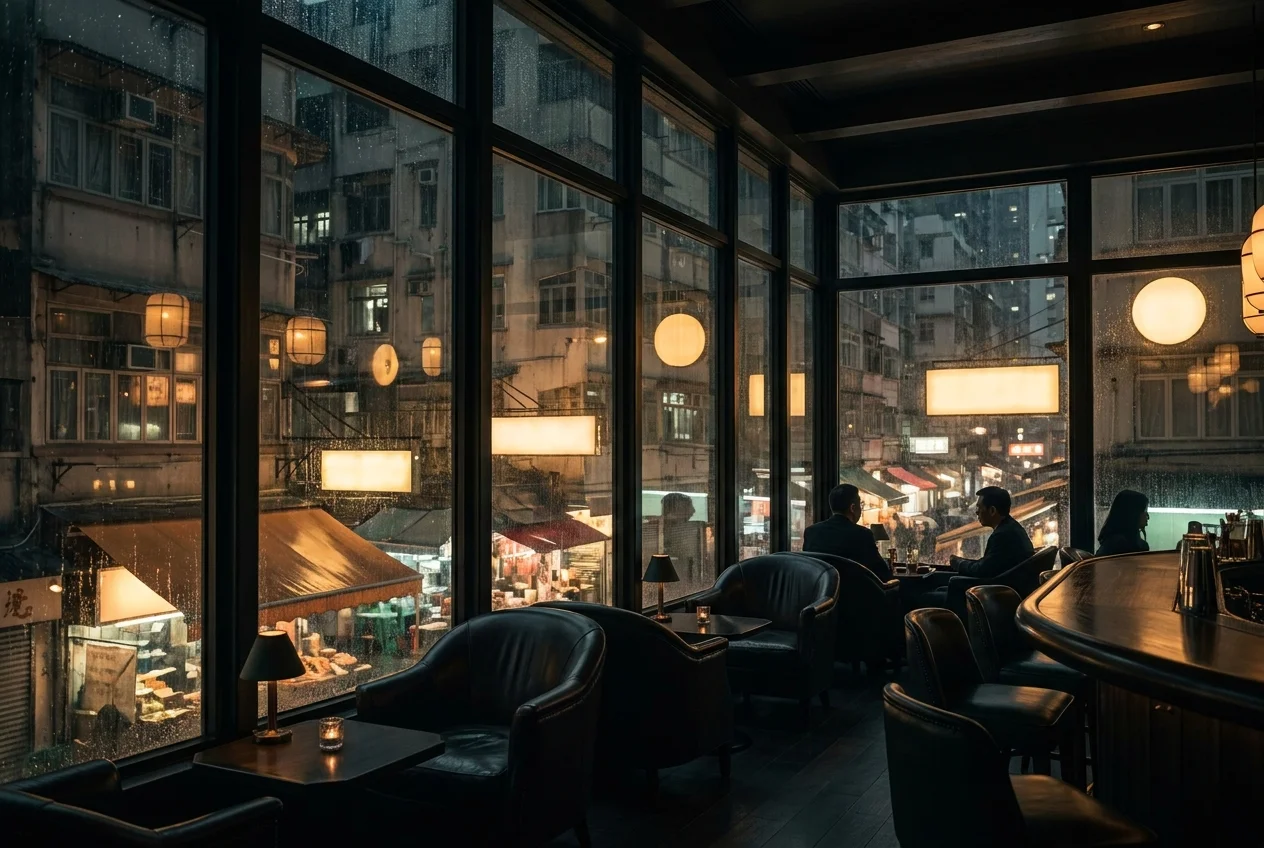
Not every smell in a controlled interior needs correction. Old timber, paper, beeswax, stone after cleaning, a trace of coffee from breakfast: these are not defects in the same category as stale smoke or a blocked drain. They may constitute the place’s most credible archive.
Research into olfactory heritage has shown that historic odours can be analysed, described and documented. Cecilia Bembibre and Matija Strlič’s work on the smell of old books combined chemical analysis with the language and emotions of visitors, treating scent as part of cultural inheritance. The implication for hospitality is subtle but important. A building may already possess an accord before a perfumer arrives.
The intelligent approach is editorial rather than imperial. It asks what should be removed, what should remain and what—if anything—needs to be added. A fragrance that silences every material beneath it may deliver brand consistency while destroying the evidence of age, climate and use that gives an address its authority.
The finest scenting may therefore be difficult to separate from the room. Not because it is weak, but because it behaves like an edit to an existing text.

Who owns the air?
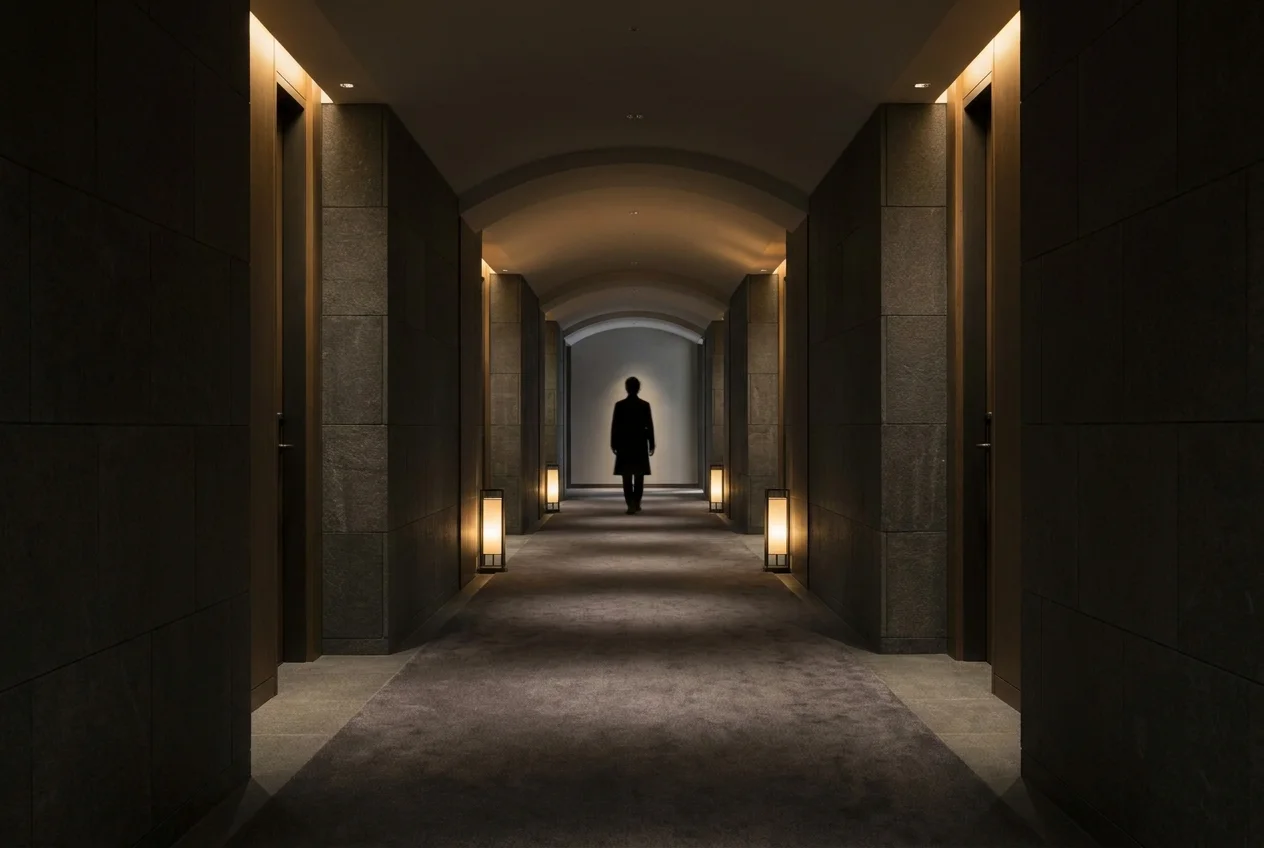
There is an ethical limit to the idea of private weather. Ambient fragrance differs from music or visual styling in one decisive way: participation is difficult to refuse. A guest may look away from an artwork. They cannot stop breathing the lobby.
Some people report headaches, respiratory discomfort or other adverse reactions around fragranced products. Studies of these experiences include self-reported survey data and should not be treated as proof that every fragrance, ingredient or concentration produces the same effect. Laboratory research also confirms that fragrance diffusers can emit mixtures of volatile organic compounds; exposure depends on formulation, concentration, ventilation, duration and individual sensitivity. “Natural” is not a safety category, just as “synthetic” is not a diagnosis.
The question for luxury hospitality is not whether scent must disappear. It is whether control can include restraint, disclosure and choice. Is intensity monitored as carefully as temperature? Can a guest request a room without added fragrance? Does the system respond to complaints without treating sensitivity as a failure of taste?
Hospitality is often defined as the art of anticipating needs before they are spoken. That principle becomes less elegant if it assumes that every body desires the same air.
Exit weather
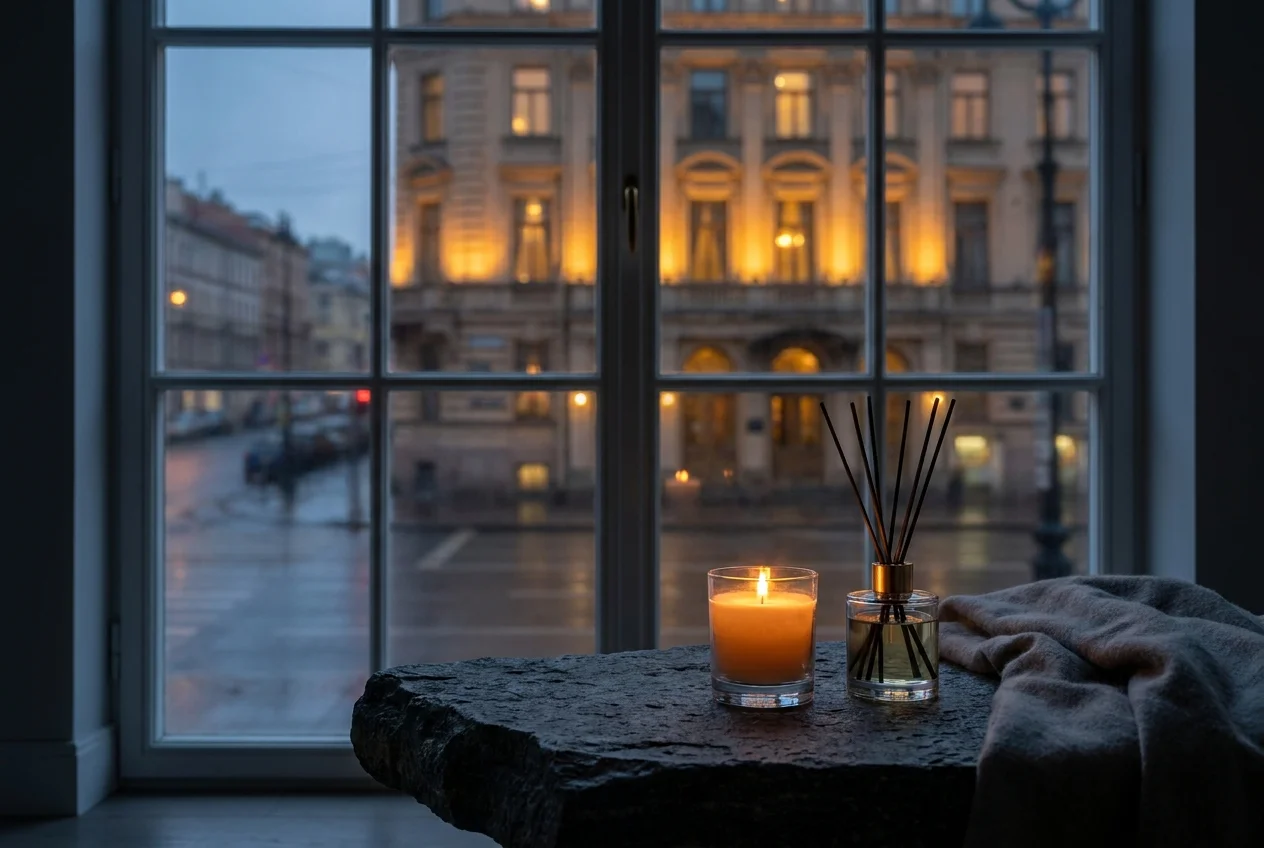
Eventually, the revolving door releases the guest back into conditions the hotel cannot moderate. Heat presses against glass. Rain lifts the mineral and bacterial traces held by porous ground. A delivery scooter leaves a ribbon of fuel. Someone passes wearing too much perfume. The city resumes its argument.
For a moment, the hotel’s accord may remain on a cuff or in the memory of the first breath inside. Then it thins. What persists is not black tea, rose, cedar or bergamot so much as the sensation of atmospheric authority: the knowledge that behind one door, weather had been made private.
That is the promise and the problem of the controlled interior. It offers refuge by editing the city. At its best, the edit is precise enough to sharpen a sense of place. At its worst, it replaces the world with a brand.