I. The Concrete and the Souk
The portraits arrive before the building does.
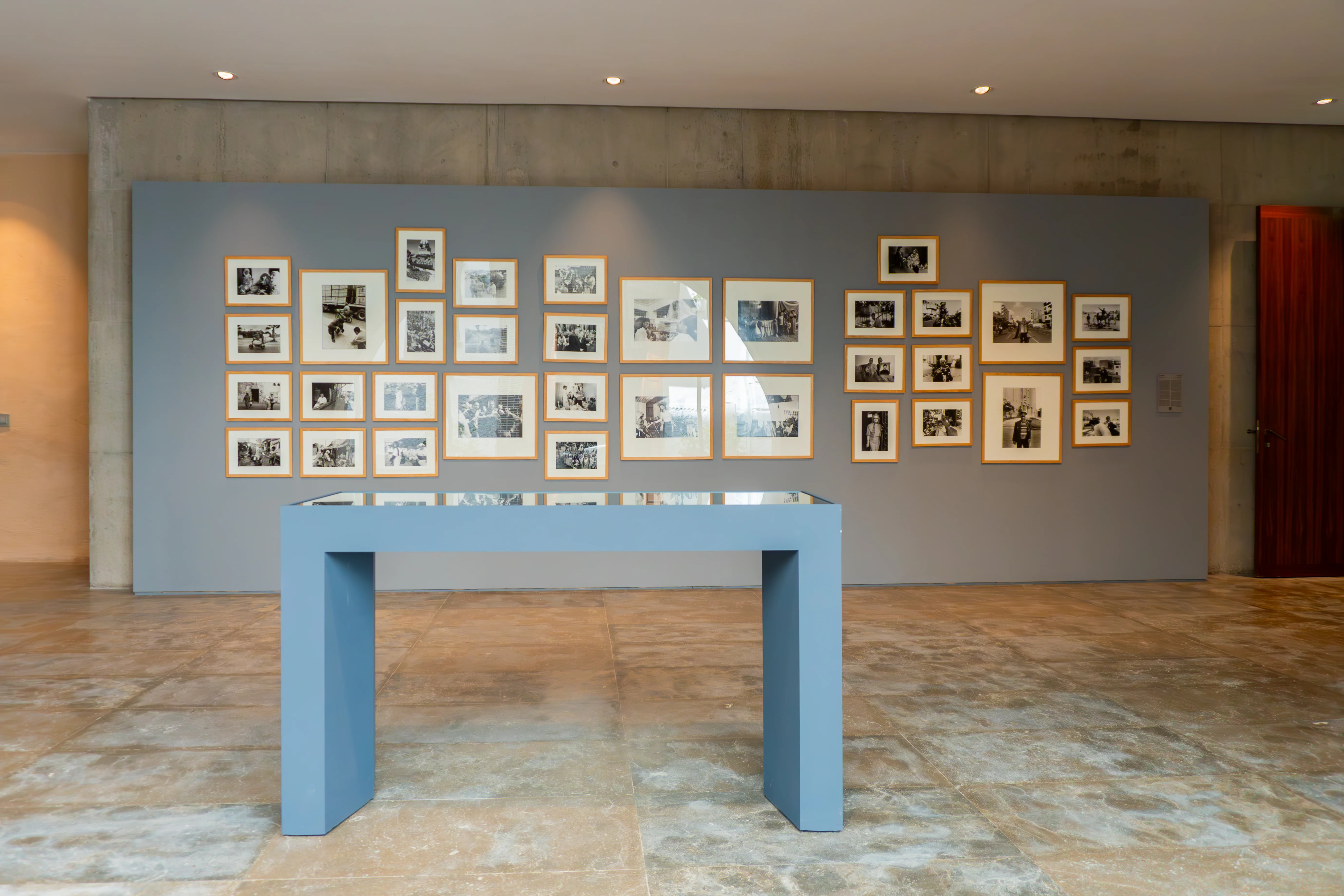
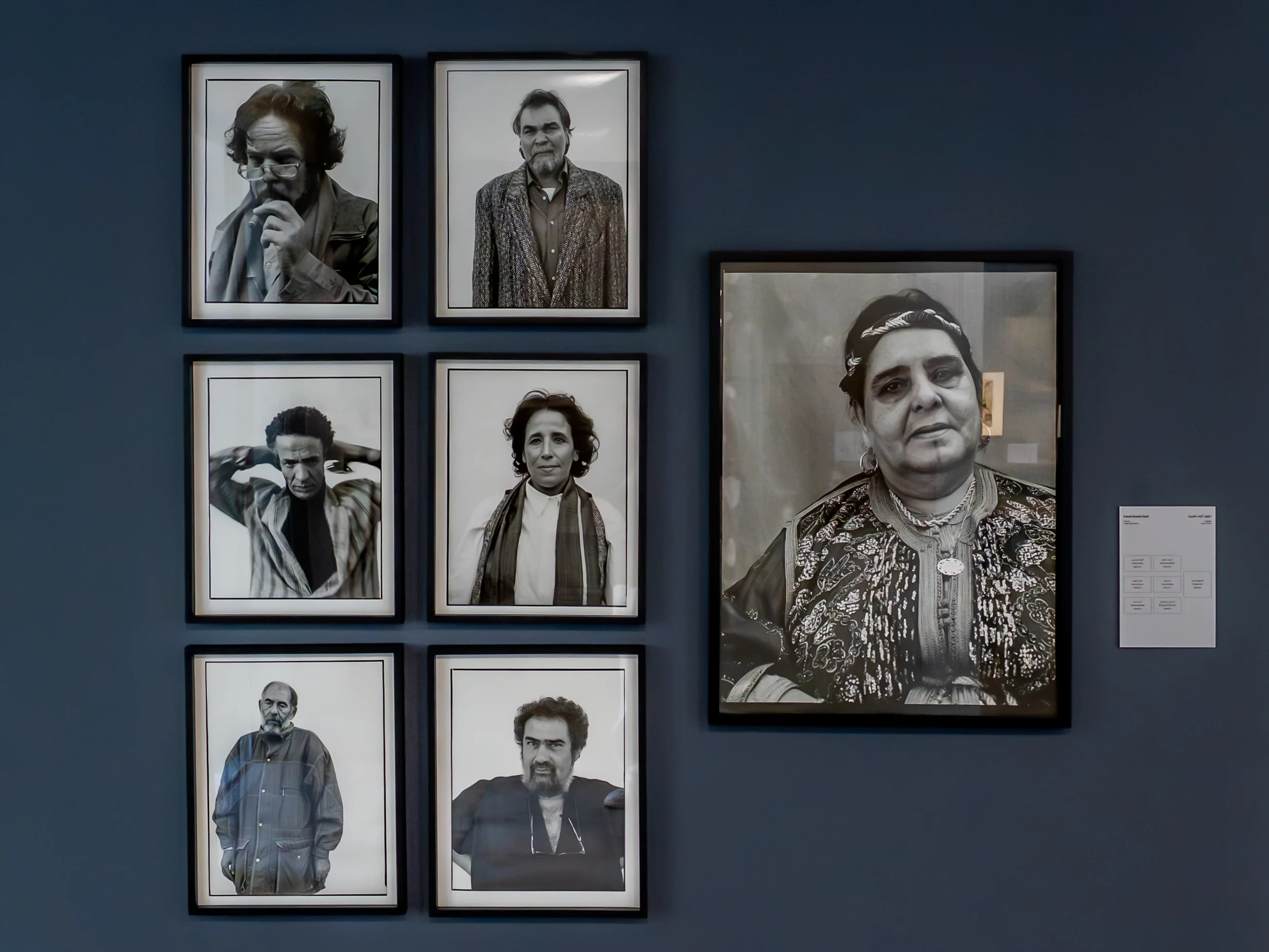
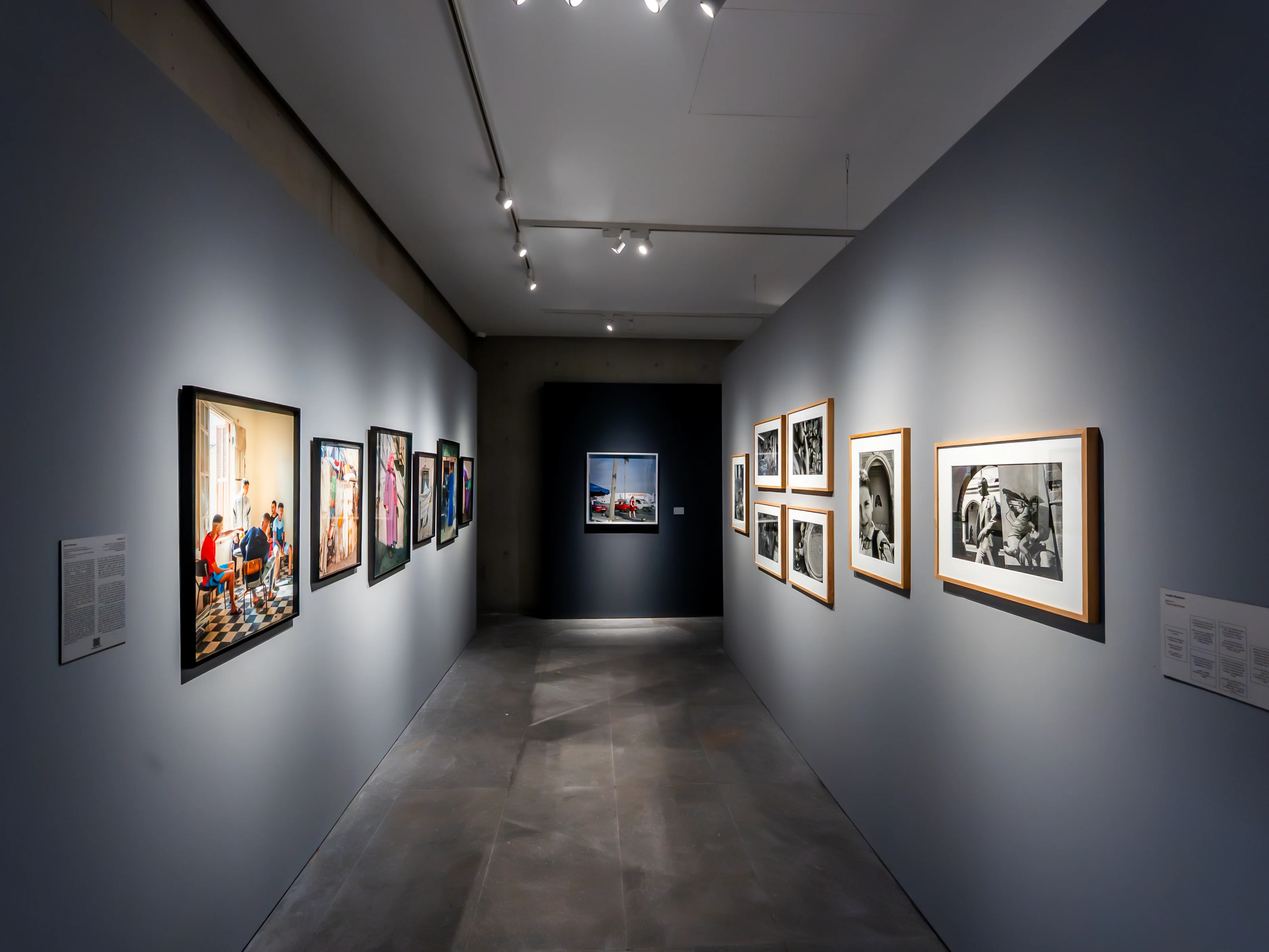
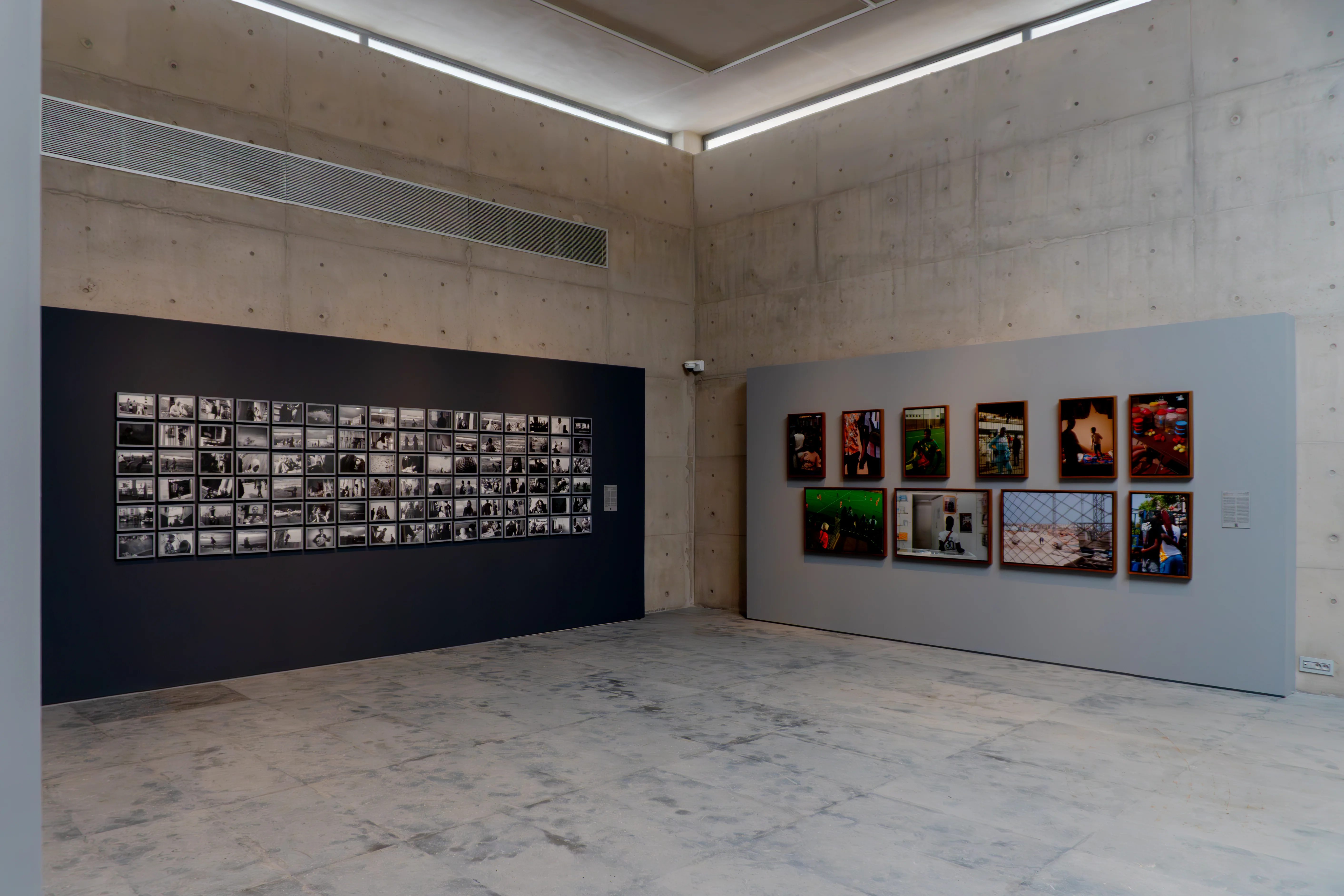
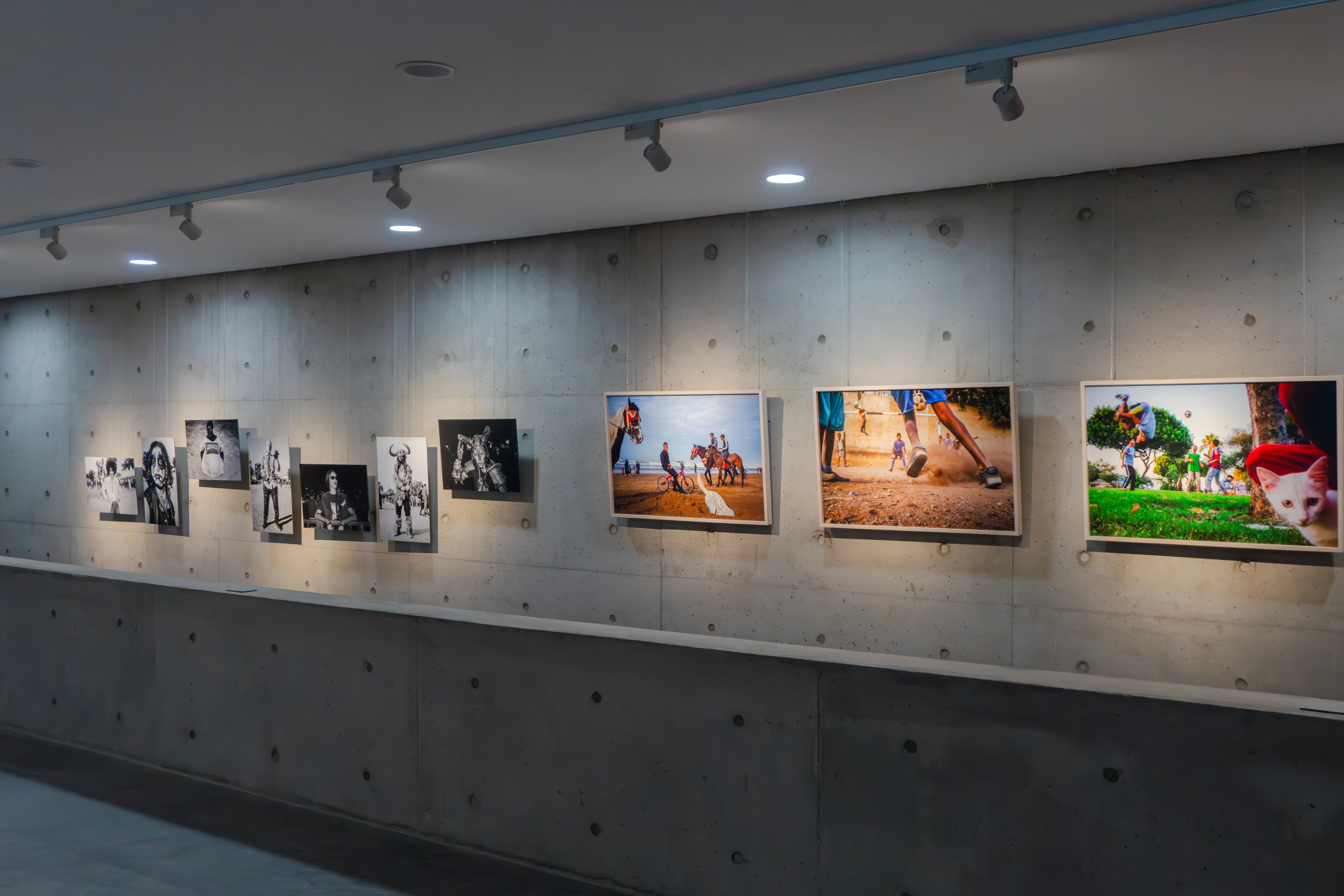
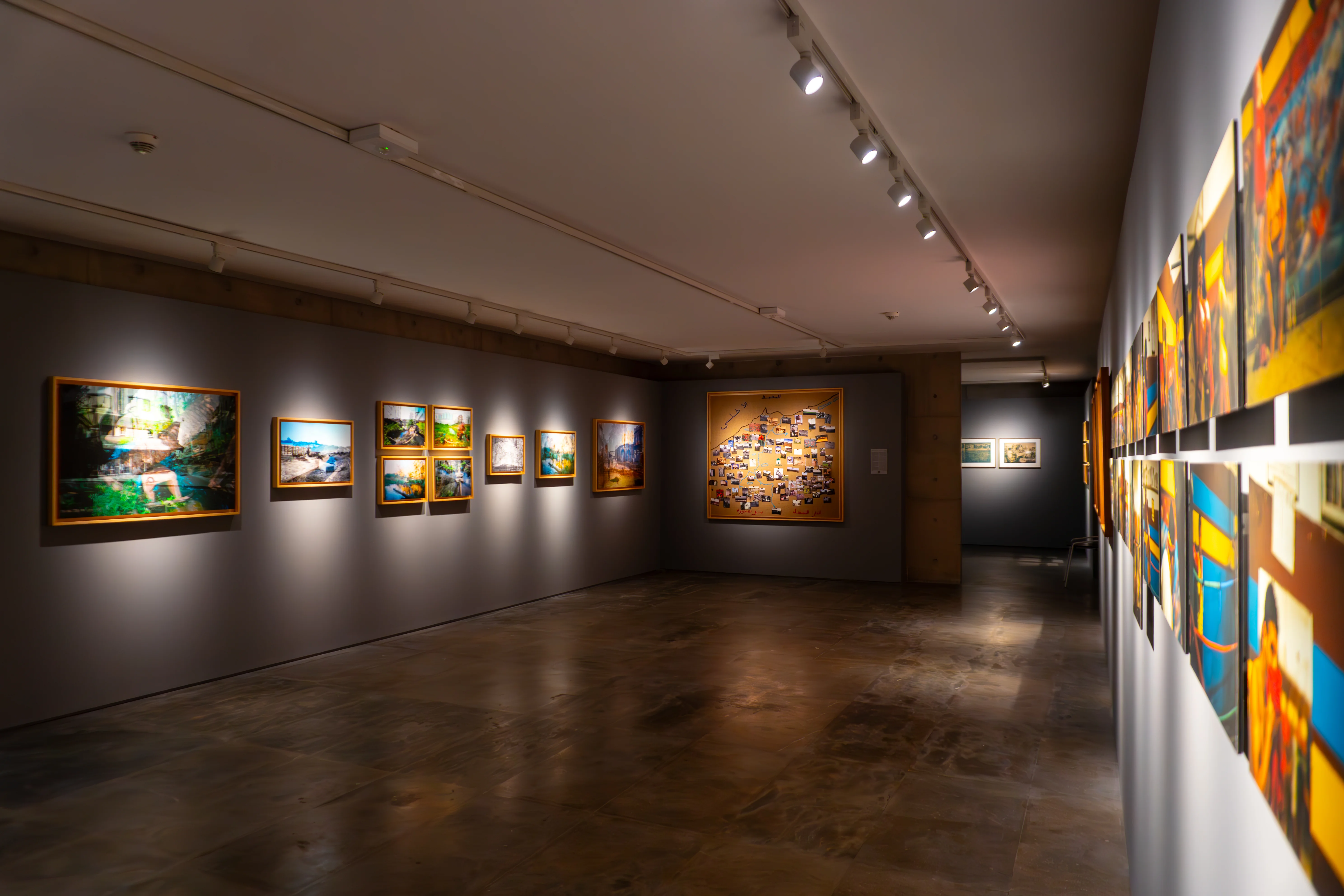
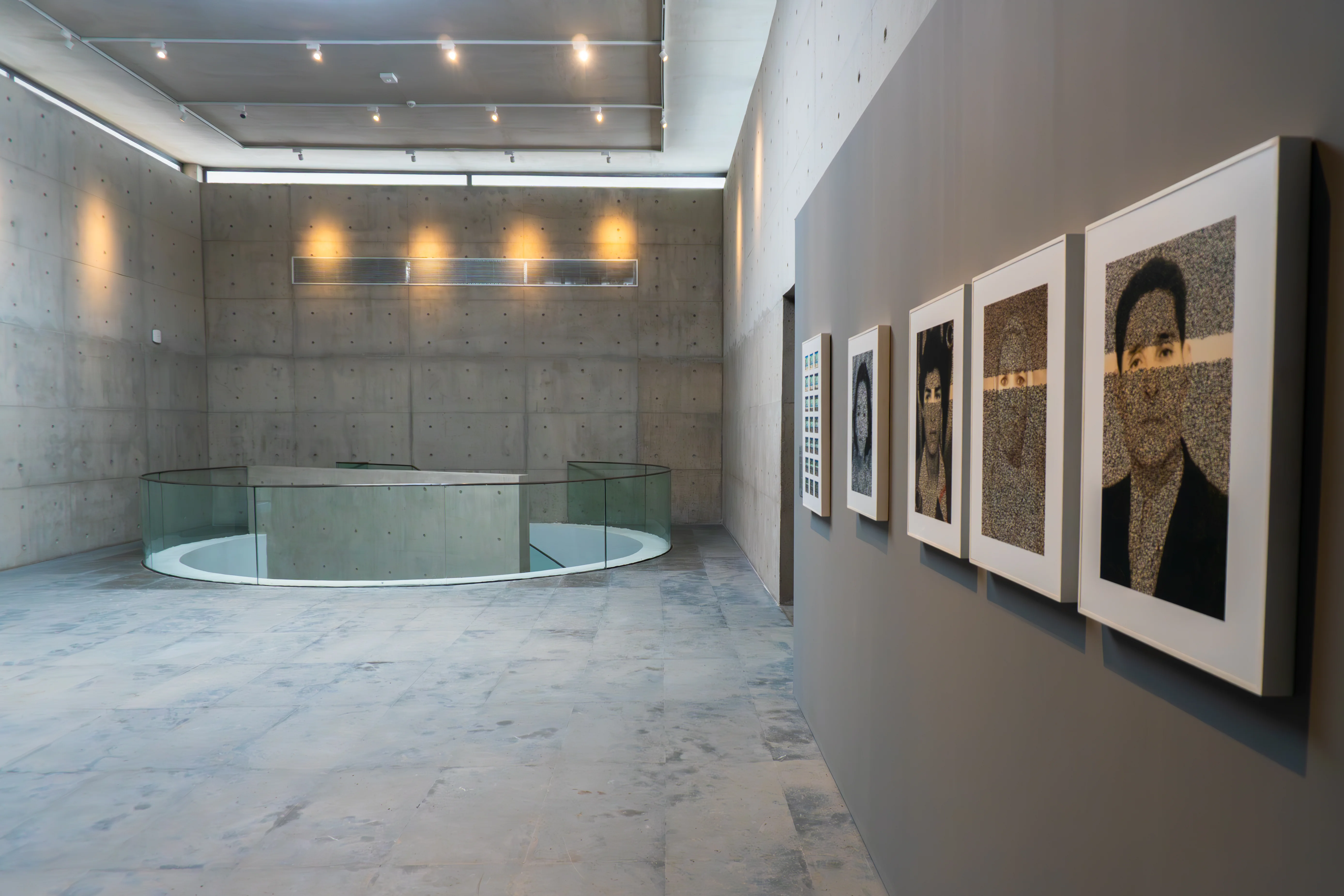
On the third floor of a museum that should not exist here, on a street called Larache where the medina folds into itself like a hand closing around something precious, the faces of Casablanca watch from walls of poured concrete. A fishmonger. A woman with kohl and a stillness that suggests she has been photographed before and does not care to be again. A boy mid-stride, his shadow longer than he is. The exhibition is called "Casa," because the city's residents have always abbreviated their own name, the way one shortens the name of someone one knows too well for formality.
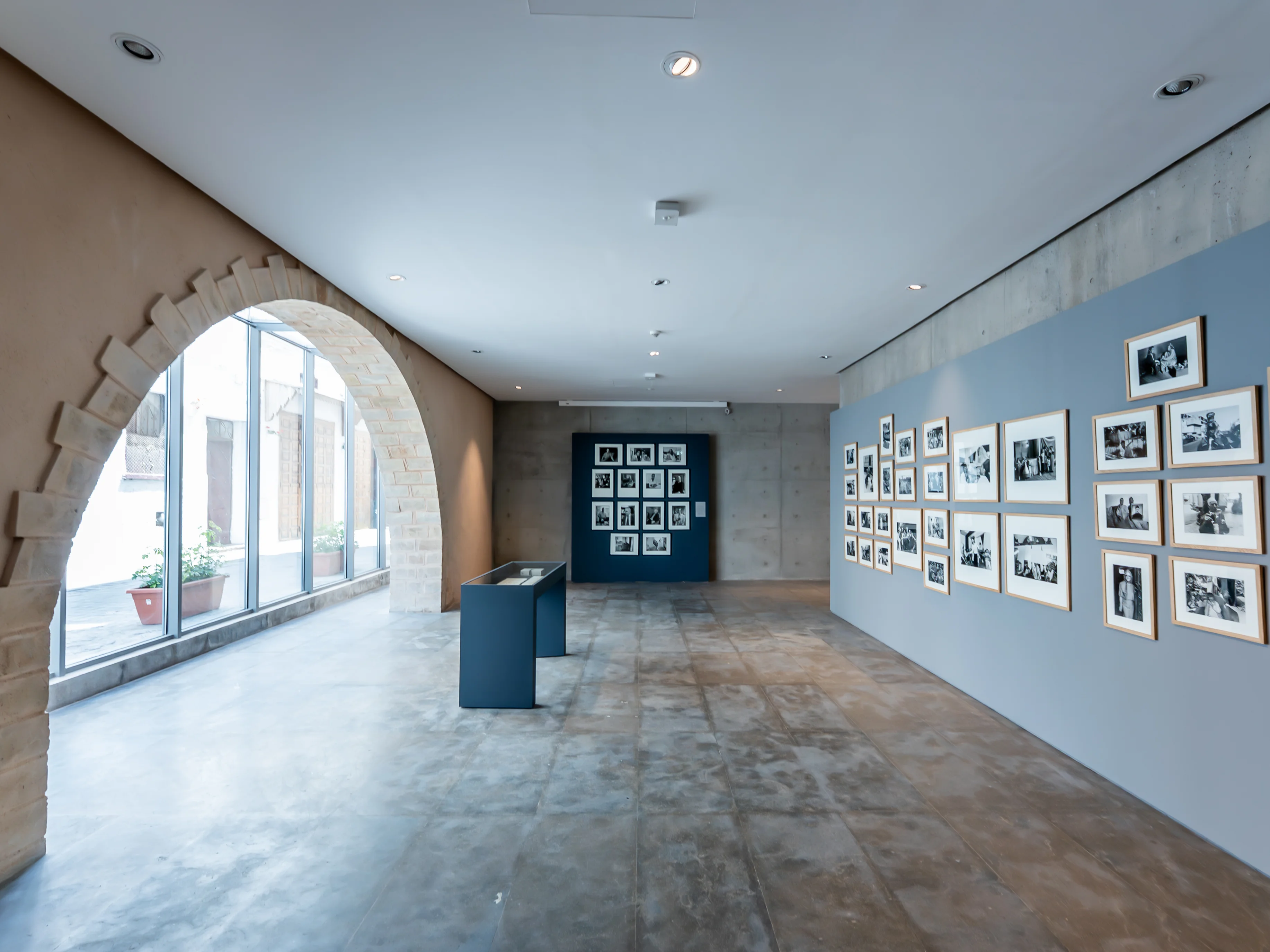
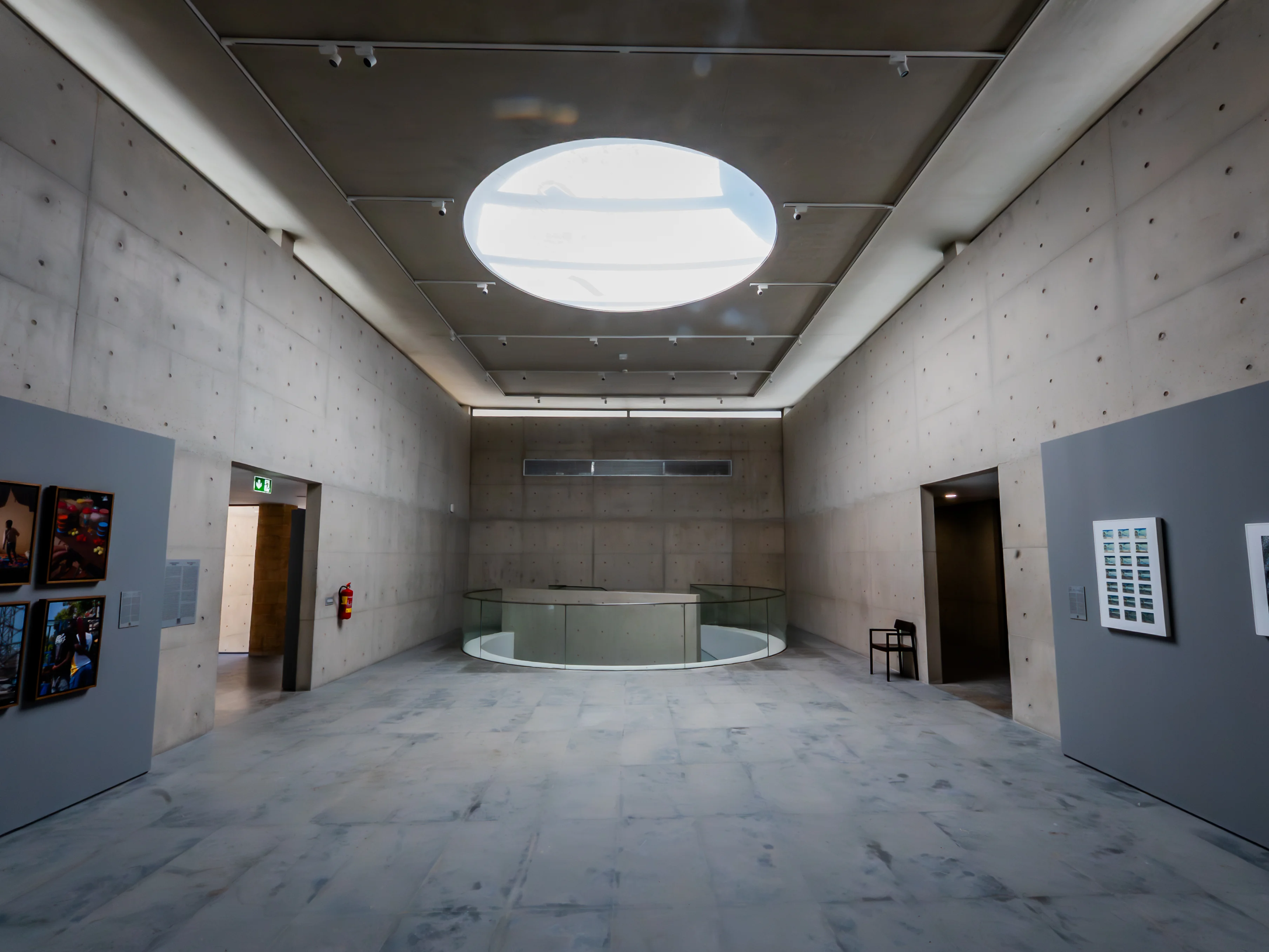
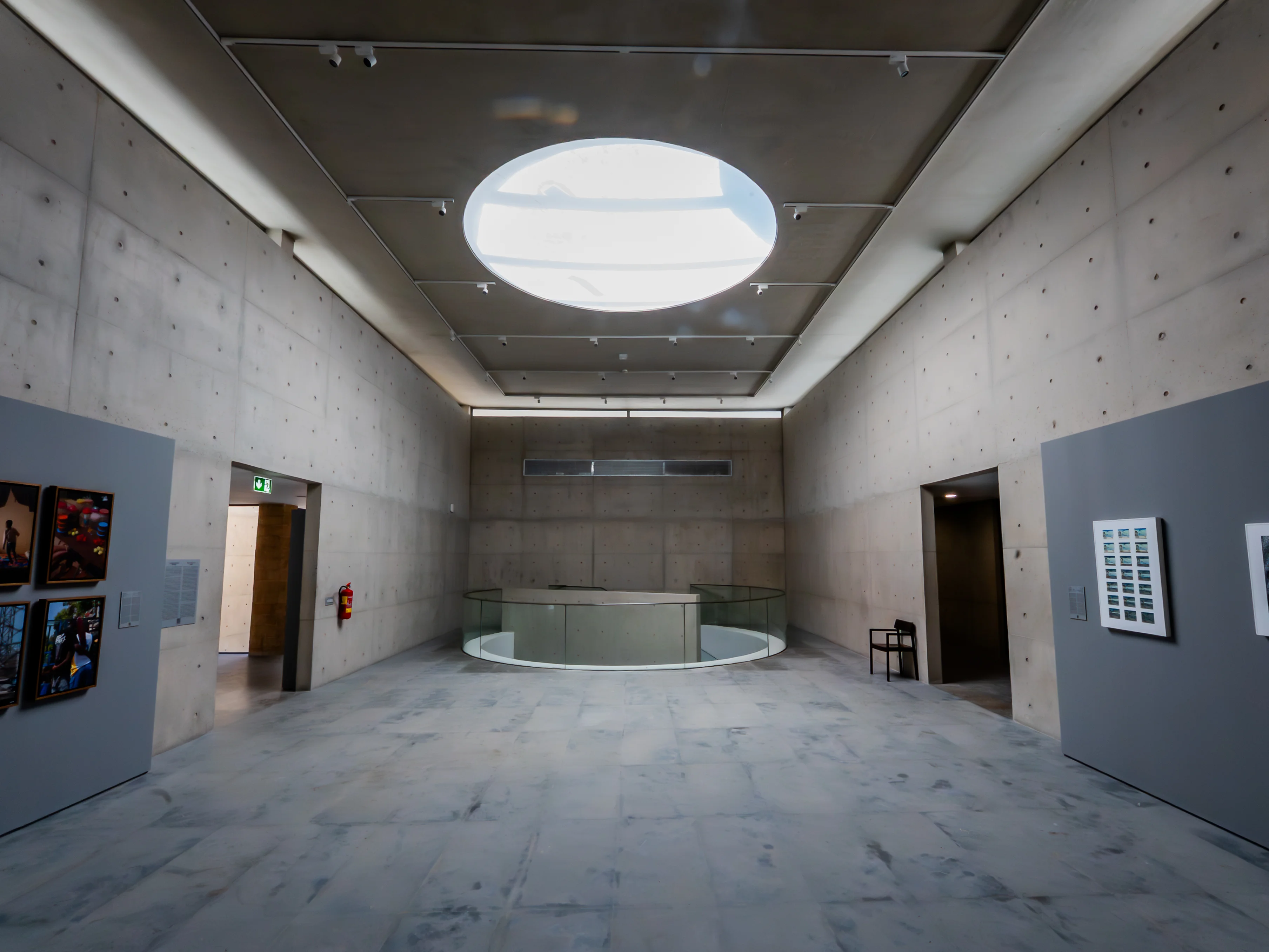
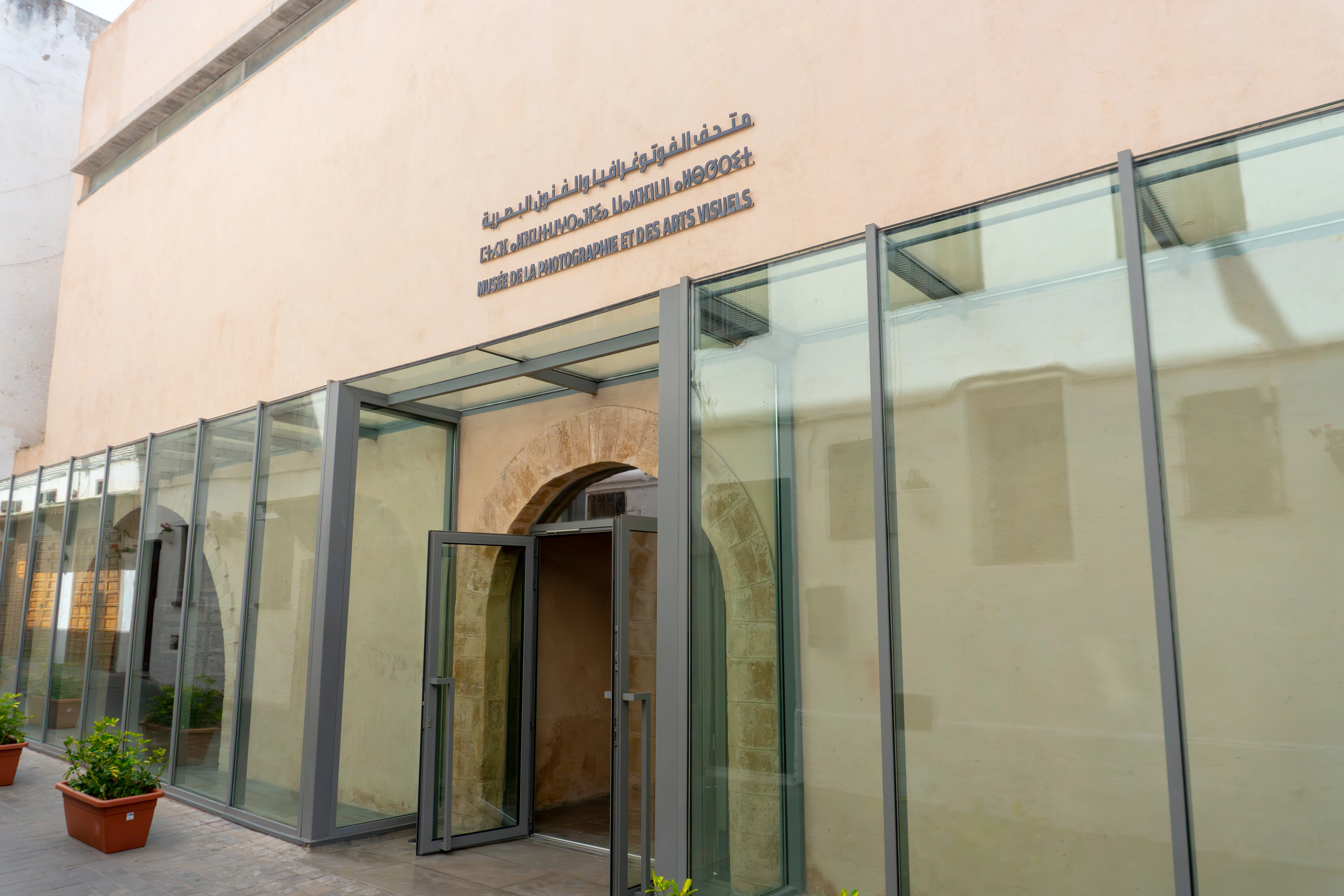
The concrete is Tadao Ando's. The site was Foundouk Lebbadi, a historic merchants' courtyard where traders once slept above their goods and negotiations happened in the shade of an interior they never owned. Ando did not reproduce the foundouk. He did not reference it with decorative arches or ornamental tilework. He placed concrete inside the wound the foundouk left and let the concrete do what concrete does in his hands: hold light the way a cupped palm holds water.
The street sound enters. This is the detail that separates the building from Ando's other museums, the clean geometries in Osaka and Fort Worth where silence is engineered into the architecture like humidity into a wine cellar. Here, the medina will not be silenced. A vendor three metres from the entrance is selling mint in bundles thick enough to fill a room with green. The call to prayer crosses the gallery at intervals the building cannot predict. Ando did not seal the building against Casablanca. He left it doors.
II. What the Walls Remember
Lahbib El Moumni drives a black Hyundai through the Art Deco district the way a surgeon reads a scan: with the focused calm of someone who knows exactly where the damage is.
.webp)
El Moumni and his colleague Imad Dahmani founded MAMMA in 2016. Mémoire des Architectes Modernes Marocains. Their mission: find, photograph, and document every modernist building in Morocco before the buildings are painted over, gutted, or simply forgotten. Of the roughly two hundred and fifty modernist structures MAMMA has documented in Casablanca alone, only a fraction carry any form of heritage protection. The rest exist at the mercy of developers, municipal indifference, and the particular Casablancan assumption that what came after the French is less worth keeping than what the French built. In early 2026, MAMMA announced plans to launch a digital archive: for the first time, the biographies of the architects, the locations of their projects, and the drawings that survived decades of neglect would be accessible in a single place.
Jean-François Zevaco left approximately one hundred and sixty-five structures across Morocco. Born in Casablanca in 1916, trained at the Beaux-Arts in Paris, he returned in 1945 and spent five decades building an architecture that belonged to neither France nor Morocco but to the specific quality of light where the two met. His market in Hay Hassani. His stadium. His own house, circular, with a movable glass roof. Concrete, in his hands, was not a material. It was a dialect.
In April 2019, the municipality painted the Mohammed V Stadium white. All of it. The brutalist surfaces Zevaco had left raw, the grain that caught the late-afternoon sun and held it like a thumbprint, were covered in a single weekend. No architect consulted. No historian. El Moumni stood outside the doors of the stadium afterward, the doors Zevaco had designed as thresholds between the street and the roar inside, and said five words.
"It has completely lost its identity. "
Not its value. Not its heritage. Its identity. As though a building, like a person, possesses one. As though paint can take it away.
"Our goal is not nostalgia," El Moumni has said, "but continuity. " Nostalgia preserves the past as amber. Continuity insists the past has something left to say.
The unfinished sentence of a country still composing its relationship to what it inherited and what it built.
III. The Balconies They Built Themselves
In 1952, the architects Georges Candilis, Shadrach Woods, and their colleagues designed a housing complex in Casablanca called the Cité des Jeunes. It was intended for young Europeans. The apartments had large openings, generous balconies, sight lines calculated to encourage what the architects described, with the confidence of their era, as a progressive lifestyle.
.webp)
Then Morocco became independent. The Europeans left. Moroccan families moved in.
And the buildings changed.
The windows shrank. Residents reduced the openings that had been designed for bodies accustomed to being looked at and replaced them with walls that understood the difference between public and private as a matter not of preference but of faith. The balconies were enclosed, becoming rooms. Low walls were raised. Patios were concealed behind concrete additions that turned inward, toward the family, away from the boulevard. The facades, once uniform in the way that modernist housing always promises uniformity, became singular. Every dwelling looked different: in colour and in the particular geometry of what had been added, what had been sealed, what had been painted the shade of blue a grandmother chose forty years ago and no one has thought to change since.
Architectural historians have called this appropriation. The word is accurate in its legal sense and wrong in every other.
What the residents of Semiramis, Nid d'abeilles, and Carrières Centrales did was not take someone else's buildings. They inhabited them. They refused the lifestyle the architecture prescribed and replaced it with one the architecture had not imagined. A balcony designed for display became a bedroom for a child who had nowhere else to sleep. A window designed to frame the ville nouvelle became a wall designed for the qibla. The architect's intention met the resident's necessity, and the resident did not blink.
This was not damage. It was dialogue, conducted in plaster and rebar and corrugated steel, between two ideas of how a body occupies space.
A study published by Open Book Publishers describes the impulse plainly. "A sense of belonging," the researchers write, "ranked one of the most important values in individual life. " The modifications were declarations, written in the specific weight of the cinder blocks a family in Hay Mohammadi carried up four flights because the elevator had not worked since 1974. In the angle of a satellite dish bolted to a facade Candilis designed to be clean. In the clotheslines strung between walls that were meant to frame the sky and now frame underwear drying in the Atlantic wind.
The paradox is precise: the buildings are now more valuable because they were changed. The original modernist designs, replicated across continents with minor variations for climate, were universal. The modified buildings are unique. They are what happens when architecture meets the people it did not expect.
The people won.
And the evidence is on every facade. Walk through Carrières Centrales today and the grid Ecochard imposed in 1953 is still legible underneath, the way a palimpsest preserves the text it overwrote. The right angles remain. The proportions remain. But every surface has been claimed. A doorway widened here. A room added there, cantilevered over the courtyard with the confidence of someone who has never heard of a building code and does not intend to. The overall effect is not chaos. It is a city that has been rewritten by its inhabitants, line by line, wall by wall, in a handwriting the original authors could not have predicted and would not have approved.
Modernism survives in Casablanca by losing control of its own intentions.
IV. A Door That Faces the Atlantic
On the Corniche, where the Atlantic arrives at Casablanca's shoulder with the bluntness of a fact, a building stands that contains zero zellige.
.webp)
In this city, that is the architectural equivalent of a Parisian refusing to wear a scarf. It is a statement made through absence, and it is the first thing a visitor notices about Villa Sahrai without knowing they have noticed it.
Christophe Pillet designed the architecture. Bold brutalist lines contrasted with softer volumes, deep overhangs that create the dialogue between light and shadow that Mediterranean modernism has always promised and rarely delivered. Inside, the spaces belong to Ali Lahlou, a Casablancan whose interiors begin with polished stone, linen, and aged wood: materials chosen for how they feel under a hand at the end of a long flight, not for how they photograph. Ceramics from a local atelier. Artworks from a gallery that represents African artists, hung at heights that suggest they were placed by someone who lives with art rather than displays it.
We do not review this place. That is not what we do.
But we observe that the entrance is a threshold, not an announcement. Pillet learned this from the modernist villas of Anfa he studied: the door as invitation. The building does not perform Casablanca. It stands in concrete and stone and glass and says: I am from here. The proof is not in what I display. The proof is in what I refuse to display.
In some rooms, the terrace is planted with night-blooming jasmine. The scent arrives after dark, when the guest is alone, when there is no one to perform for. The fragrance is not a signature. It is an accident of horticulture and a philosophy of attention: the things that matter happen when no one is watching.
V. The Language of Home
Farid Belkahia was appointed Director of the Casablanca School of Fine Arts in 1962. He spent the rest of his life answering a question that Casablanca's architects are still answering in concrete and glass and the precise angle of a window reduced by a family in Semiramis.
How can an artist remain open to the world without losing the language of home?
Heidegger wrote that building and dwelling are not separate acts. The German words share a root: bauen, to build, and wohnen, to dwell, were once the same verb. Casablanca did not need Heidegger to know this. The families in the modernist blocks were building and dwelling simultaneously, every modification a sentence in a language the original architects could not speak.
The question is not rhetorical. It is the load-bearing wall.
Step inside one of those ground-floor apartments in Semiramis and the evidence is physical. A wall where the architect left a window, painted the green of a mosque in Fès the family left three generations ago. A ceiling lowered by twenty centimetres to accommodate a mezzanine where a son studies for university entrance exams by the light of a phone. The smell of harira at four in the afternoon, seeping into plaster that was poured for someone else's kitchen.
Belonging, in the Western tradition, is a function of ownership. You buy, therefore you belong. The deed is the proof. Casablanca proposes something different. Belonging here is a function of inhabitation. You change the window, therefore you belong. You add a room where the architect left a void, therefore you belong. You place portraits of fishmongers on concrete walls inside a merchants' courtyard, therefore you belong. The proof is not in the deed. The proof is in the alteration.
This is why demolition is violence. Not because it destroys materials (materials are replaceable) but because it erases sentences. Every enclosed balcony, every raised wall, every painted doorframe is a statement of presence. To tear it down is to tell the inhabitants that their language was never a language. That their alterations were damage. That belonging requires permission from the architect who left before the building was truly finished.
VI. What Remains Open
There is a villa on Boulevard de la Résistance that has lived more lives than the city around it.
Villa Carl Ficke was built in 1913 for a German merchant by an Italian architect named Ulysse Tonci. Columns and arched windows wide enough to frame the Casablanca that was then a port town with ambitions and a Portuguese name. The villa became an internment camp during the First World War. Then a refuge for sick children. Then a school. Then nothing. Decades of nothing, while the city grew past it the way a river grows past a stone.
In February 2025, the doors opened again. The villa is now the Musée de la Mémoire de Casablanca. Salima Naji led the restoration with a discipline El Moumni would recognise: respect the original details. Do not impose. Let the building remember what it was, then ask it what it wants to become.
In the garden, contemporary sculptures by Ikram Kabbaj stand among the trees. One piece, a torso in hammered copper the colour of the earth beneath it, catches the four o'clock light and holds it differently from the stone columns beside it: warmer, less certain, alive in a way that geometry refuses to be. A German merchant's columns. A Moroccan artist's forms. The colonial past and the creative present, not reconciled (reconciliation implies a conflict that has ended) but cohabiting. Sharing the same soil.
This is what Casablanca knows that other cities are still learning. Belonging is not built from scratch. It is not designed by a single hand. It is not purchased, branded, or rendered in a single gesture of architectural intent. Belonging accumulates. It is the residue of every hand that has touched the wall: the architect who placed it, the family who moved it, the conservator who documented it, the sculptor who set her work in its shadow.
A door facing south is not an answer. It is an orientation. Toward light. Toward warmth. Toward the possibility that whoever arrives has not arrived too late.
The buildings are different. The question is the same.
Who is allowed to enter, and who is allowed to change what they find?
The answer is never written into the plan. It is left on the wall.
.webp)