I. Remembered Before Visited
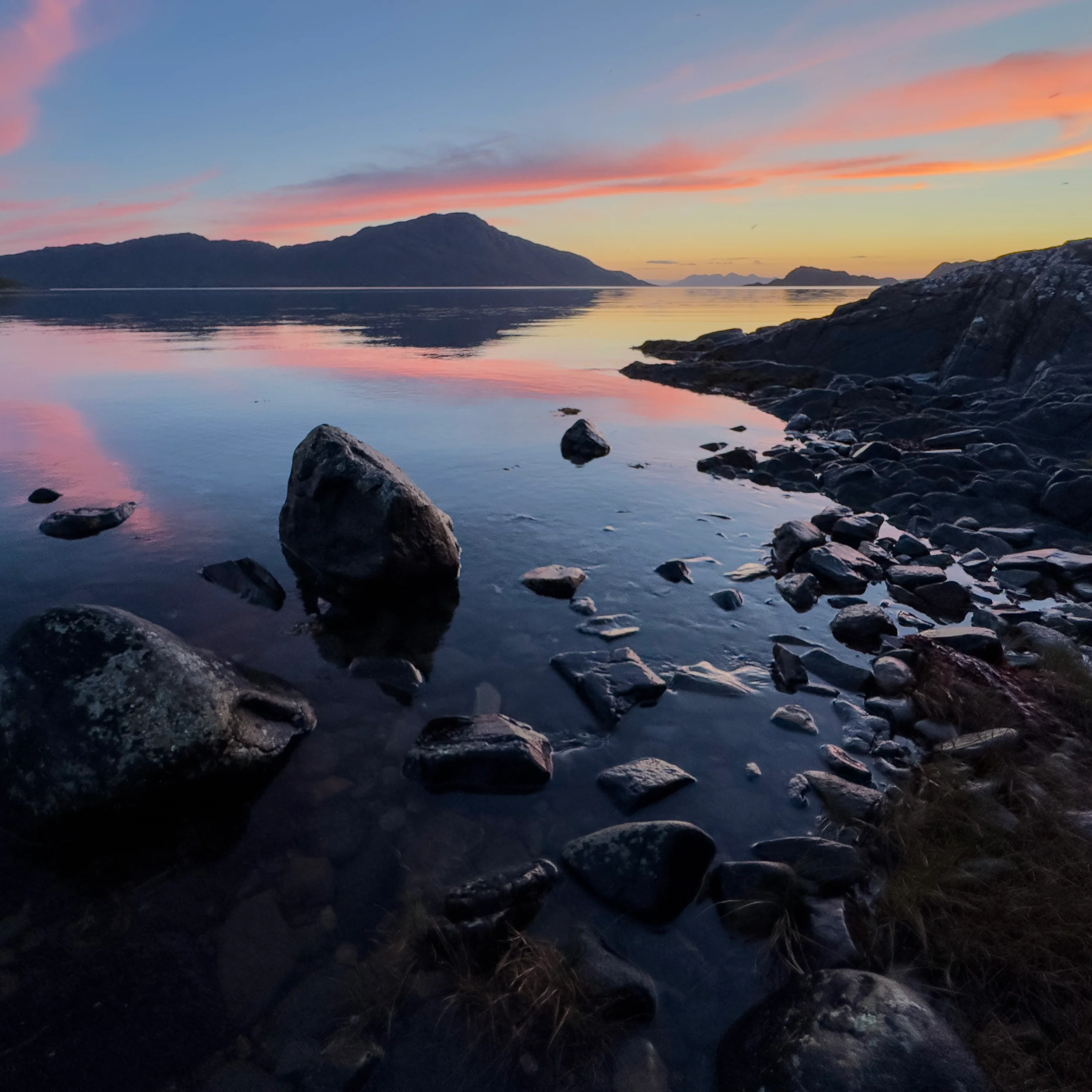
The pink reaches the water before the eye has finished following it across the sky. In a photograph supplied by Kilchoan Estate, coral lies in long strokes above a dark mountain and is laid down again, softer, on the still water beneath. Towards the horizon it warms to apricot, then to pale gold. In the gap between the hills, a farther shore lies blue-grey, too distant to name.
Nearer, the water is clear enough to show its floor. Stones lie beneath the surface as though under glass; others break through it, wet, each holding a point of light. One large stone stands in the shallows above its own dark reflection. Lichen pales the boulders on the right. In the lower corner, dry grass is the colour of rust.
There is no house in the frame, no chair turned to the view. The water looks almost tender. That tenderness is light on a surface; it says nothing about how cold the water is.
A photograph can make a place feel remembered before it has been visited. This one holds an hour that is already over and was never ours. Even so, it comes back the way memory does, without being called: the stone in the shallows, the wet edge, the line of gold.
We know the other kind of view: chosen with the room, confirmed in writing, waiting behind glass. We have been shown a great many. The light in this one keeps no appointment. Kilchoan begins here, with a colour no one can promise to show us again.
We look for a way across the stones. The eye has already crossed. The body must follow by boat.
II. Forty Minutes of Water
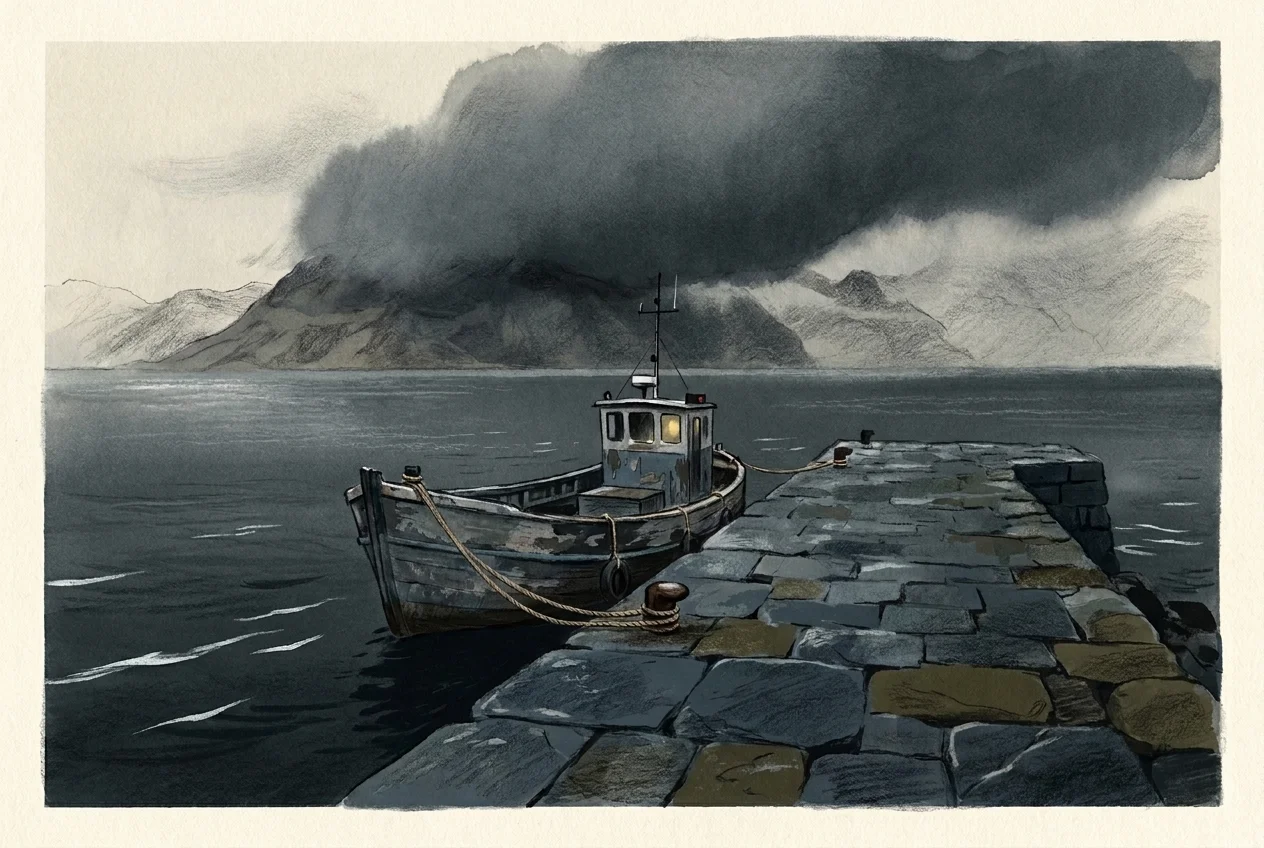
No road connects Knoydart to the rest of Scotland. The peninsula is reached by ferry, about forty minutes from Mallaig to Inverie, or on foot over two days. Where the tarmac gives out, a line of water takes its place.
On land, forty minutes vanish without notice: a call that runs long, a car kept waiting at a kerb. Here they must be spent on the water. The far shore remains in view without being available to the hand.
"We have come to believe that the journey is the first thing a place does to you," writes Christina Rossi, Managing Partner of Dunton Management Company, in written answers to Escale Privée. She has been part of Kilchoan since the very first phone call about the property. "By the time guests step off the boat at Kilchoan, the peninsula has already begun its work. "
In 2020, Rossi writes, a friend called Christoph Henkel about an estate on Knoydart. The inaccessibility was part of what drew him. For three decades, she says, he and his wife, Katrin, who own Kilchoan, have tended to notice places rather than hunt for them, and then to listen.
A great deal of luxury is spent making distance disappear. At Kilchoan, the distance was the first thing kept.
Somewhere on the far side, a welcome is being made ready. No amount of wanting will hurry the water between. For forty minutes we can see where we are expected, and cannot yet be there.
III. Books Someone Loves
"What we chose to include were the things that make a house feel like a home," Rossi says, "books someone loves, a pool table, a long table, and people who are genuinely glad you came. "
Books someone loves. Someone's affection reached the shelf before we did. We may open one or leave it where it lies; either way, it was chosen before we had any say. We are used to rooms that arrange themselves around our wishes. This one keeps a trace of somebody else's.
There are no televisions in the cottages. Rossi lists books, puzzles and board games for the days "when the weather makes the decision for you, which in Knoydart is simply part of the experience. " In the yoga room there is a large screen. It comes out "on the evenings when everyone agrees a film is exactly what's needed. "
No one is asked to perform a purer life for the sake of the house. Some evenings can belong to a film.
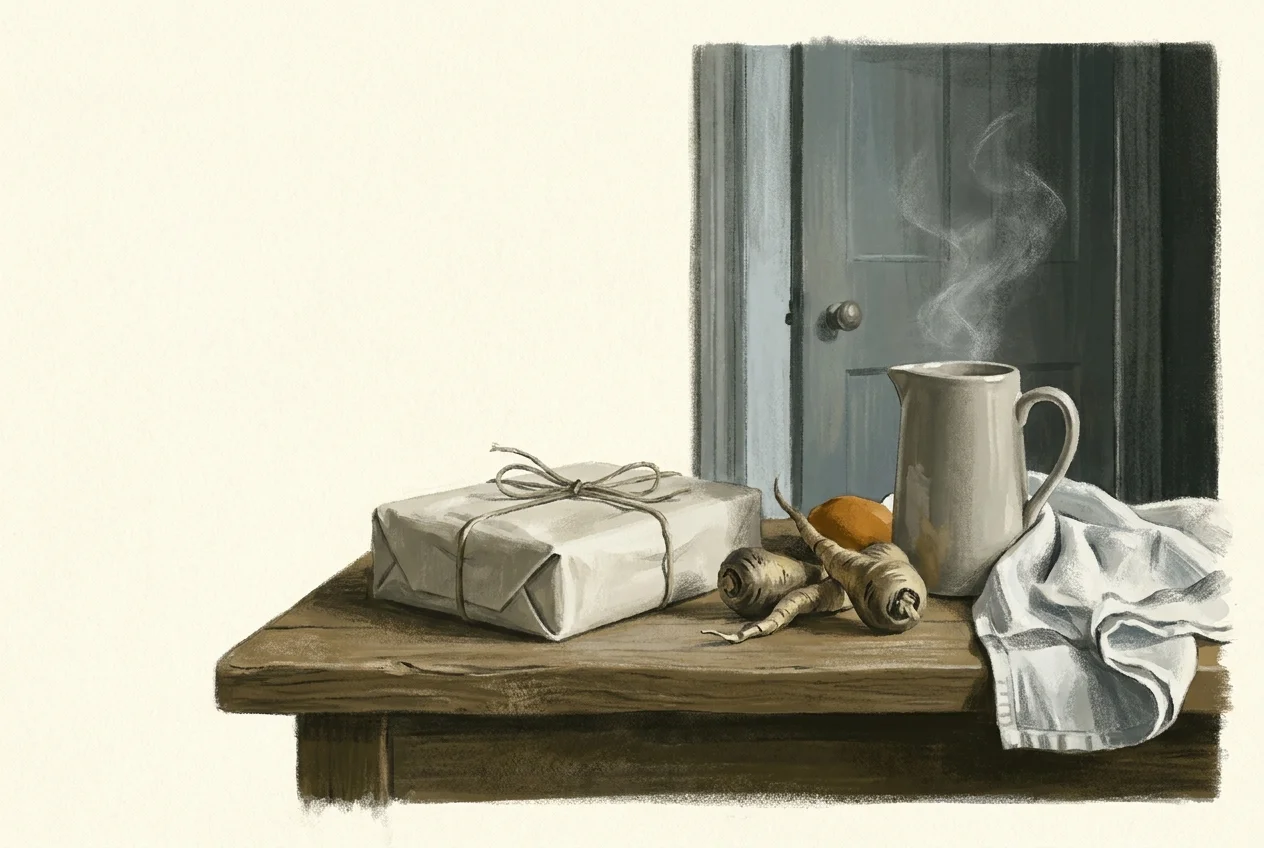
The rest of the house speaks in small services. Each morning, she writes, the kitchens are stocked with local provisions. Guests who spend long days in the hills take packed lunches with them. In the evening everyone gathers at The Long House for a shared meal by firelight.
None of this appears in the photograph. At a long table the scale contracts, from a peninsula to the reach of a voice, from a distant shore to the face across the table. The house knows we have arrived. The hills do not need to.
IV. What Not to Touch
We first approached Kilchoan with a proposition about silence: that it might be composed as precisely as a service. Rossi's answer began outside the house.
"Christoph often describes Kilchoan as a 'thundering silence,'" she writes, "and I think that phrase comes closer than anything else. The quiet there is not an absence at all. It is wind moving across the hills, water running down to the loch, and the sheer scale of a landscape with nothing man-made to interrupt it. None of that was engineered so much as protected. "
Wind, running water, scale. The still photograph begins to move, and its hush acquires grain and weight. Our question had placed the house at the centre. Her answer set it down, small, against the hills. Knoydart, she adds, was quiet long before the Henkels arrived; the work since has been not to break that quiet.
"Perhaps it is composition in the way a restorer composes, where the skill lies mostly in knowing what not to touch. "
Any serious editor knows the principle: what is left out decides what can be seen. A house can diminish a landscape without hiding any of it, simply by turning everything beyond its windows into an amenity. Restraint refuses that small theft.
According to Rossi, the existing cottages were renovated with care, and anything new was "built to belong to the land rather than stand apart from it. " She sets Kilchoan beside Dunton Hot Springs, restored log by log over seven years, and Pangolin on Mustique, whose purchase alone took years. The Henkels hold, she writes, that "you should wake up in the morning and know immediately where you are. "
For anyone who has woken in many beautiful rooms and felt them drift towards one another, that is an exacting promise. Something must enter the room that could not be delivered to any other address. In Rossi's answer it is the wind, the water, the scale. In the photograph it is the hard shore beside the soft reflection. No amount of light makes the stones less themselves.
V. The Final Word
In April 2026, Robb Report gave a starting rate of £1,100 a night for two, all-inclusive. Some of what stands behind the figure can be seen: the stocked kitchen, the packed lunch, the fire at The Long House, the people whose work makes our ease possible. The rest cannot. No road. No television. Nothing man-made to interrupt the land, and the discipline of keeping it that way. This is the price of nothing: not emptiness, but everything that has been kept from filling it.
Even so, the figure does not reach the hour in the photograph. No rate can hold that passage of coral across blue, or make it last until we have finished looking.
On a few days each year, Rossi says, a northerly wind makes the crossing impossible. For anyone with a flight to catch, there is no romance in that; a missed connection is no lighter for happening somewhere beautiful. And yet, for those whose days are built from confirmations, there may be a wish seldom said aloud: that the wind will rise, the boat will not come, and the world, for one evening, will fail to reach us.
"Guests who arrive on their own schedule gradually let it go and begin living by the land's instead," she writes, "and that surrender is where the recovery happens. "
She calls it recovery. A guest anxious about the journey home may have another word for it.
"Kilchoan is showing us how to let the weather have the final word," Rossi says. Almost everything at Kilchoan can be confirmed in advance. The final word cannot.
VI. The Near Shore
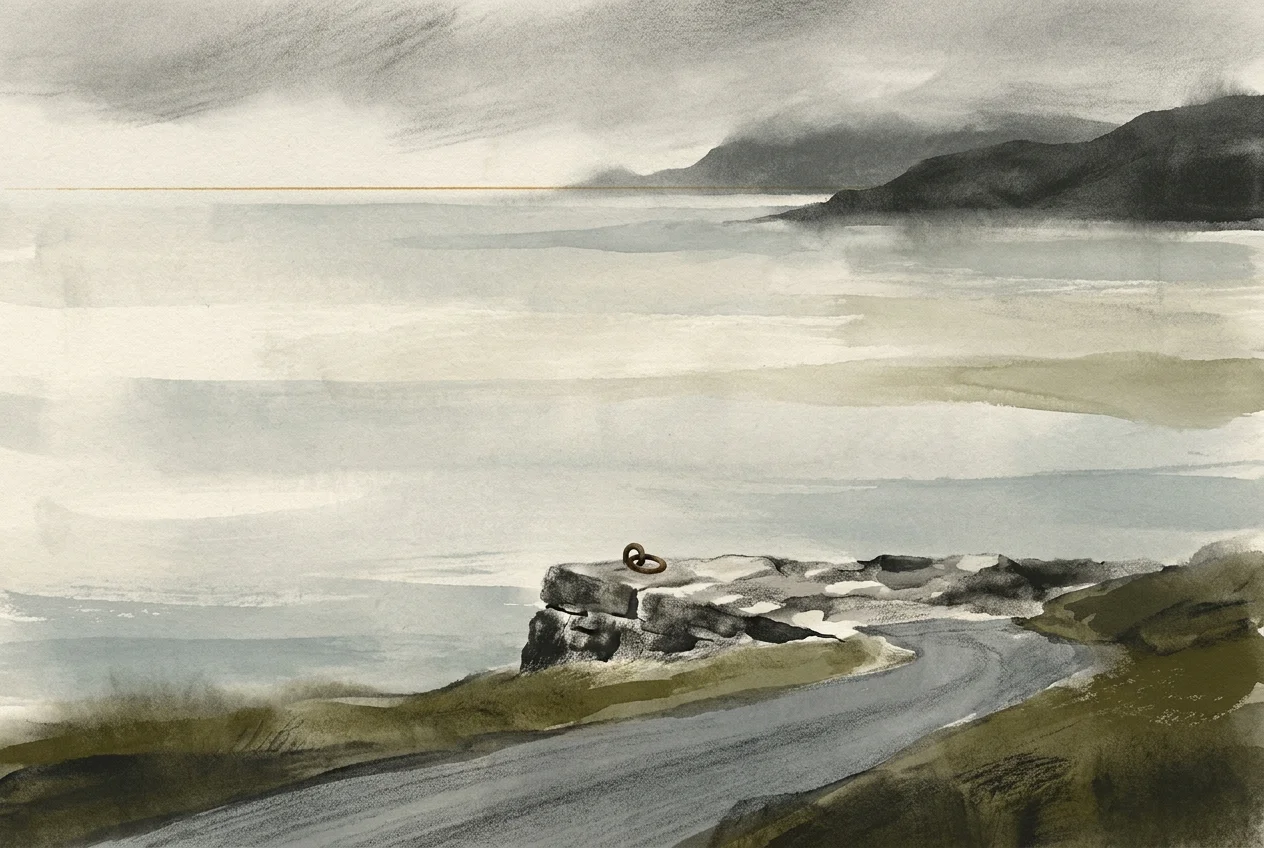
Return to the photograph. The stone still stands in the shallows above its dark reflection. Around it the sky lies on the water, coral thinning into blue. At the horizon a little gold remains. In the gap between the hills lies the paler shore that no one has named for us.
The image withholds everything a body would know: the temperature of the air, the sound just beyond the frame, the minute after. Perhaps this is how a place moves into us, through the narrow gap between seeing and reaching. An unfamiliar shore takes on the intimacy of something missed. We carry away a colour and slowly furnish it with wishes.
Most days go quickly and leave nothing behind. This hour comes back like a refrain, a little altered each time, and brings with it what we have imagined around it: a crossing, a book left open somewhere beyond the frame, someone glad that we came.
A reservation could take us to Kilchoan. It could not take us back into this light. The eye returns to the opening between the mountains and crosses again. There is no door there to close.
With thanks to Christina and Edoardo Rossi for their time and generosity.
Łukasz Ogorzałek
Editor, Escale Privée