.webp)
.webp)
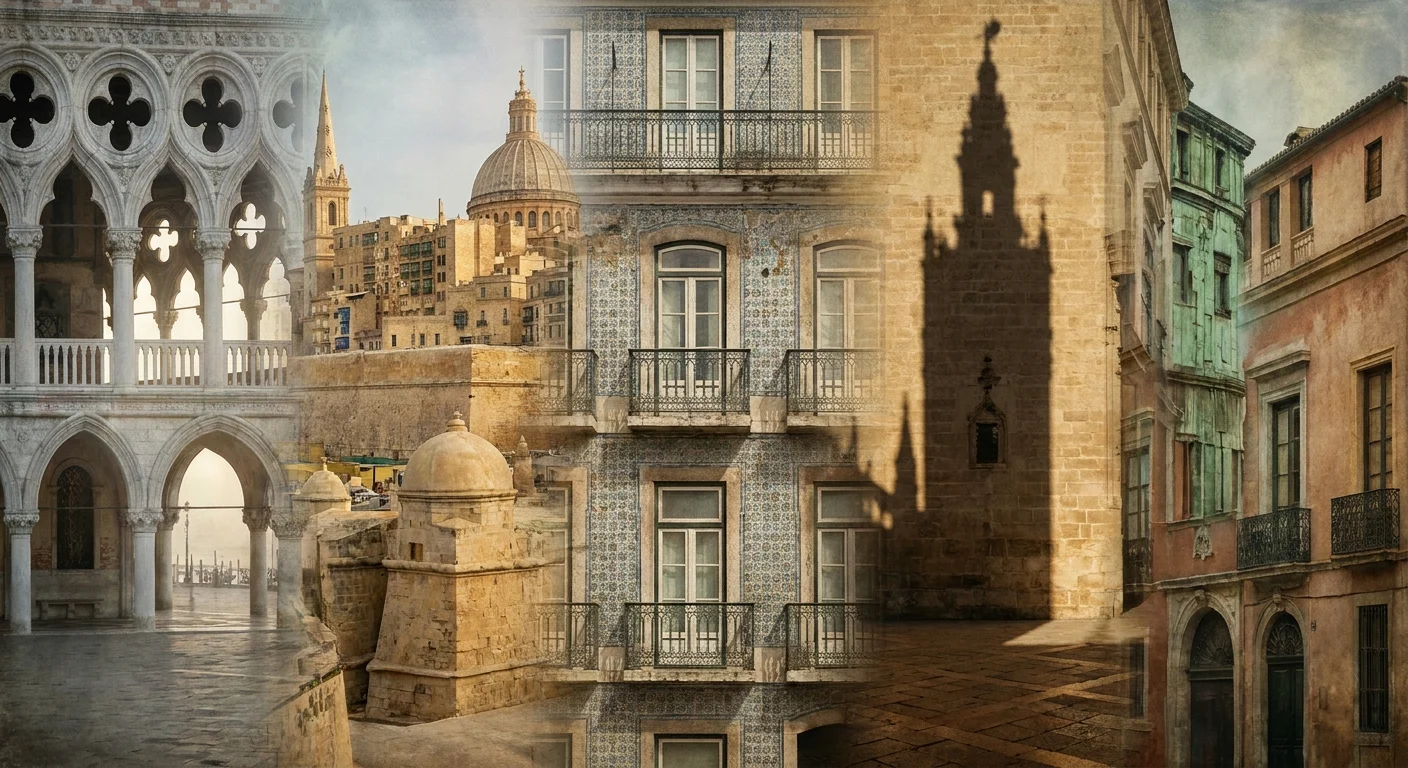
There is a new anxiety in hospitality: the fear of looking new. After a decade of hotels designed to photograph well — pale wood, rounded sofas, linen curtains, spas speaking the fluent, frictionless language of global wellness — the most valuable thing a hotel can now possess is something no designer can order and no brand book can simulate: age. Not the appearance of age. Not a patina applied by committee. Age itself. This is why the most interesting openings of summer 2026 are not really openings. They are returns. In Venice, Valletta, Lisbon and Seville, historic buildings are re-entering the conversation not as refreshed properties, but as places that must be read again. The word “renovation” feels too technical for what is at stake here. New plumbing, repaired frescoes, improved bathrooms, a spa inserted where another function once lived — all of that belongs to the mechanics. The more serious question is whether a building can be brought back without being made obedient. A palace can be restored to working order and still lose its nerve. The rarest version is different. A building returns not simply with cleaner stone and better service, but with its intelligence intact. It remembers how to receive. It remembers how to withhold. It remembers that not everything old needs to be explained, translated or softened into comfort. That is the threshold these four addresses now approach.
Venice — The Palazzo Returns to Itself
Morning comes to the Riva degli Schiavoni as a silver disturbance. The lagoon lifts its light slowly, first onto the water, then onto the stone, then into the windows of a building that has spent centuries watching arrivals. Gondolas pass. Vaporetti breathe. Somewhere behind the façade, a staircase waits for footsteps it has not heard in years. Hotel Danieli has always belonged to this choreography. Built as Palazzo Dandolo in the 15th century, it became a hotel in 1822, and over the following two centuries gathered the kind of biography most addresses can only imitate: Charles Dickens slept here, Coco Chanel lingered, generations of actors, diplomats, aristocrats and travellers moved through its halls as if entering a second Venice — more theatrical, more private, more conscious of its own reflection. On 26 August 2026, after more than three years of closure and restoration, it reopens as Danieli, A Four Seasons Hotel, Venice.
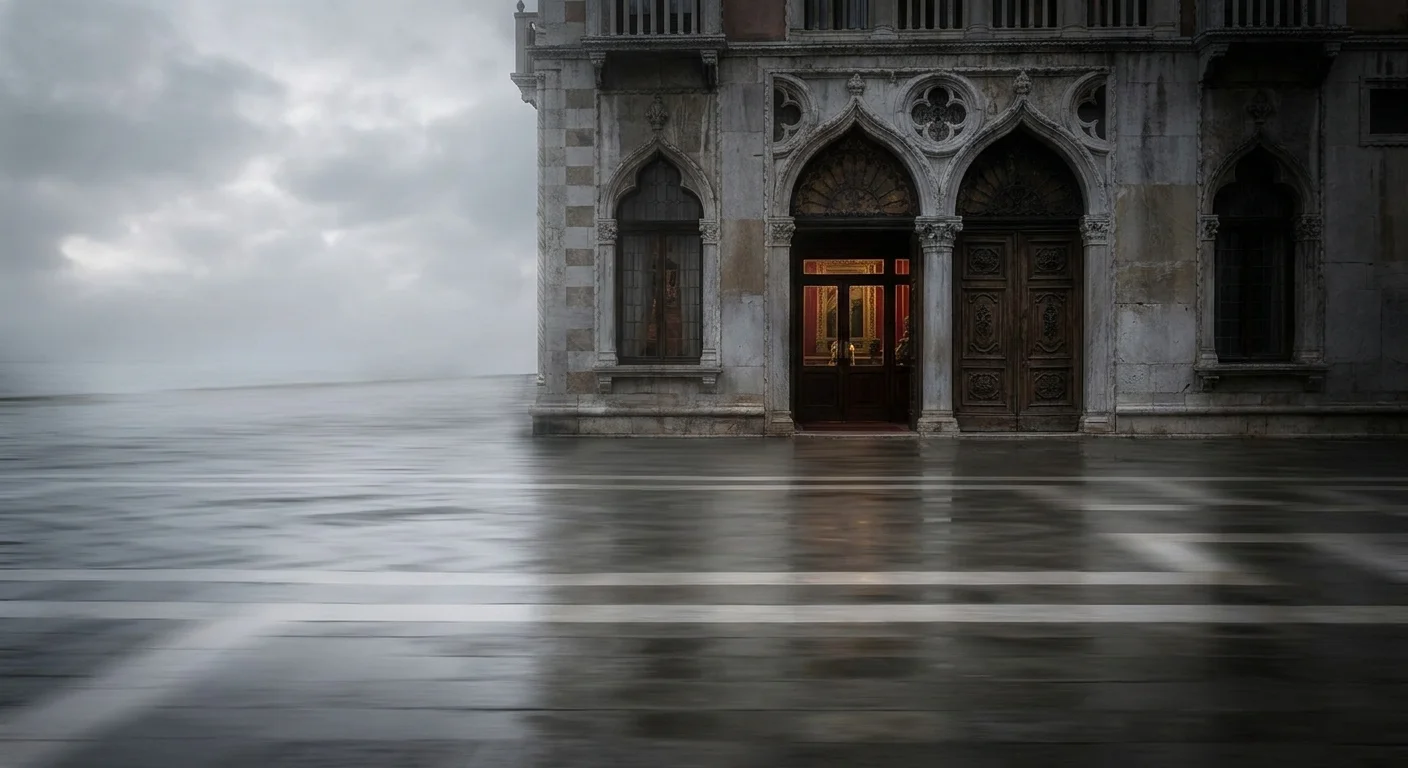
The risk with Danieli is not neglect. It is overcorrection. Too much polish, and the building becomes a replica of itself. Too much reverence, and it becomes a museum with room service. The restoration therefore matters less as a design exercise than as a test of restraint. Pierre-Yves Rochon, whose better historic interiors clarify rather than impose, appears to understand the essential point: Danieli does not need a new identity. It needs its old one returned with cleaner light. The gilded atrium remains the emotional centre. Not because it is grand — Venice has never lacked grandeur — but because it operates as a memory chamber. Marble, arches, red and gold, the vertical drama of arrival: these are not decorative signals. They are proof of continuity. The lagoon-facing terraces, the Doge Dandolo Suite, the ceremonial rooms and corridors carry the same burden. They must feel restored, not corrected. Four Seasons brings operational precision, and that precision will matter. A palace cannot survive on atmosphere alone. But Danieli’s success will depend on whether that precision knows when to disappear. The building already has a voice. The finest stewardship will lower the volume around it. For a demanding guest, the question is not whether to stay there. It is where, exactly, to stay. Which rooms still belong emotionally to the old palazzo? Which views justify the premium? How much of the experience remains Danieli, and how much becomes the international fluency of Four Seasons? In a hotel like this, the wrong room can turn a legend into an expensive address. What is exceptional: the density of myth, location and architectural memory held in one place. What is not exceptional: Venice is not short of icons. Other hotels here possess water, ritual, history and names in the guest book. Danieli’s name is powerful, but power in Venice is never uncontested. The reopening must earn its position again. Danieli is not returning to Venice. It never left. It is simply opening its eyes again.
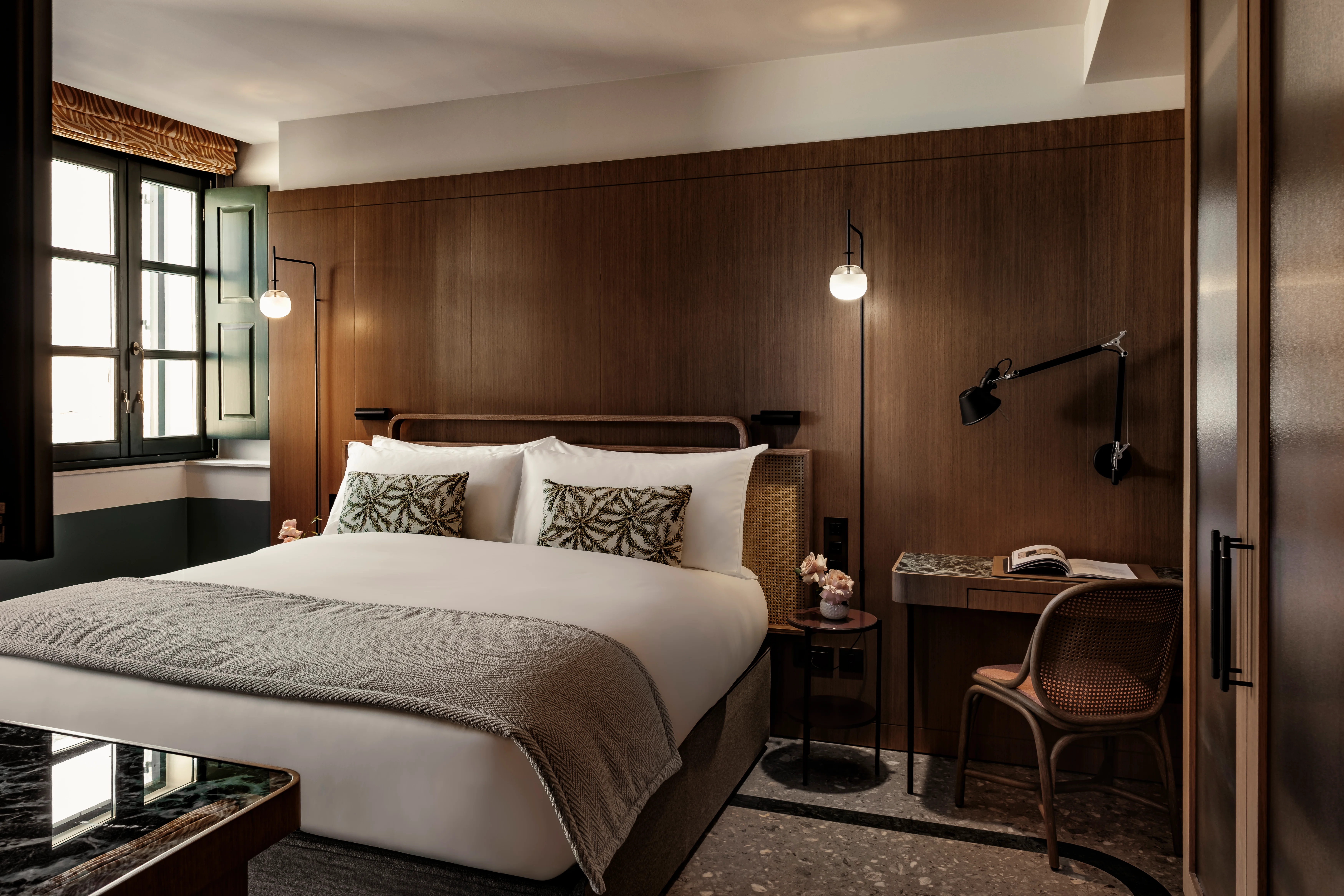
Valletta — Twenty-Two Rooms and Five Centuries Valletta does not reveal itself in a straight line.
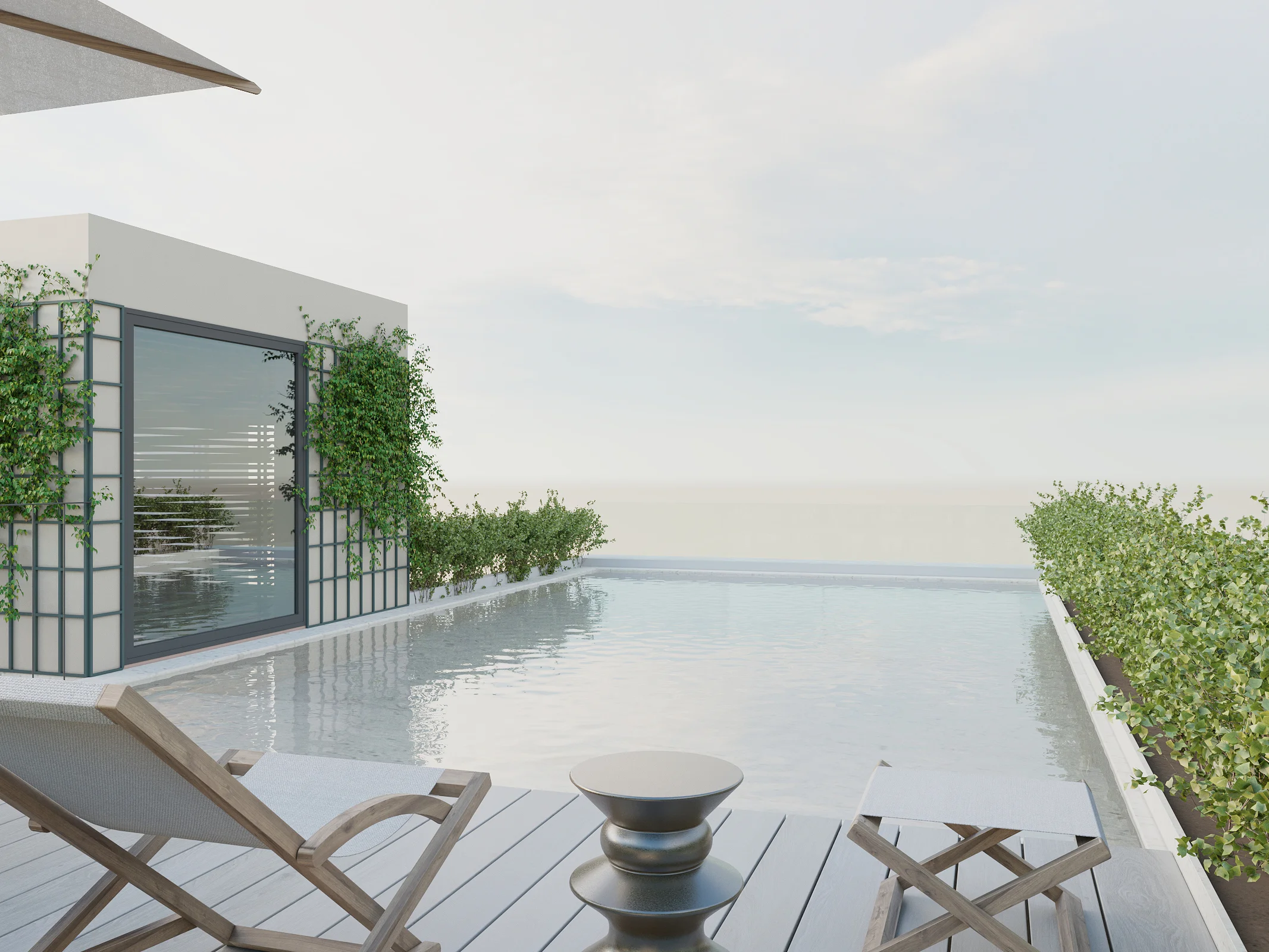
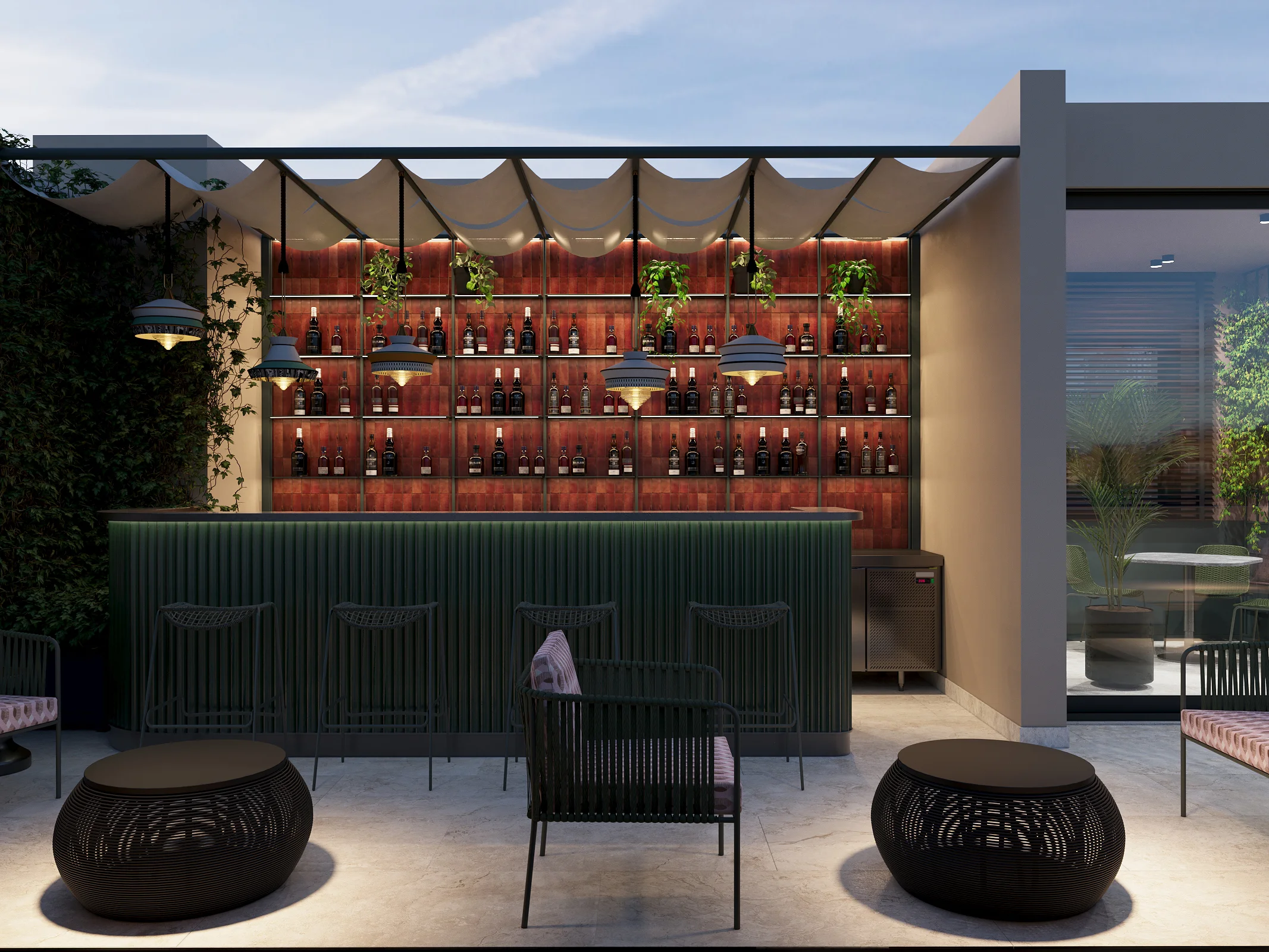
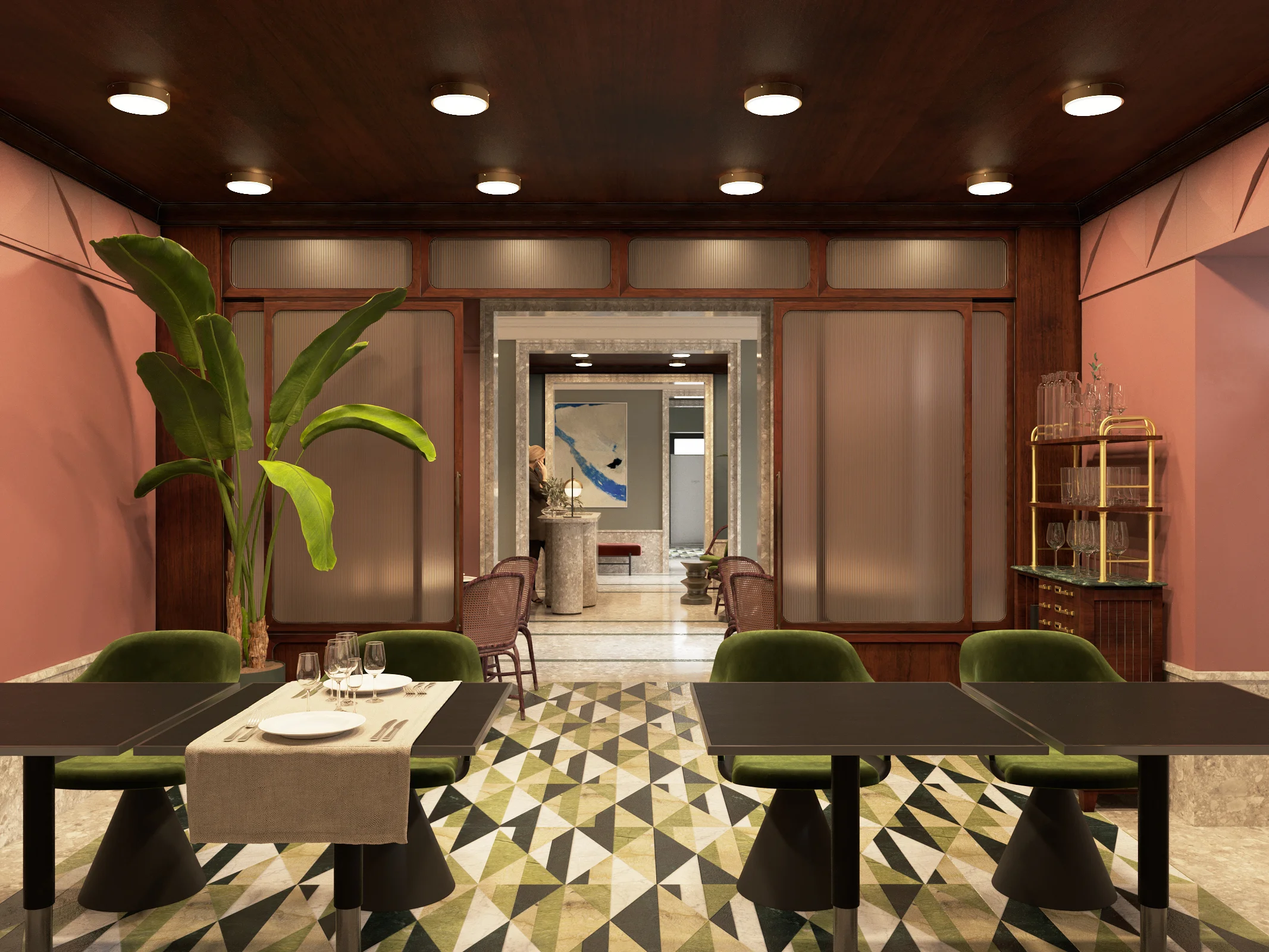
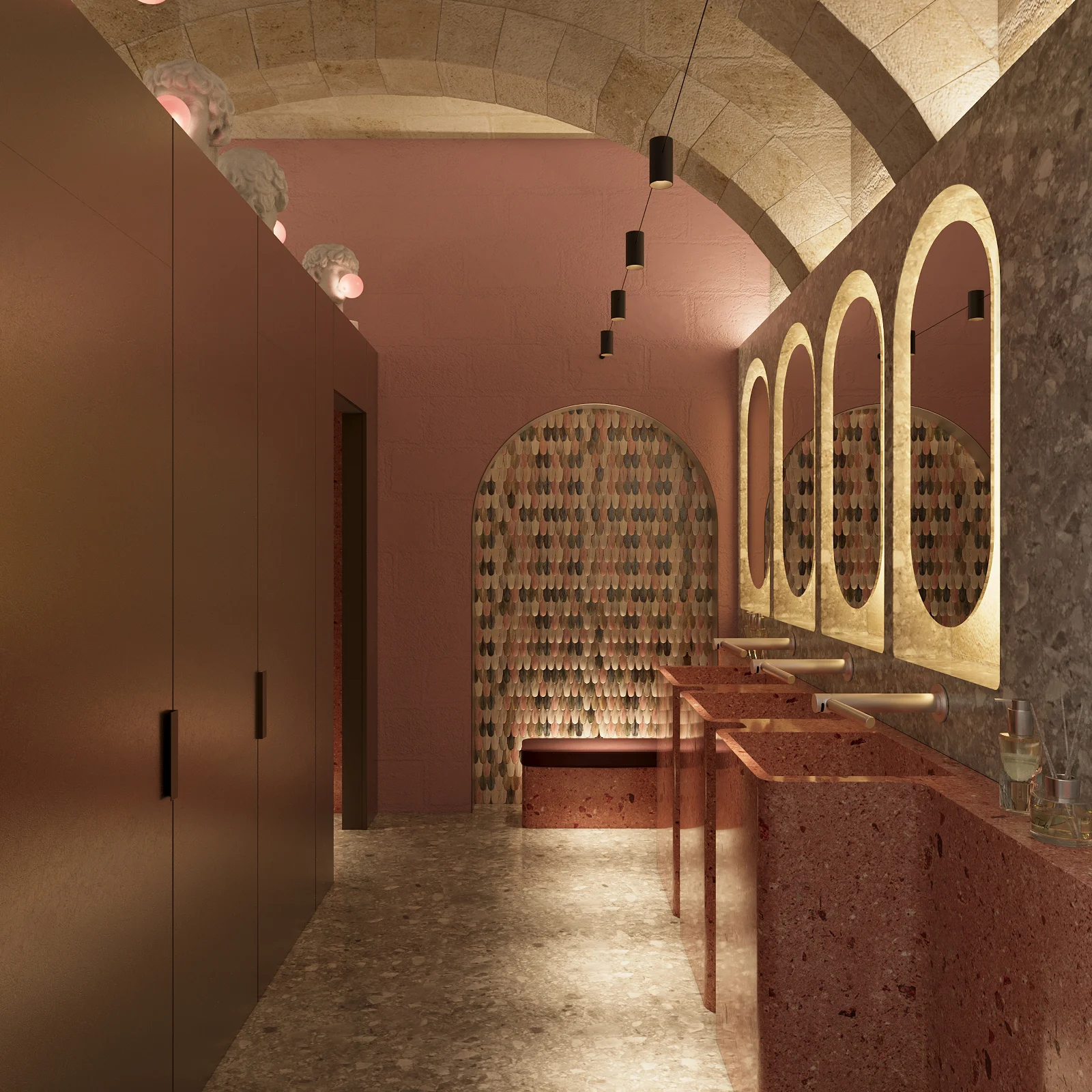
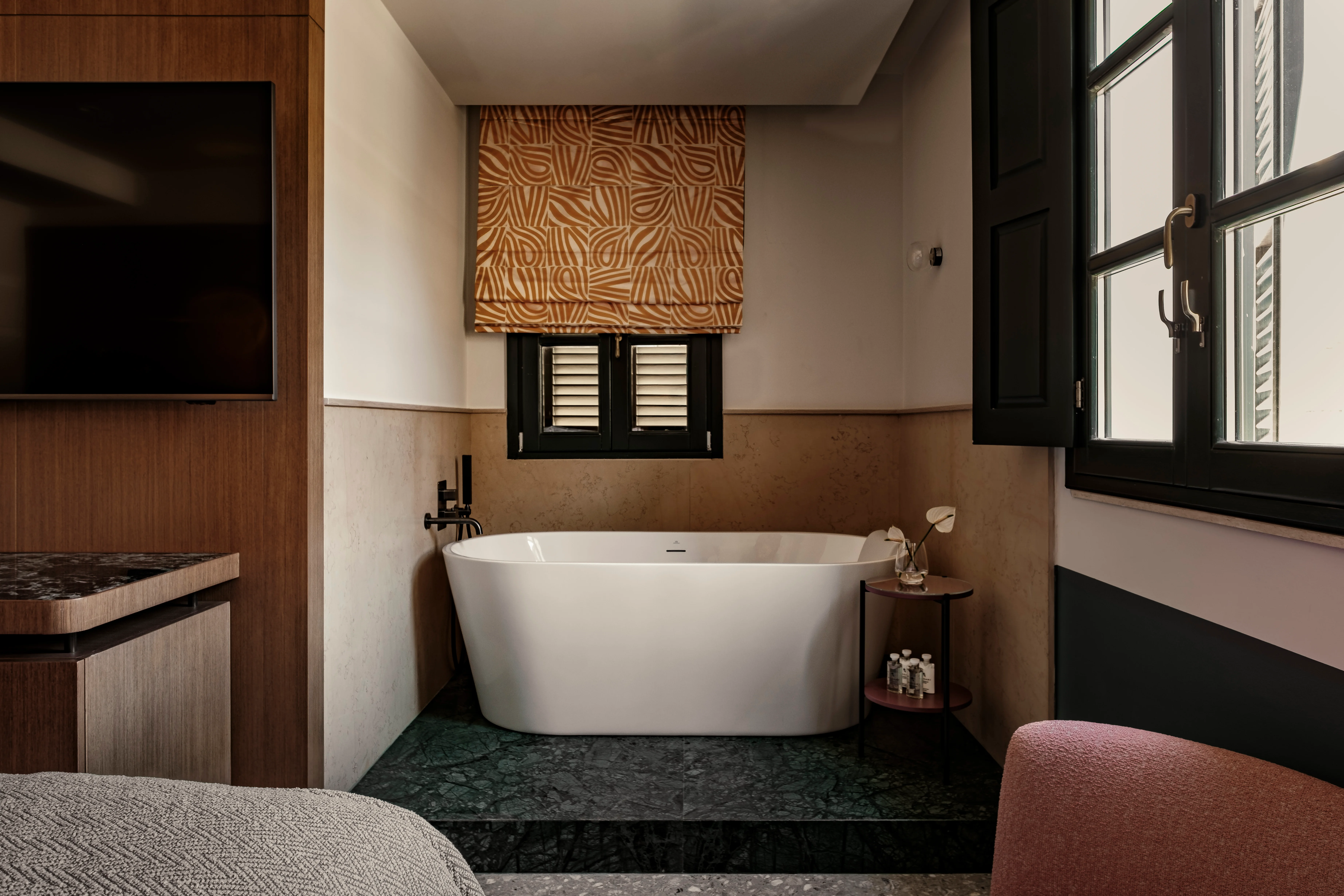
It turns, narrows, drops toward the sea, then rises again into limestone heat. Balconies lean over streets the colour of old honey. Church bells travel differently here, as if the stone itself carries sound. In this city, a hotel with twenty-two rooms and suites can feel larger than a resort, because it enters the imagination through density rather than scale. Romegas Hotel takes its name from the Grand Master of Malta. That reference matters. It gives the building not a theme, but a lineage: crusading orders, maritime routes, Catholic ceremony, Mediterranean collision. Valletta is not one influence softened into prettiness. It is an archive of arrivals. The hotel’s smallness is its strongest argument. Twenty-two rooms and suites is not a constraint; it is a position. It suggests that not every historic building should be stretched until it resembles a commercial concept. Some places ask to remain particular. Some staircases should not be widened. Some silences should not be converted into amenities. Interiors by Camilleri Paris Mode are central to that reading. Traditional terrazzo floors, wood panelling and hand-carved stone could easily become costume. The more interesting possibility is that they remain close to their source: not “Mediterranean style” as a mood board, but Maltese craft as lived material. The distinction is everything. Heritage performed for guests feels theatrical. Heritage handled by people who know its weight can feel almost domestic. The rooftop pool gives the building its one cinematic gesture. From above, Valletta’s rooftops fall toward the bay and Manoel Island. The view is not soft. It has edges: bastions, domes, ships, heat, military geometry, sea glare. A guest does not look out onto “the Mediterranean” in the abstract, but onto a city shaped by defence and desire. For a high-net-worth guest, Romegas raises practical questions. Is this a hotel for two nights or five? Is the rooftop peaceful or performative? Are the best rooms meaningfully different from the rest? Does the restaurant carry the house for the whole stay? And most importantly: does the staff understand privacy? What is exceptional: concentration. A palazzo, a city, a local material language, a small scale, an address that could not simply be moved to another capital. What is not exceptional: the restored-palazzo story is now common in European hospitality. Romegas becomes interesting only if the Maltese specificity remains stronger than the generic vocabulary of the boutique hotel. This may be the most compelling address in the group. Not because it is the most famous. Because it is not. It asks for a traveller who still knows how to follow a name into a side street.
Lisbon — Two Palaces, One Address
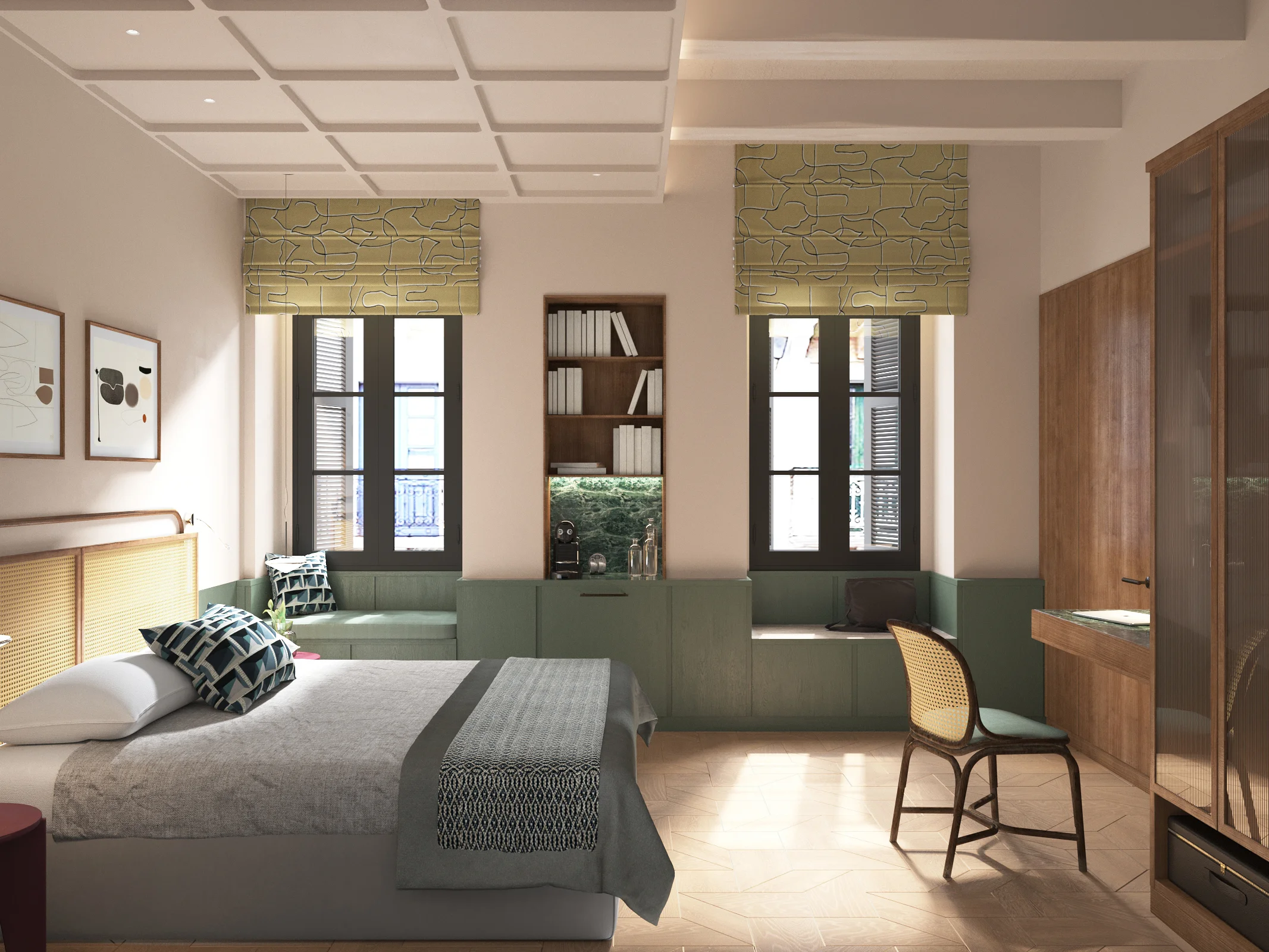
Lisbon is a city of surfaces that remember touch. Azulejos, brass railings, worn thresholds, laundry moving in upper windows, the pale vibration of afternoon light on façades that seem to have absorbed salt from the air. Near the Elevador do Lavra, where the city begins one of its familiar climbs, Six Senses Lisbon gathers two 17th-century buildings — Palácio Lavra and Palácio das Pedrosas — into a single address.
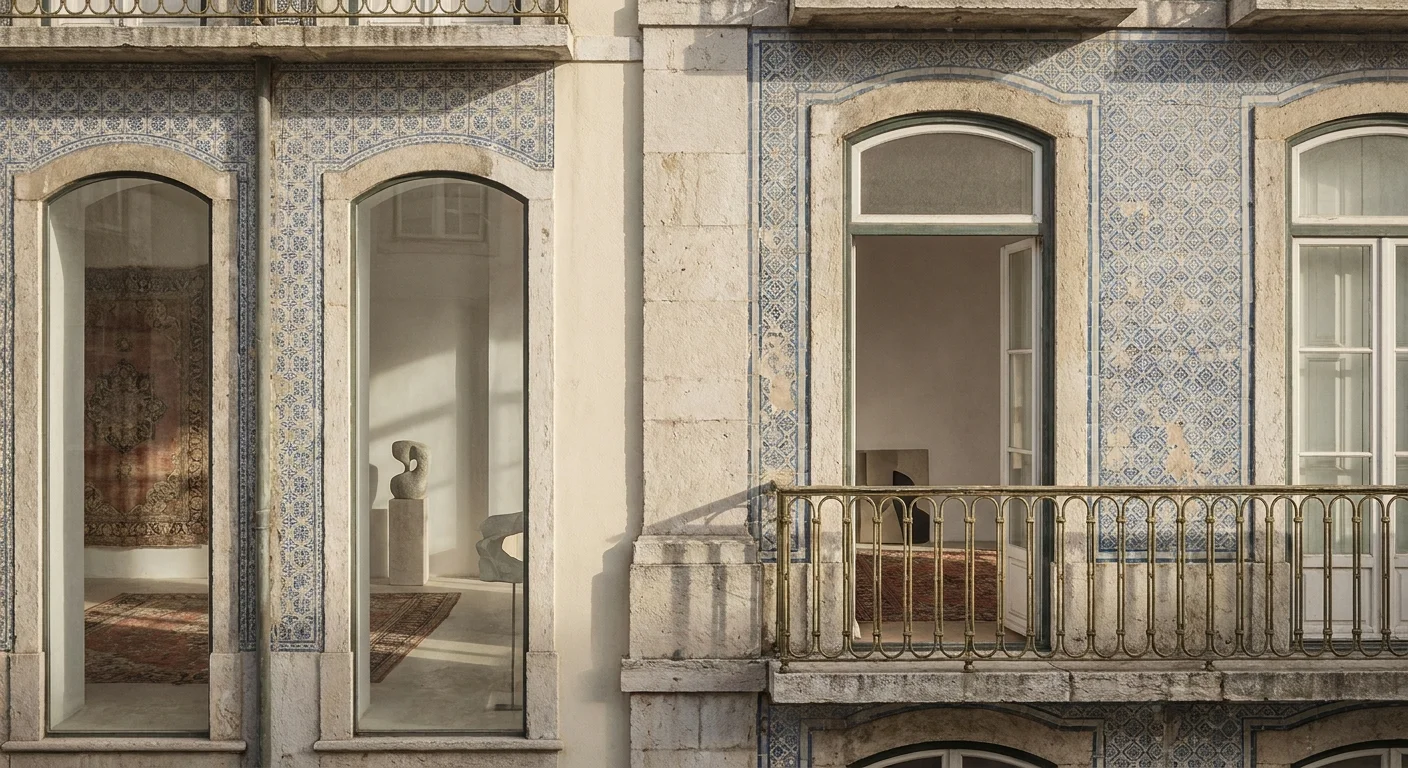
The more intriguing of the two may be Palácio das Pedrosas. Pieces acquired by its original merchant owner remain in situ, and that phrase changes the entire reading of the hotel. Objects left in place behave differently from objects acquired for effect. They do not decorate a narrative. They complicate it. Antique rugs, handmade textile sculptures, classic and modern art exist alongside one another not as a curated collection, but as accumulated life. This gives Lisbon its central tension. Six Senses arrives with a highly legible brand language: wellness, ritual, sleep, spa, botanical calm, sensory calibration. In many settings, that grammar can be seductive. In a palace, it must be careful. The building cannot become a backdrop for wellness. Wellness has to become another way of listening to the building. The announced 1,000-square-metre spa, with eight treatment rooms and yoga spaces, is therefore both promise and risk. Done too smoothly, it could flatten the address into another urban sanctuary in a calm palette. Done well, it could turn the palaces’ age into a slower rhythm of care: not escape from the city, but a different way of inhabiting it. For a high-net-worth guest, the questions are precise. How private is the arrival? How large does 114 rooms feel in operation? Does the spa attract outside guests, and if so, does that alter the mood of the house? Are the original objects integrated with intelligence, or presented like a lifestyle set? Can the hotel deliver Lisbon without packaging it too neatly? What is exceptional: the possibility of sleeping inside a layered, object-rich address where restoration does not erase history, but sharpens the guest’s attention to it. What is not exceptional: urban wellness hotels are no longer rare. A large spa and a calm palette are not enough. Six Senses Lisbon will matter only if the palaces remain the primary experience. The strongest version of this hotel would resist spectacle. It would let the old collection remain slightly strange. It would allow rooms to feel less designed than inherited. It would make the spa quiet enough that the stairs, the art, the rugs and the light can continue speaking.
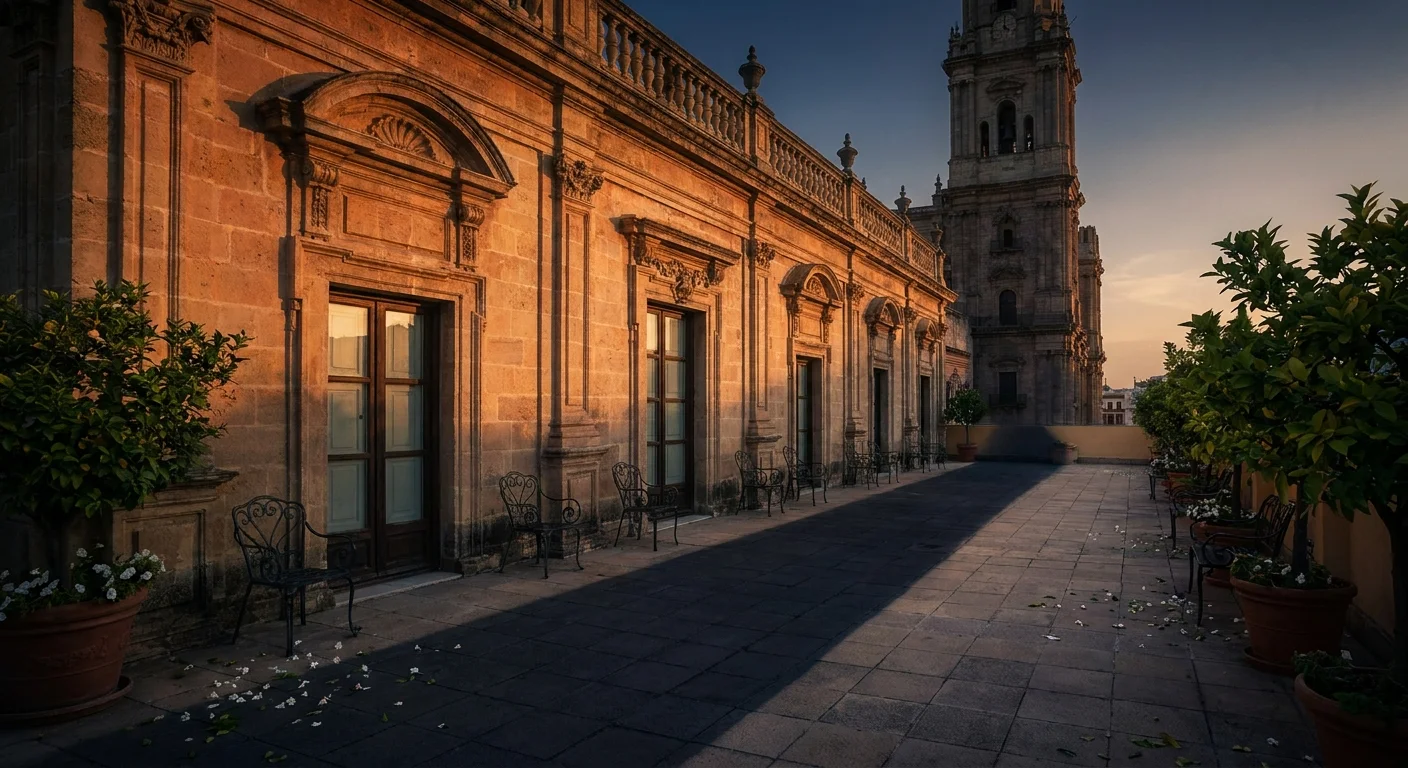
Seville — The Discipline of Not Overplaying the City Seville does not whisper.
It burns, rings, perfumes, performs. Orange blossom, horse hooves, incense, guitar strings from somewhere unseen, the long heat stored in stone after sunset. To open a hotel here is to enter a city that already knows how to stage itself. The challenge is not to add drama. The challenge is to deserve it. The building at Avenida de la Constitución, steps from Seville Cathedral, was designed by Aníbal González between 1915 and 1917 — the same architect responsible for the Plaza de España. That fact alone gives the project a particular charge. González understood Seville as an argument between ornament and civic identity. His architecture did not treat decoration as excess. It treated it as language. Serras Sevilla opens here in September 2026 with 43 rooms, a second-floor restaurant and a rooftop terrace with cathedral views. The numbers matter. Forty-three rooms allow the hotel to remain close to the scale of the building rather than dominate it. The restaurant’s placement suggests an address that wants to participate in the life of the city, not merely overlook it. The rooftop, if handled with restraint, could become less a spectacle than a pause above the streets.
For a high-net-worth guest, the key questions are room position, sound, heat, privacy and flow. Cathedral proximity is valuable, but it also brings movement, noise and tourist density. The rooftop may be beautiful, but is it serene or social? The restaurant may be serious, but is it a destination for locals or mainly an amenity for guests? Does the hotel create refuge from Seville’s intensity without cutting the guest off from it? What is exceptional: the chance to stay inside a building with genuine architectural authorship, in a central address, with a brand that may have the discipline not to lose to the city through excess. What is not exceptional: Seville has no shortage of atmosphere. A hotel cannot rely on orange blossom, tiles and cathedral views alone. Those belong to the city. The hotel must add judgement. If Danieli is memory as theatre, Romegas memory as compression, and Lisbon memory as archive, Seville is memory as ornament — not decoration, but the old belief that beauty can still have civic force.
The Places Not Offered First
At this level, a concierge should not ask whether a guest wants to see the “main attractions.” That belongs to another category of travel. A serious guest does not need a list. They need access — to people, workshops, archives, houses and rituals that have not been arranged for immediate consumption. In Venice, the more interesting experience is not another gondola ride, but contact with the city’s mechanics. Save Venice offers private restoration tours for members and donors, led by expert staff and often connected to conservation sites. It is a way of entering Venice as an organism that requires care, not as scenery. Another thread leads to Squero di San Trovaso, or to quieter access around the boatbuilding tradition: the gondola stops being an image and becomes a structure of wood, proportion and inherited handwork. For a guest who wants to understand the city physically, a private voga alla veneta lesson with Row Venice may matter more than the most polished ride. It requires balance, attention and humility before water. In Valletta, I would not look for spectacle. I would look for houses and underground rooms. Casa Rocca Piccola, still owned by the de Piro family, is compelling because it is not a dead reconstruction. It is a palace where private life and public history still touch: library, chapel, family portraits, wartime shelters. Another route leads beneath the city — to the Lascaris War Rooms and tunnels, where Malta stops being a limestone postcard and becomes the strategic nerve of the Mediterranean. A third, more material direction is filigree: Maltese silver worked patiently into fine threads, ideally not as a souvenir purchase but through a demonstration or short workshop with a maker. It says more about Malta than many panoramic viewpoints. In Lisbon, the natural extension of Six Senses is not another fado dinner built for visitors. The better direction runs through azulejos and private palace gardens. Palácio Fronteira, still private, has the rare quality of making its gardens and tiles feel less like display than a memory system spread across walls, terraces and water. The themed visits dedicated to azulejos and the literary figures connected to the palace are especially relevant. Another thread leads to the Museu Nacional do Azulejo and its conservation culture, where Lisbon stops being a city of “pretty tiles” and becomes a laboratory for repairing the past piece by piece. If fado enters the itinerary, it should not be treated as the evening’s entertainment, but as a small room where the most important moment is the silence before the first voice. In Seville, the easiest mistake is to confuse what is most theatrical with what is most true. Flamenco demands caution. Peña Flamenca Torres Macarena is a useful lead not because it is convenient, but because it does not fully submit to the visitor. It is a club, not a performance designed for a camera. One has to arrive early, understand the rules, and respect the local rhythm. The same applies to Triana ceramics: the interesting part is not the polished shop display, but the workshops and former kilns where technique, error, hand and fire remain visible. For another kind of guest, the better door may be the Archivo General de Indias — not as a UNESCO stop, but as a privately guided lesson in how Seville stored the world through paper, trade and empire. These experiences only work if they are not made too loud. They do not need staging. They need the right person, the right hour, and an acceptance that not everything will be opened. That resistance is part of the value.
What Actually Matters
A guest who is not easily impressed does not arrive asking whether a hotel is beautiful. At this level, beauty is assumed. So are good sheets, competent service, a decent spa, a table secured without theatre. The more serious question is quieter: what does this place give me that another address cannot? And, just as important: where might it disappoint me? In hotels like these, the real criteria rarely appear in opening announcements. Room hierarchy matters: which category actually carries the soul of the building. Privacy matters: can one arrive, dine, leave and ask without becoming part of the lobby theatre. Service intelligence matters: does the staff anticipate without performing intimacy. Acoustic comfort matters: old buildings often fail here, and charm does not excuse poor sleep. The difference between view and feeling matters: the most expensive view is not always the best room. Local access matters too. Can the hotel open the city quietly, without sending guests into obvious experiences? Is the opening truly ready, or still learning on paying guests? And finally: does the operator serve the building, or does the building serve the operator? This is what connects the four addresses. Not simply that they are historic. Not that they have been restored. What connects them is a particular relationship to time. Each treats age not as a backstory to be summarised in the welcome letter, but as the primary material of the guest experience. Danieli’s atrium is not inspired by Venetian Gothic. It is Venetian Gothic. Romegas’s terrazzo floors are not a reference to Maltese craftsmanship. They are Maltese craftsmanship. At a moment when many new hotels are designed to look timeless, rare are the places that have no need to perform that quality. The patina is not applied. The memory is not manufactured. Perhaps the most valuable hotel of the next decade will not be the one that adds the most. It will be the one with the discipline to leave enough alone.
Escale Privée — Venice, Valletta, Lisbon, Seville. Four addresses where the question is not what has been restored, but what has been allowed to remain.