.webp)
.webp)
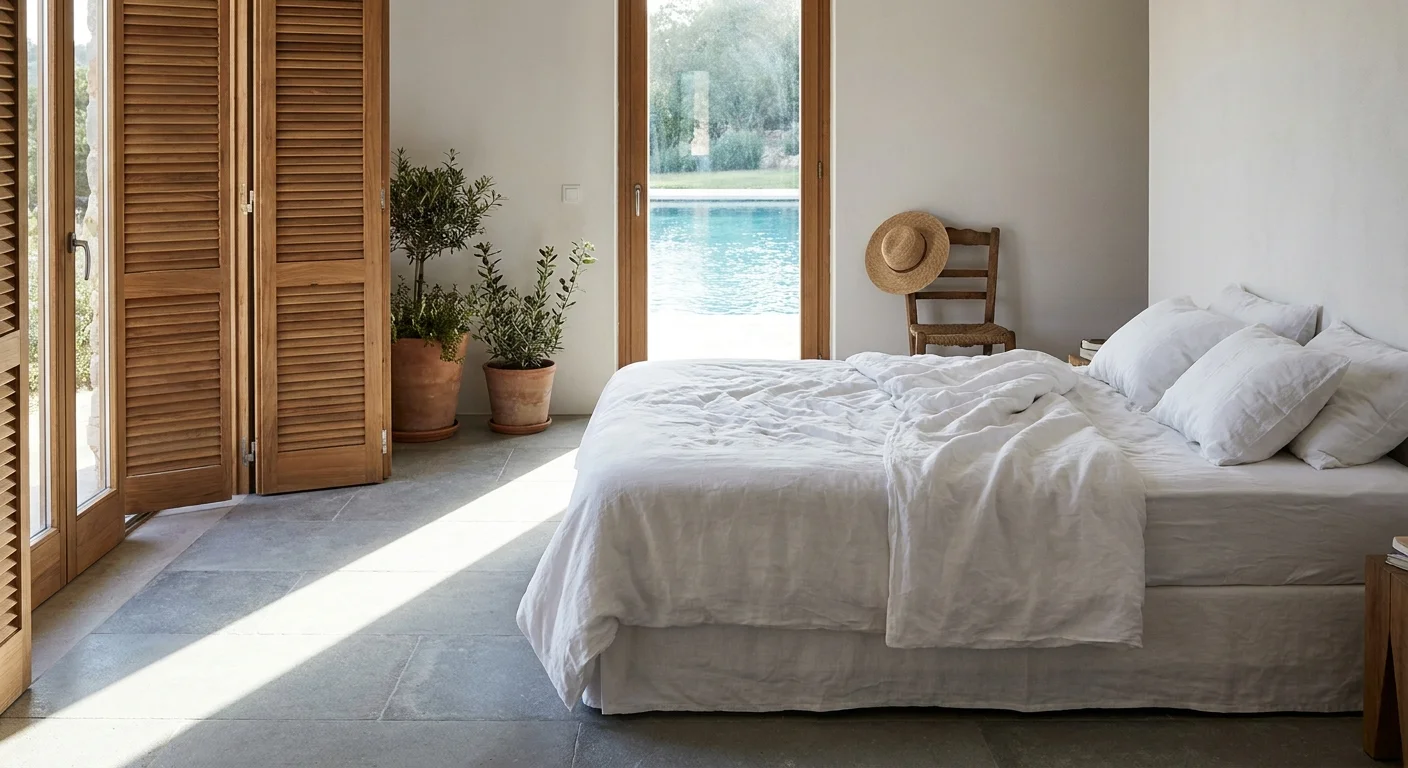
There is a moment, in certain Mediterranean houses, before anyone else wakes.
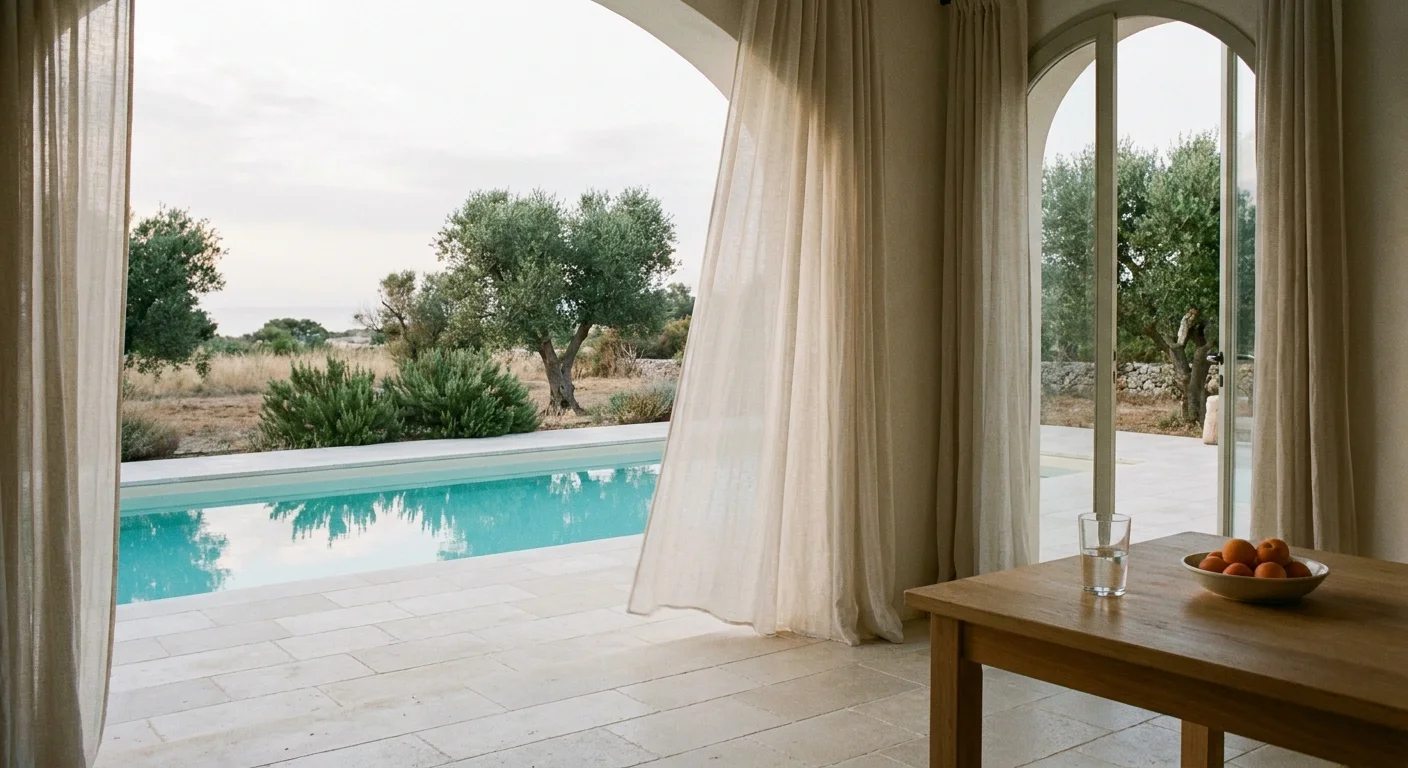
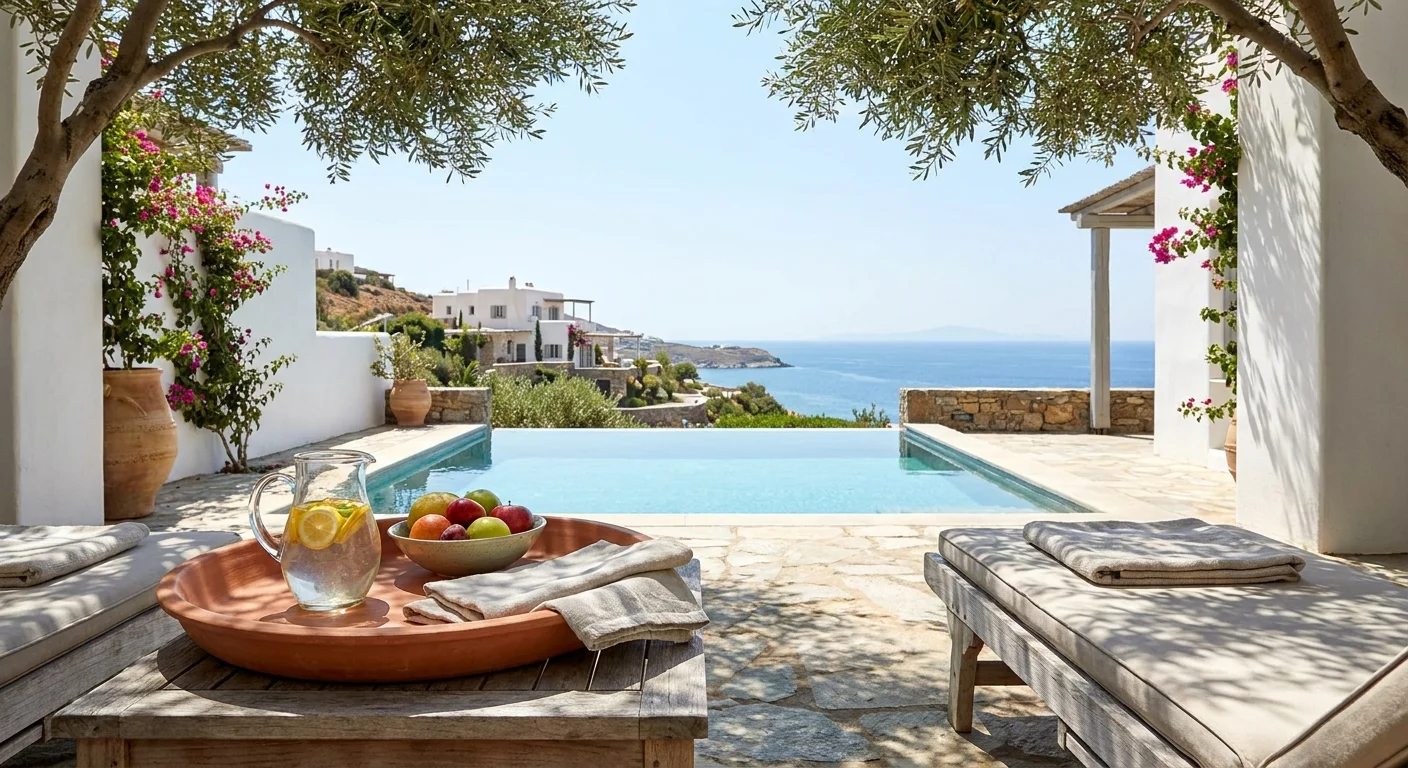
The tiles are still cool. A glass stands on the table with a trace of yesterday’s water inside it. Somewhere behind a closed door, a child turns in sleep. Outside, the pool holds the first light without movement. No one has asked for a room number. No one has arrived with a tray. No corridor absorbs the soft disorder of other people’s mornings. The day has not yet been arranged.
This is the new privilege of summer: not spectacle, but authorship.
For decades, the hotel was the stage on which a certain kind of holiday announced itself. The lobby, the bar, the poolside chair, the breakfast terrace, the discreet theatre of arrival and recognition. One entered, was received, was seen. At its best, the hotel could still be a form of civilization: the well-timed greeting, the room prepared before language became necessary, the lift that smelled faintly of polish and flowers, the small exchange of glances that confirmed one belonged to the grammar of the place.But something has shifted.The summer of 2026 is not abolishing the hotel. It is changing the question. The traveller no longer asks only where to stay. The traveller asks how to disappear without withdrawing from beauty. How to rest without being managed. How to gather family or friends without dissolving into logistics. How to feel held by a place without being placed on display.The answer, increasingly, is the house.Not every house. Not the rental as transaction, the inventory photograph, the anonymous white cube with a pool and a vocabulary borrowed from real estate. The house that matters now is more precise than that. It has a gate, a table, a kitchen where fruit can ripen, a terrace with its own hour of shade. It has bedrooms far enough apart for silence and close enough for children to cross barefoot in the morning. It has a view that does not need to be shared with strangers. It has a rhythm.The villa, in this new reading, is not the opposite of the hotel. It is what the hotel has been trying to become.
The end of scheduled leisure.
The first freedom of the private house is time. In a hotel, even a very good one, the day arrives already divided. Breakfast ends. Housekeeping knocks. The spa has availability at four. Dinner is held at nine. A car waits at the front. The pool is open. The beach club has its own ceremony. Even rest is given a structure. This structure can be beautiful. It can spare the guest from decisions. It can turn movement into ease. But in 2026, after years of accelerated life, remote work, social compression, family fragmentation, and the strange fatigue of being always reachable, the most sophisticated traveller is beginning to resist scheduled leisure. A holiday that behaves too much like a calendar no longer feels like escape. It feels like a better-dressed version of the same life. The private house removes this architecture. There is no breakfast hour. Someone may eat figs at seven, coffee at ten, pasta at noon, nothing at all until evening. Children can swim before brushing their hair. A grandparent can read in the same chair for three consecutive mornings. A guest can vanish after lunch without apology. Dinner can be late because the tomatoes looked better at the market than expected, or early because everyone is tired from the sea. The day becomes elastic. This is not laziness. It is sovereignty. The word matters. The villa gives back control not in the crude sense of command, but in the deeper sense of self-regulation. It allows a group to rediscover its own tempo. In a hotel, the guest joins a rhythm already written by the property. In a house, the rhythm is negotiated by the people inside it. The difference is subtle until one has lived it. Then it becomes almost impossible to forget.
The holiday without an audience
There is also the question of visibility. The hotel is a public-private invention. It promises intimacy, but surrounds it with shared spaces. One passes through the lobby. One is observed at breakfast. One chooses a place by the pool and becomes, however unwillingly, part of a composition. The best hotels soften this condition. They create privacy through distance, foliage, timing, and service. But the fact remains: the hotel is built around thresholds through which others pass. The private villa changes the social contract. It removes the audience. No one watches the imperfect swim. No one sees the child’s mood at lunch. No one hears the argument that dissolves by the time the plates are cleared. No one notices that someone has worn the same linen shirt three evenings in a row. There is no lobby in which to perform arrival, no breakfast room in which to edit oneself, no poolside theatre in which bodies become public. This absence has become valuable. Hilton’s 2026 research gives the market a name for the desire: hushpitality.
Travellers want places and experiences that dial down life’s distractions. The report’s central figure is revealing: “rest and recharge” is the leading leisure travel motivation for 2026. Calm is no longer a supplement to the trip. It is the reason for the trip. BBC Travel calls the same movement “quietcations”: comfort, silence, and a retreat from the compounded stresses of modern life. The language may be new, a little ungainly, but the feeling beneath it is old. People want to hear themselves again. A house allows this more naturally than almost any other form. Silence in a hotel must be designed. Silence in a villa can simply happen. It gathers in the hallway after lunch. It settles on the terrace when the sun is too high for conversation. It lives in the shaded room where someone falls asleep over a book and wakes without knowing the hour. It does not need programming. It needs walls, trees, distance, and permission.
The group as the new suite
.webp)
The hotel suite was built for separation disguised as grandeur.A bedroom. A sitting room. A view. Perhaps a terrace. It gives scale to the individual or couple, but it does not solve the more complicated desire of contemporary travel: to be together without being trapped together.This is where the villa becomes socially intelligent.Families now travel in configurations that the hotel room was never designed to hold. Parents, children, grandparents, adult siblings, friends who have become family, couples with different waking hours, teenagers who need distance but not disappearance.
Skyscanner’s family-travel research points to the rise of multi-generational trips, especially among younger adults. Hilton’s own 2026 trend work notes that multiple generations, even skip-generations, will travel together more visibly in the coming year.The reason is not only economy, although shared cost has its place. The deeper reason is time.
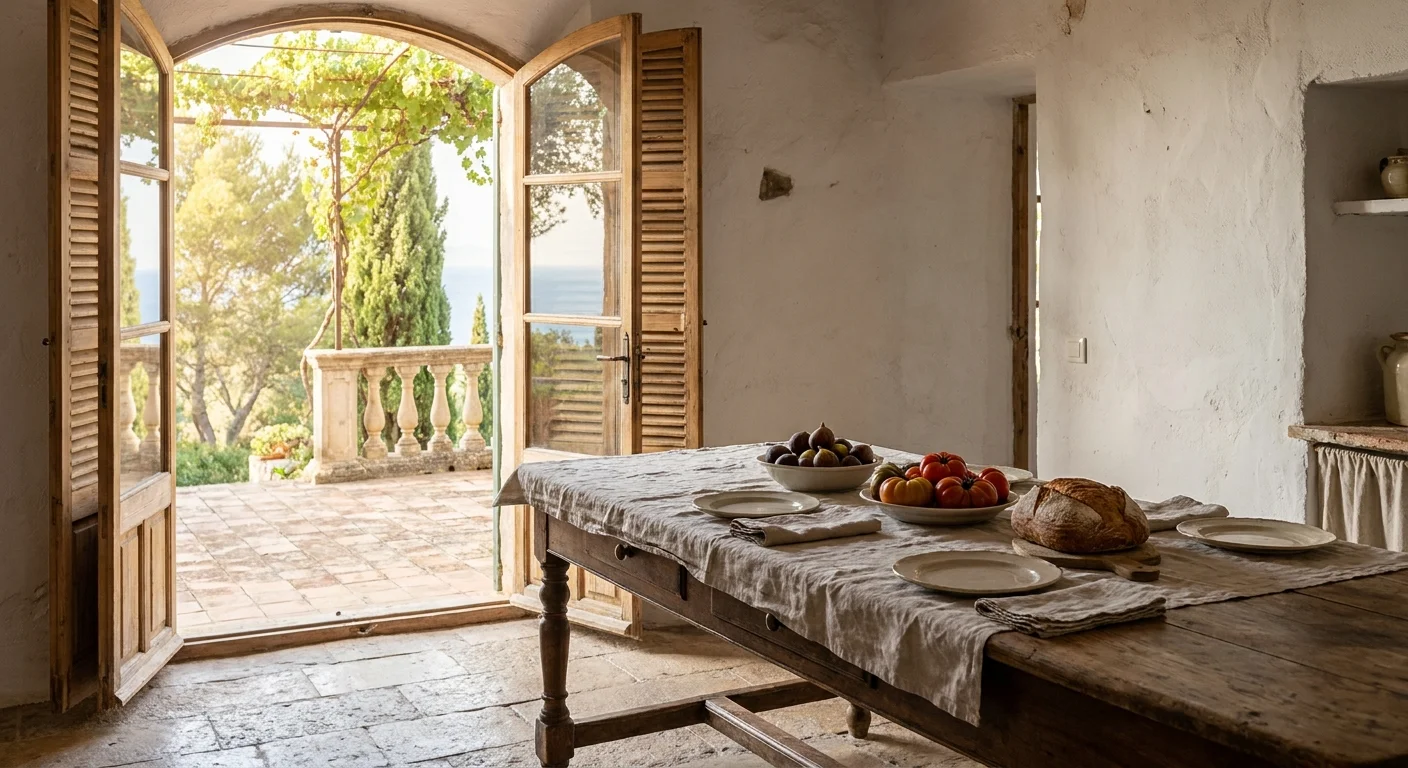
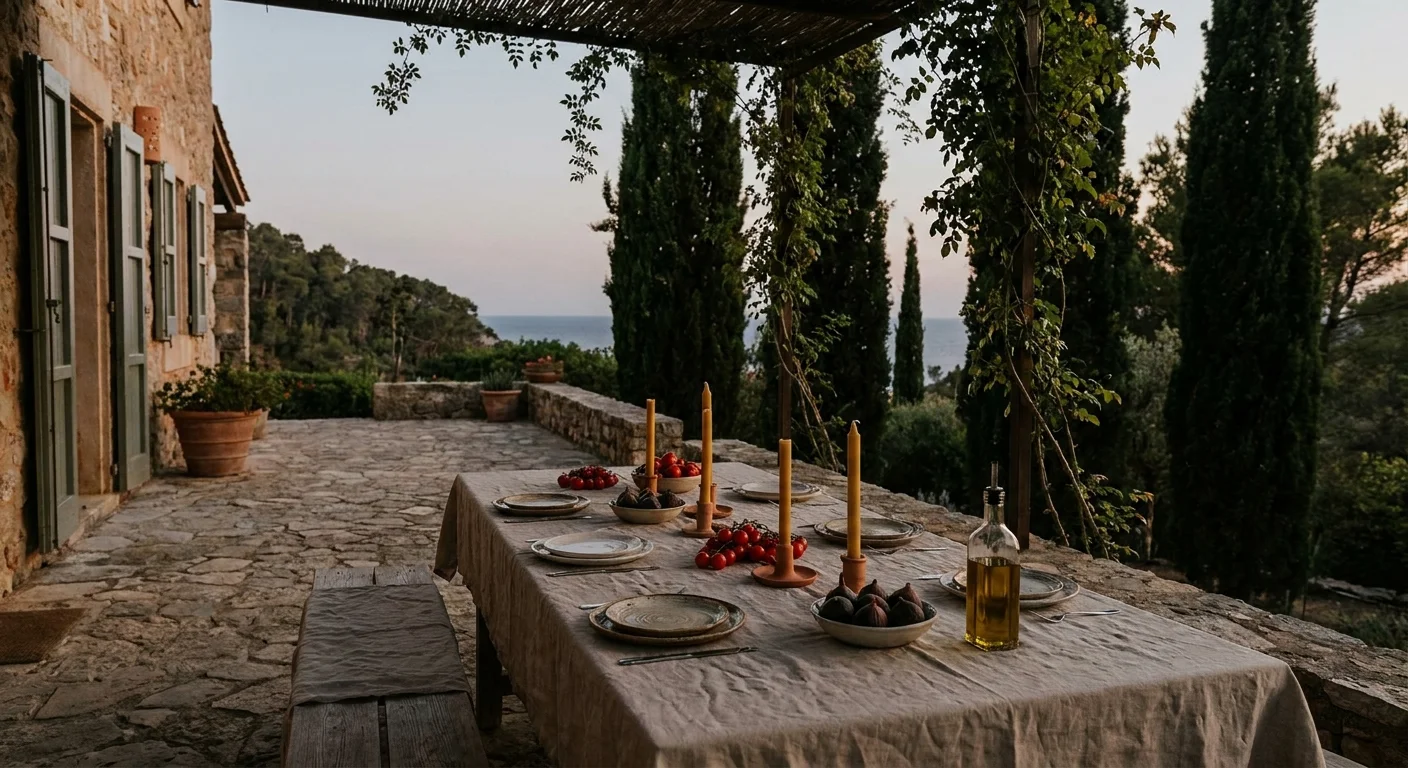
Modern families often live in fragments: different cities, different work patterns, school calendars, delayed adulthood, ageing parents, children growing quickly in the margins of everyone’s attention. The holiday becomes a brief attempt to restore the table. Not metaphorically. Literally.The villa is built around that table.A hotel can host a family dinner. A house can let the dinner begin before anyone sits down. Someone cuts bread. Someone opens wine too early. Someone returns from the market with cherries. A child refuses shoes. A grandmother corrects the way tomatoes are sliced. The group does not meet at a reservation. It accumulates.That is the difference.A hotel gathers people through service. A villa gathers them through domestic gravity.And because the house has corners, terraces, gardens, small rooms, shaded thresholds, it permits retreat. The best family holiday is not constant togetherness. It is the ability to separate without leaving. A teenager can disappear to the lower terrace. A parent can swim alone. A grandparent can sleep through the heat. Friends can read in parallel. Everyone returns at dusk because the house has made return easy. This is why the villa is not merely a larger lodging category. It is a social architecture.
The Mediterranean house
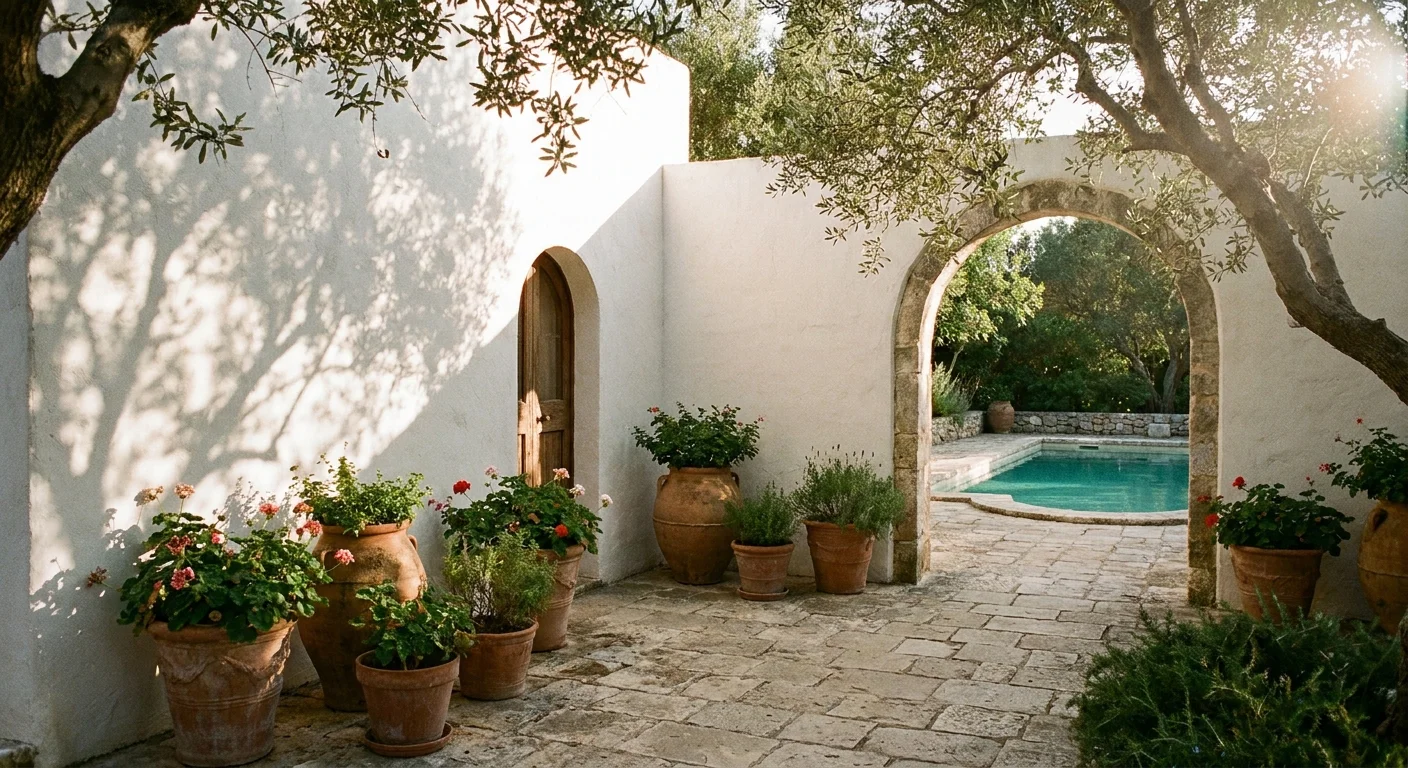
The Mediterranean has always understood the house as a climate instrument. Thick walls. Narrow openings. Stone floors. Whitewash. Shutters. Pergolas. Courtyards. Steps that force the body to slow. A kitchen positioned not for spectacle but for air. A table where the evening lengthens because the heat has finally released its hold. The 2026 villa trend is strongest where this architectural intelligence remains legible: Mallorca, Menorca, Ibiza, Mykonos, Paros, Crete, Puglia, Provence, parts of Sicily, the quieter edges of the Côte d’Azur. These places are not interchangeable, although the market often tries to make them so. Each has its own summer temperament. Ibiza understands disappearance and performance better than almost anywhere. The island knows both the party and the need to flee it. A house in the north, held back from the road, can feel like an argument against the version of Ibiza that travels by image. The pleasure there is not access. It is removal. Mallorca has a different gravity. Stone villages, interior valleys, terraces of olive and almond, the sea never entirely absent but not always dominant. The Mallorcan house often carries a rural intelligence: thick, shaded, practical, more concerned with endurance than seduction. It does not need to explain its beauty. It has been using it for centuries. Menorca is quieter still. CV Villas’ 2026 data notes exceptional growth for Menorca, driven by its coves, gentle countryside, shallow beaches, and low-key family suitability. That phrase, low-key, is doing more work than it seems. Menorca’s appeal lies precisely in its refusal to become too loud. It is an island for those who want the sea without a stage.
Mykonos remains more complicated. Its white geometry has been copied into cliché, but the island itself, when stripped of noise, still offers one of the purest relationships between light, wall, wind, and water. A villa there can either amplify the theatre or escape it. The distinction is everything. Paros has become the softer answer to islands that have learned too well how to perform themselves. Crete, larger and more ancient, resists the quick reading entirely. It requires time. This matters. The villa traveller of 2026 is often not looking for a destination that can be consumed in three days. The guest wants somewhere that continues after the first impression. Puglia and Provence complete the map in another key: less island, more inland summer. Olive groves, farmhouses, pale dust, markets, long drives, kitchens that make lunch feel like the central event of civilization. Here the villa is not escape from the hotel as much as escape from the itinerary. What binds these places is not a style. It is a proposition: the holiday as inhabitation.
Privacy is not isolation
It would be easy to misread the villa movement as withdrawal from the world. That is only partly true. The best private houses do not seal the guest away from place. They make place enter through a more precise door. A hotel often mediates destination through concierge, restaurant, spa, and branded experience. A villa mediates it through groceries, weather, road, neighbour, market, beach path, insects at dusk, the way the garbage must be taken out, the discovery that the bakery sells out of the good bread by nine. These details are not inconveniences. They are forms of contact. In the strongest villa stays, privacy creates not isolation but intimacy with place. The guest buys tomatoes. Learns which road is too narrow after dark. Notices the hour when goats cross. Understands why shutters must be closed before noon. Hears the same dog every evening. Watches laundry move on a line across the lane. The destination stops being scenery and becomes behaviour. This is where the trend intersects with slow travel. Internal Escale Privée research has already identified slow travel as one of 2026’s defining shifts: fewer destinations, longer stays, deeper engagement. The villa is almost perfectly aligned with this desire because it punishes haste. A house only reveals itself through repetition. The second morning is different from the first. The third evening teaches the wind. The fifth day, one finally stops asking what to do next. Hotels can encourage this, of course. The great ones do. But the house makes it unavoidable. One cannot fully inhabit a villa in forty-eight hours. The form asks for duration. It asks for groceries, laundry, a familiar chair, a route to the sea, the accumulation of small habits. The villa is not efficient. That is its gift.
The service that disappears
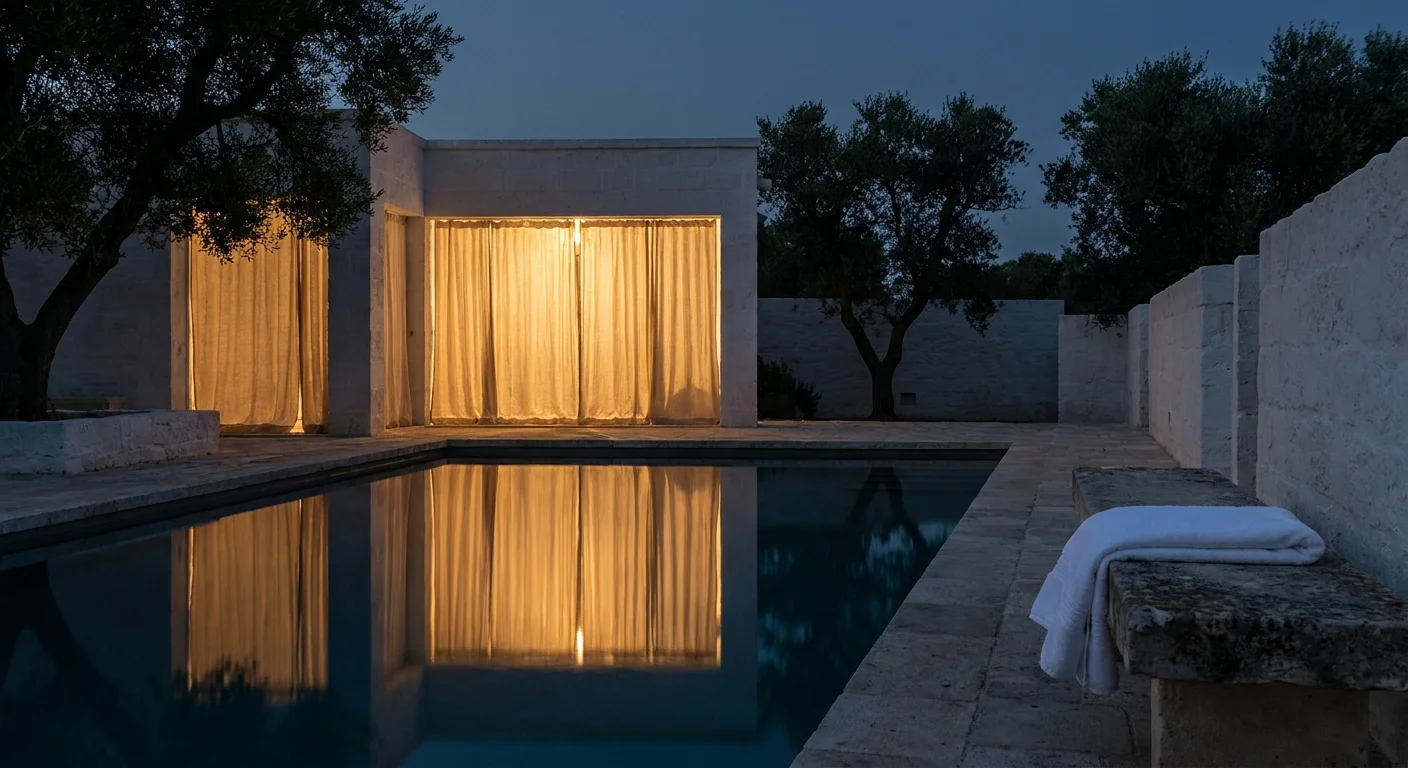
There is a paradox at the centre of the private villa.The most desirable houses are not without service. They often come with more service than a hotel room: house managers, chefs, drivers, childcare, boat arrangements, massage therapists, local guides, pre-stocked kitchens, discreet housekeeping. But this service must feel less visible, not more.The hotel, even when discreet, has uniforms. The villa has appearances.Someone comes while the family is at the beach. Someone leaves fruit. Someone knows the fishmonger. Someone texts rather than knocks. Someone understands that a guest who has finally fallen asleep in the shade should not be informed that the towels have been refreshed.This is not casual. It may be the highest form of service because it must read the domestic field without disturbing it.The modern villa company is therefore not merely renting architecture. It is choreographing absence. The best concierge is not the one who creates the most experiences. It is the one who protects the house from becoming a schedule.This is also where the platforms become part of the story.The private house may promise freedom from the hotel, but the traveller still needs a form of trust. Someone has to select, verify, describe, connect, and protect the stay from becoming another anonymous transaction. The new power in this market belongs not only to owners of houses, but to curators of confidence: villa specialists, independent-hotel collections, membership platforms, and distribution alliances that make character legible without flattening it.
Small Luxury Hotels of the World is one of the clearest examples of this middle layer. Its collection now spans more than 700 independently minded hotels in more than 100 countries, and its partnership with Hilton has carried hundreds of those addresses into Hilton’s booking channels and Honors ecosystem. The numbers matter less than the tension they reveal. A guest can now reach an intimate, characterful property through the machinery of a global platform. Independence gains distribution. Scale borrows soul.For the villa movement, this is instructive. The future is unlikely to belong only to the raw marketplace, where every house competes through images, adjectives, and availability calendars. Nor will it belong only to the old hotel group, unless that group learns to handle privacy without turning it into a package. The most interesting space sits between the two: curated access, local intelligence, reliable service, and enough editorial restraint to let the house remain itself.
Le Collectionist, SLH, villa specialists, hotel residences, and private-stay platforms are all answering the same unease. The traveller wants the freedom of a house, but not the risk of being left alone with a bad choice. They want independence, but not abandonment. They want a gate, a kitchen, a pool, a terrace, a name to call if the air-conditioning fails, and someone with taste who has already decided that the place is worthy of the journey.This is curation as hospitality infrastructure.The question, then, is not whether platforms will shape the villa era. They already are. The question is whether they will behave like catalogues or like editors. A catalogue multiplies options. An editor protects meaning. In a market where every house can call itself private and every stay can claim to be tailored, the rarest service may be the ability to say: not this one.This distinction matters for Escale Privée. We do not look for abundance. We look for rightness. A full fridge is not enough. A private chef is not enough. A pool, a view, a linen sofa, a stone staircase: none of these are sufficient. The question is whether the house allows the guest to recover a form of self-possession. Whether service arrives as pressure or relief. Whether the place gives more silence than it takes.
Against the list
The market will do what the market does. It will produce rankings. Best villas in Europe. Most beautiful villas in Greece. Where to stay in Ibiza. The new private escapes. The hidden addresses. The language will repeat itself until even beautiful houses begin to sound interchangeable. But the villa deserves better than the list. A house is not a product in the same way a room is a product. It has moods. It has failures. It has a wrong bedroom and a right chair. It has a staircase that becomes charming only after one stops carrying luggage. It has a kitchen that may be too small for the photographs but perfect for the person who actually cooks. It has a pool that looks unremarkable at noon and perfect at seven. It has a view that cannot be photographed because the real pleasure is the breeze. The list flattens these things. The essay can restore them. This is why Escale Privée should treat the villa not as an accommodation category, but as a literary and cultural form. A house can be read. The arrival can be read. The table can be read. The silence between bedrooms can be read. The distance from town, the quality of shade, the route to the sea, the proportion of kitchen to terrace: these are not amenities. They are arguments. The best private houses argue for a way of living, briefly borrowed.
.webp)
What the hotel must learn
The rise of the villa does not mean the decline of the hotel. It means the hotel must understand what the villa has exposed. Travellers do not only want service. They want control over contact. They do not only want design. They want emotional privacy. They do not only want experience. They want the right to refuse experience. They do not only want a destination. They want a rhythm that feels recoverable. This explains why many hotels are moving toward residences, villas, private entrances, extended-stay suites, family compounds, separate pools, and quieter wings. They are not merely expanding inventory. They are responding to a new psychological demand. The hotel of the future may need to become less hotel-like. Not in quality. In posture. Less stage, more shelter. Less programme, more permission. Less insistence on the guest’s participation in the hotel’s identity, more willingness to let the guest disappear into their own. Some properties already understand this. They have houses within estates, garden rooms with private thresholds, residences that can access the hotel without being absorbed by it. The best of them do not treat the villa as a premium add-on. They treat it as a different philosophy of stay. That philosophy is now moving from margin to centre.
.webp)
Summer’s private grammar
By the end of a good villa week, the house has taught everyone a language. Which door sticks. Which glass belongs outside. Which bedroom is too bright after seven. Which step is dangerous when wet. Which chair receives the best breeze. Which path to the beach is shorter but less beautiful. Which market stall has peaches that bruise before lunch. Which child wakes first. Who makes coffee. Who disappears after dinner. Who swims at night. None of this can be bought as an experience. It happens because the place is lived in. This is the true distinction of the private house. It allows repetition to become meaning. Hotels often refine the exceptional moment. Villas refine the ordinary one. And perhaps that is why they feel so timely now. The affluent traveller has had enough of exceptional moments. The world produces them constantly, packages them, photographs them, sells them back in a thousand variations. What is harder to find is an ordinary morning restored to beauty. A bowl of apricots. Wet hair on a child’s shoulders. A book left open in the heat. Someone rinsing sand from their feet. The first plate of tomatoes. The sound of chairs being dragged across stone. A house holding all of it without comment. This is not a lesser form of travel. It may be the form toward which the most perceptive travel has been moving all along.
.webp)
The house before the hotel
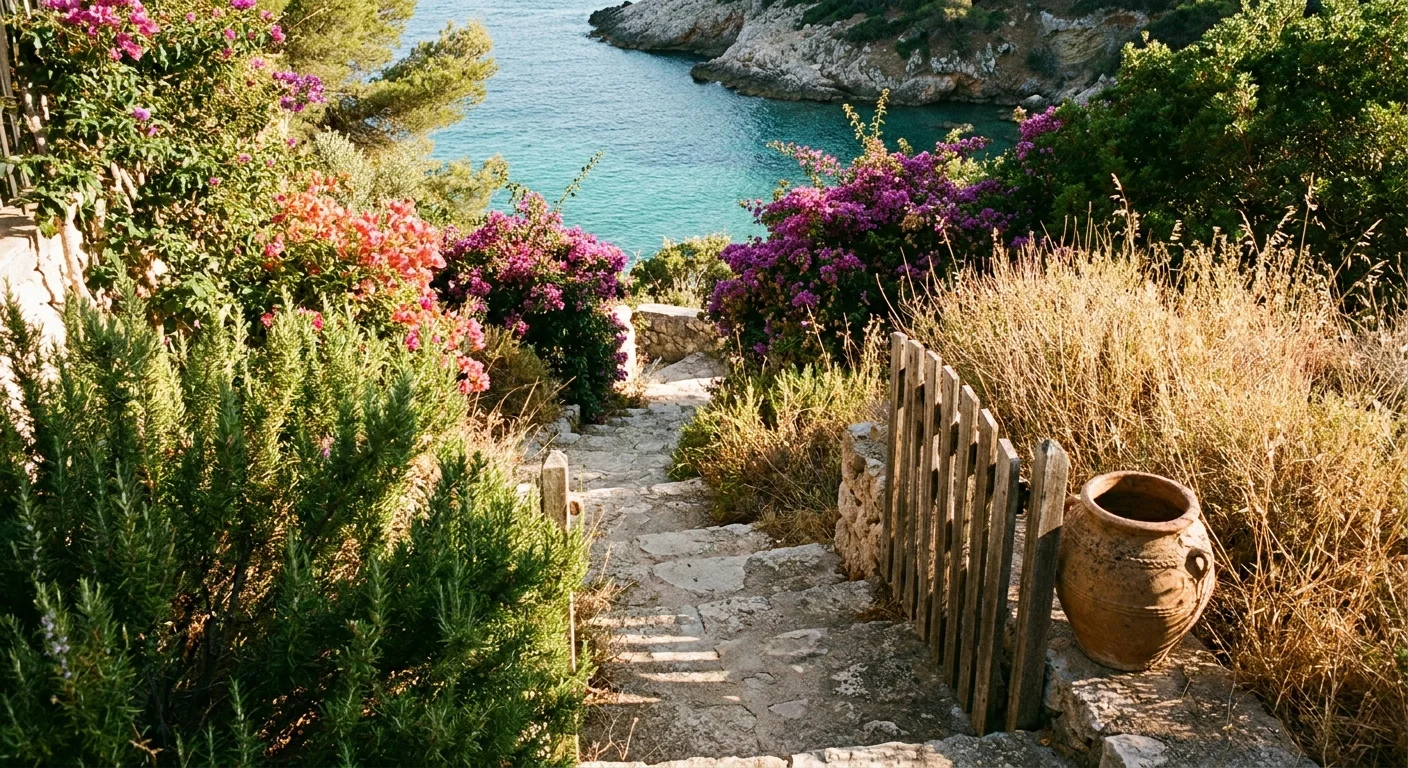
The private villa belongs to summer 2026 because it answers the season’s quietest question. Not where can I go? But where can I become unobserved enough to return to myself? The hotel will remain. The great hotel still has its place: the arrival, the bar, the corridor, the room prepared with almost theatrical precision, the sense that someone has been waiting without impatience. Escale Privée will continue to love the hotel when the hotel remembers that hospitality is not display but recognition. But this summer, the deeper current runs through the house. Behind a gate. Down a pale road. Past the rosemary. In the kitchen at eleven, when breakfast has become lunch without anyone naming the transition. On the terrace after the children are asleep. In the small hour before dinner, when the light lowers and the house grows briefly golden, and someone, somewhere inside, opens a bottle without asking whether the timing is correct. The timing is correct because no one owns it. That is the promise. Not more space. Not more privacy as ornament. Not another category of stay dressed in softer language. A day returned to its inhabitants.
Escale Privée · Summer 2026 Private villas, Mediterranean houses, and the new grammar of rest.