.webp)
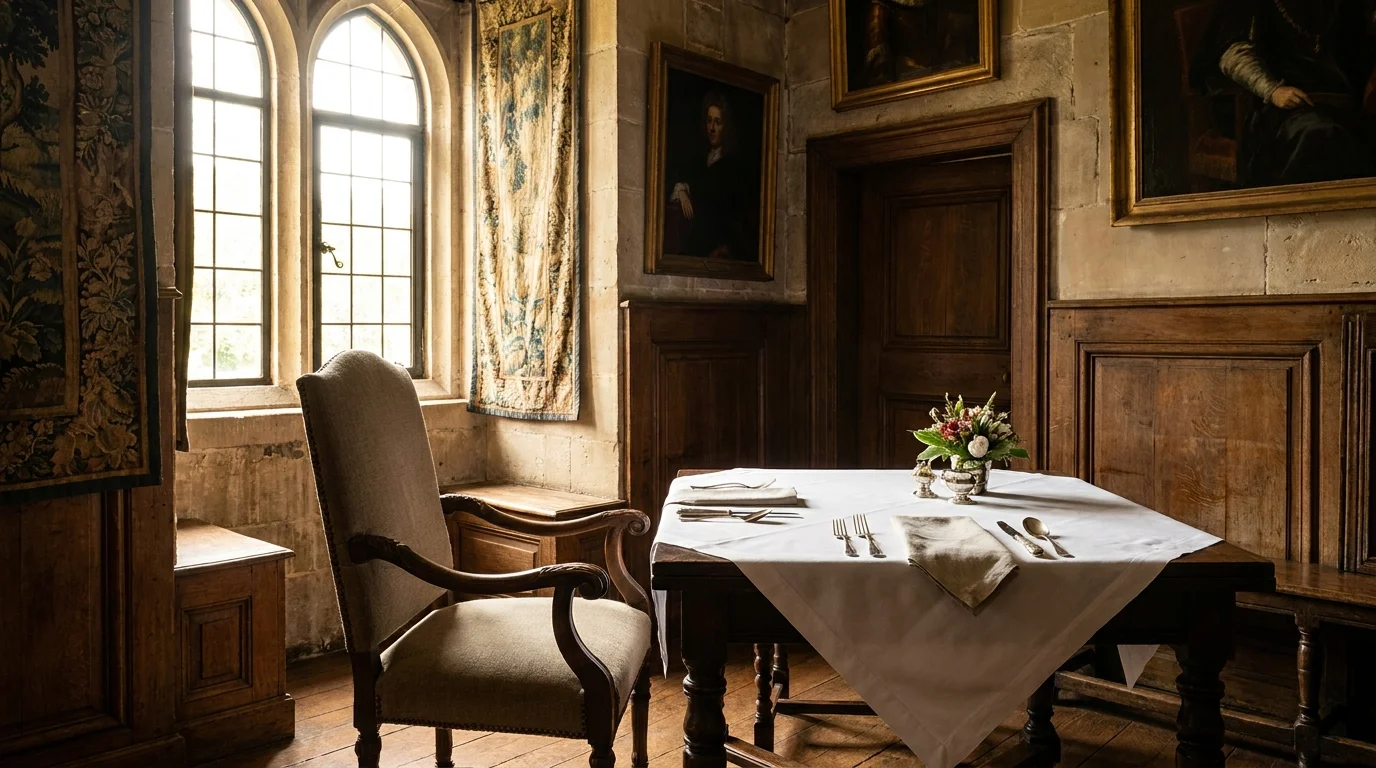
There is a moment, in the better houses, before anything has been said.
A glass is placed where it was placed last time. The corner table is not offered with ceremony, because ceremony would make the gesture too loud. Someone remembers that you arrive early, that you dislike the brighter side of the room, that you prefer to walk before dinner and not after. No one performs recognition. They simply let the room adjust.
This is the new grammar of belonging.
It is not the grammar of points, though points may still sit quietly in the machinery behind the experience. It is not the grammar of tiers, though tiers remain useful to accountants and dashboards. It is not even the old grammar of status, with its velvet ropes and visible privileges, its separate lines and coloured cards, its small public theatre of being allowed in. That language belonged to a world in which being seen entering the room was half the meaning of entering it. The modern traveller asks a different question now. Not: can I get in? But: does this place know how to receive me?
The End of Visible Status.
Status was once wonderfully legible. It had objects, surfaces, codes. A watch. A key. A suite. A lounge. A table. A name on a list. A room with a better view than the one reserved by someone else. Travel absorbed this language completely. Hotels became theatres of visible difference. Airlines perfected it. Members passed through separate corridors. Cards changed colour. The hierarchy could be read at a glance. There was comfort in its bluntness. One knew where one stood because the system had been designed to announce it. For a while, that was enough. Then visibility began to lose force. Too many things that once felt rare became purchasable. Too many privileges became products. Too many experiences were designed not to be lived, but to be shown. The old status economy did not disappear; it became noisy. And noise, in the upper registers of taste, is often the first sign that a code has expired. The more access could be bought, the less access could signify. This is not the death of hierarchy. It is subtler than that. The hierarchy has not vanished; it has moved inward. The velvet rope has become psychological. The question is no longer simply who may cross the threshold. It is who feels expected once they have crossed it. A table can be bought. A suite can be booked. A club can be joined. Even privacy, the great contemporary desire, can be packaged with enough money and the right intermediary. What resists simple purchase is the sensation that a place has made room for the person one actually is. That sensation is rare because it cannot be manufactured by architecture alone. It cannot be guaranteed by a room category. It cannot be reduced to a welcome amenity, a bottle on ice, or a note printed in a font chosen to imitate handwriting. It requires memory. It requires interpretation. It requires a culture of attention. And culture, unlike access, cannot be added at the end.
Access Was Only the First Door
To be admitted is not the same as to belong. This is the confusion at the centre of much contemporary hospitality. A place may open itself beautifully and still leave the guest untouched. It may deliver every promised benefit and still fail to create return. It may know the reservation number, the tier, the birthday, the last stay, the preferred pillow, and still know nothing of the person. Recognition is not data. It is interpretation. The old model of loyalty measured repetition. Stay again. Spend again. Accumulate. Ascend. The new model tries to understand why return matters at all. What does a guest seek when they come back to the same hotel, the same club, the same city, the same table by the window? Not novelty. Not conquest. Something quieter. A continuity of self. There are travellers who return to a hotel because the lobby holds them at the right volume. Because the staff do not over-explain the house. Because breakfast arrives without the small violence of choice. Because a room on the fourth floor catches the afternoon light in a way that steadies the day. Because, in a life of movement, the place has learned to behave like a familiar sentence. A loyalty programme can notice the return. A good house understands its meaning. This is where membership begins to separate itself from status. Status says: you have earned a place above others. Membership says: you have entered a world with its own memory, rhythm and obligations. The first is comparative. The second is relational. The distinction matters because the traveller who once wanted to be elevated may now want to be located. Not above. Within.
The Club Returns, But Not as Before
The private members’ club has returned because the hotel alone no longer answers every social need. After years of remote work, fractured cities, digital acquaintances and lives lived between airports, people began to look again for third places: neither home nor office, but a room where the day could change its register. A place to work without looking stranded. To dine without beginning from zero. To meet people without surrendering to the chaos of publicness. Hotels were ready. They already had rooms, bars, gyms, terraces, staff, rituals, architecture, lighting, the whole choreography of arrival. The club was a natural extension. But the new club could not simply repeat the old grammar of exclusion. It had to offer something more sophisticated than a closed door. The strongest of these places now trade in atmosphere, programming, cultural alignment, intellectual appetite and shared tempo. They are less interested in saying who is out than in defining what happens inside. That is the crucial shift. The old club protected status. The new club curates belonging. This does not make the club innocent. Many clubs will mistake scarcity for soul. Many will confuse a waiting list with culture. Many will gather attractive people in expensive rooms and call the result community. But the better ones understand that membership is not merely a mechanism of refusal. It is a discipline of atmosphere. A true club has weather. It has repeated faces, internal jokes, preferred corners, rituals that do not appear in the brochure. It has a way of letting people pass from public identity into a softer register. It does not need to tell the member they belong; it lets the member stop auditioning. The hotel that learns this becomes more than accommodation. It becomes a social instrument. The lobby is no longer just the place one crosses between street and lift. It becomes a room in which one can be known without being exposed.
From Rewards to Recognition
The loyalty programme was never designed to carry so much emotional weight. It is a brilliant mechanism for retention, but a poor language for intimacy. Points can express value, but not memory. A tier can express frequency, but not meaning. An upgrade can delight, but it cannot, by itself, make a person feel known. This is why the most interesting movement in hospitality is not the replacement of loyalty by membership, but the soft absorption of loyalty into a larger culture of recognition. The arithmetic remains. The feeling changes. A guest may still collect a currency, unlock a benefit, receive a preferred rate. But the story around those mechanics has to mature. The question is no longer only what the member receives. It is what kind of world the member is entering. A loyalty programme knows what you spent. A house with memory knows how you arrive. GHA DISCOVERY is useful here not because it solves the entire emotional problem, but because it points toward one of the new expectations: clarity as respect. Its DISCOVERY Dollars are deliberately legible — D$1 equals USD 1 — in an industry that has often trained guests to accept opacity as normal. Its 2026 loyalty research, conducted with Bond Brand Loyalty across more than 9,000 members, pointed toward simplicity, personalisation and experiences over discounts, with independent hotel loyalty programmes preferred for clarity, flexibility and meaningful travel experiences over rigid points systems. That language matters. Clarity. Flexibility. Meaning. These are not the old words of status. They are not built around conquest, hoarding or display. They suggest that the guest is no longer impressed merely by being given a ladder to climb. The guest wants the relationship to make sense. GHA’s own momentum confirms that the appetite is real: its 2025 results reported USD 3.2 billion in total GHA DISCOVERY revenue, up 21 per cent year on year, with repeat stay revenue reaching USD 1.8 billion and cross-brand stay revenue rising to USD 424 million. The numbers are commercial, of course. But beneath them is a more interesting behavioural signal: people return where the system feels intelligible, and where the portfolio still permits a sense of discovery. The word discovery is doing more work than it first appears. It suggests motion without anonymity. Difference without dislocation. A guest may move from one independent house to another, one city to another, one ritual to another, while remaining held by a larger sense of recognition. Not sameness. Continuity. That is the territory the new membership economy wants to claim.
The Inflation of Elite
There is a moment in the life of every status system when the top tier becomes too crowded to mean what it says. The upgrade that was once a surprise becomes an expectation. The private check-in that was once reserved for the most frequent guests is extended to anyone with the right card. The welcome amenity appears because the system demanded it, not because the house felt the occasion. The word elite survives, but as décor. This is the paradox of scaled status. The more successful the programme becomes, the more it dilutes the feeling it was meant to confer. A tier must be rare enough to matter, but common enough to drive behaviour. It must flatter the member while remaining profitable to the operator. It must feel personal while being distributed across millions of profiles. At a certain scale, the contradiction becomes visible. The industry’s answer has often been to add more tiers, more thresholds, more names for elevation. Platinum gives way to titanium, diamond to invitation-only, invitation-only to something still more discreet. The ladder extends upward. The anxiety continues. But the guest who travels with discernment has begun to see the machinery. They know when the note has been printed. They know when the amenity was assembled in bulk. They know when the phrase “valued member” arrives from a script rather than a person. They know when the programme has recognised their spend but missed their temperament. This is where status fails. It can rank a guest. It cannot always receive them.
.webp)
The Grammar Itself
Belonging has its own syntax.
Memory is one part of it. Not the crude memory of a database, but the living memory of a place that can hold a guest’s pattern without turning it into performance. The preference remembered without announcement. The absence noticed. The return received as continuity, not transaction. Ritual is another. The repeated gesture matters because it binds time. The same table. The same walk through the lobby. The same small courtesy that would mean nothing on a first visit and everything on a fifth. Ritual makes belonging physical. It gives the relationship a texture one can touch. Curation matters too. Belonging cannot mean everything for everyone. A room that tries to welcome all desires equally quickly becomes a lobby with better furniture. The new membership must have taste, and taste requires refusal. Not cruelty. Shape. Continuity may be the deepest element. The member does not belong only during the stay, dinner, event or weekend. The relationship stretches between visits. A note. An invitation. A seasonal letter. A reason to return that is not discounted into urgency. A house that disappears entirely between transactions cannot be surprised when the guest behaves transactionally in return. And then restraint. The most convincing belonging does not announce itself. It does not say, look how well we know you. It allows the guest to feel the relief of not explaining. That relief may become one of the defining comforts of high hospitality. Not marble. Not thread count. Not the size of the suite. The relief of entering a place where the self does not have to be rebuilt from the beginning.
.webp)
What Membership Can Become
Membership is replacing status because status answers a public hunger, while belonging answers a private one. Status asks to be seen. Belonging asks to be understood. This does not mean membership is automatically deeper than status. It can become another costume, another gate, another performance of taste. It can hide snobbery under softer language. It can turn community into a product and intimacy into a subscription. It can mistake database personalisation for care. The danger is real because belonging is now valuable. Once a word becomes valuable, it becomes overused. Every programme will claim it. Every club will design for it. Every brand will try to wrap its benefits in the language of emotional return. But the new grammar cannot be faked for long. A guest knows the difference between being processed and being received. Between a scripted welcome and a remembered return. Between a room that flatters them and a room that steadies them. Between a place that has collected their data and a place that has learned their rhythm. The future of high hospitality will not belong to the places that collect the most information. It will belong to the places that make memory feel human.
The House That Remembers
Perhaps this is why the most powerful forms of belonging still look almost old-fashioned. A small hotel that keeps the same staff for years. A dining room where the maître d’ remembers the guest’s preferred hour but does not make a spectacle of it. A club whose value lies less in who it excludes than in how the room behaves once one is inside. A travel membership that does not drown the guest in possibility, but edits the world with intelligence. A programme whose clearest benefit is not the upgrade, but the absence of friction. These are modest things. They do not photograph as easily as a pool at dusk. They do not announce themselves in a campaign. But they are the things that produce return. The member comes back not because the house has shouted its importance, but because something in the house has lowered the temperature of the day. The corridor is quiet at the right hour. The linen smells faintly of sun and starch. The brass rail by the stairs has warmed under someone else’s hand. A cup appears. A name is spoken once, correctly, then not overused. Belonging begins there. Not in the card. Not in the tier. Not in the visible proof that one has arrived above others. In the small, almost private shock of being expected. The new grammar is not a rejection of status so much as its exhaustion. The old language still exists. It will continue to sell rooms, seats, memberships, upgrades, access. But its emotional authority has thinned. The traveller who has seen enough rooms, crossed enough thresholds, joined enough lists, begins to desire something more difficult to purchase and harder to stage. A place that knows when to open the door. A place that knows when to leave one alone. A place that remembers not the category, but the person.
Escale Privée — Geography of Belonging
.webp)