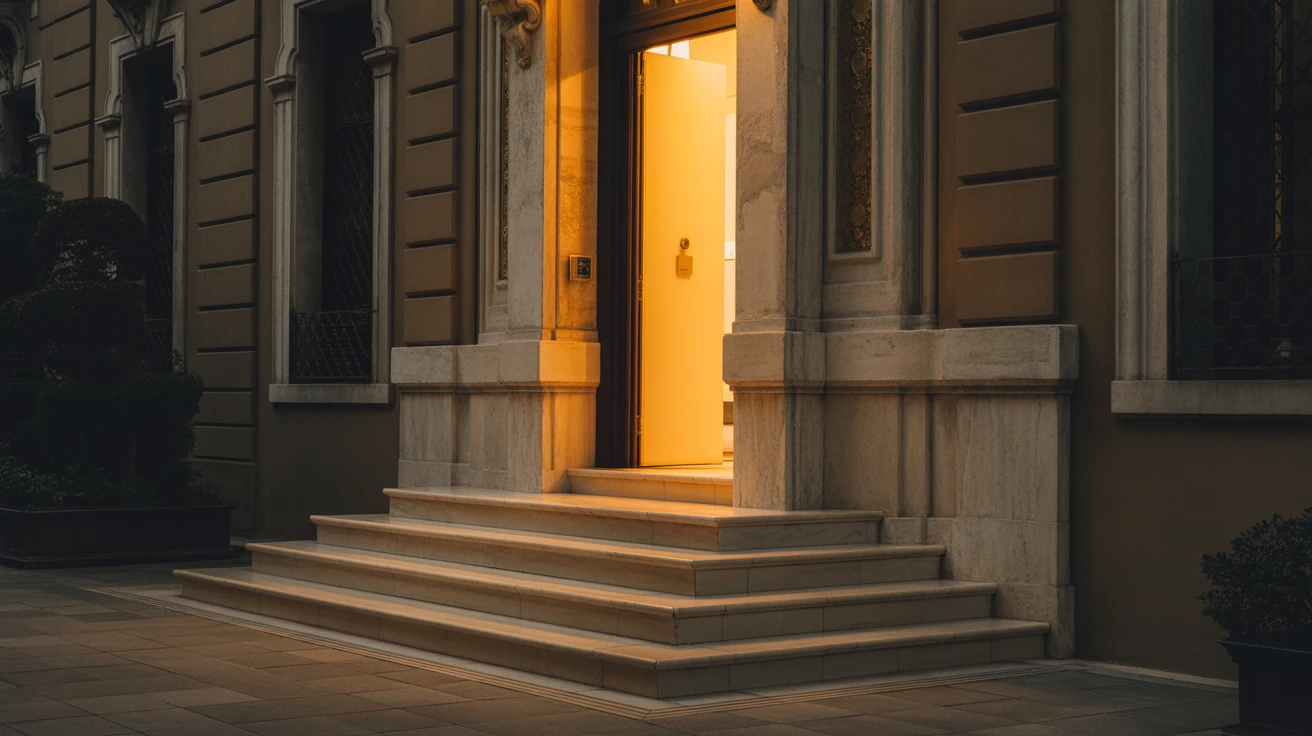
The feeling of belonging is built long before it is furnished.
I. What the Camera Misses
Decoration photographs well. It is designed to. The lamp, the fabric, the considered corner — these are the surfaces the industry has learned to sell. But belonging is rarely found on a surface. It is found in the proportion of a room, the height of a ceiling relative to the width of a floor, the distance the body must travel from door to bed and what that distance is asked to feel like.
Architecture is the part of hospitality the camera misses because it cannot be pointed at. It is the shape of the air. A house can be dressed in the finest materials and still hold the guest at arm’s length, because its bones were drawn for display rather than dwelling. And a plain house, honestly proportioned, can receive a guest like an old friend.
II. Proportion Is a Form of Manners
Proportion is manners made permanent. A room that is too tall for its purpose is a room that does not know how to sit with you. A ceiling brought low over a reading chair is a house lowering its voice. These are decisions of scale, and scale is the vocabulary in which a building expresses its intentions toward the people inside it.
The houses we return to have understood this. They have resisted the temptation to impress with volume, and spent their intelligence instead on the human distances — the reach to the switch, the turn of the stair, the passage from noise to quiet. None of it announces itself. All of it is felt.
III. Light as Welcome
Light is the fastest architecture. Before a guest has registered a single material, the light has already told them whether they are welcome. Hard light interrogates. Low, layered light receives. The difference between a room that flatters and a room that belongs is very often the difference between one source and many, between light aimed at the space and light arranged around the person.
We notice how a house treats the end of the day, because dusk is when a building either releases the guest into rest or keeps them on alert. The generous houses have thought about the hour when no one is watching. That is where their belonging lives.
IV. The Bridge to the Body
To speak of belonging as architecture is to return hospitality to the body, where it began. We do not feel welcome as an idea. We feel it as temperature, as passage, as the ease or effort of moving through a place. Decoration can be changed in an afternoon. Architecture is a promise the house cannot take back — which is why, when it is generous, it is the most honest thing a house ever says.