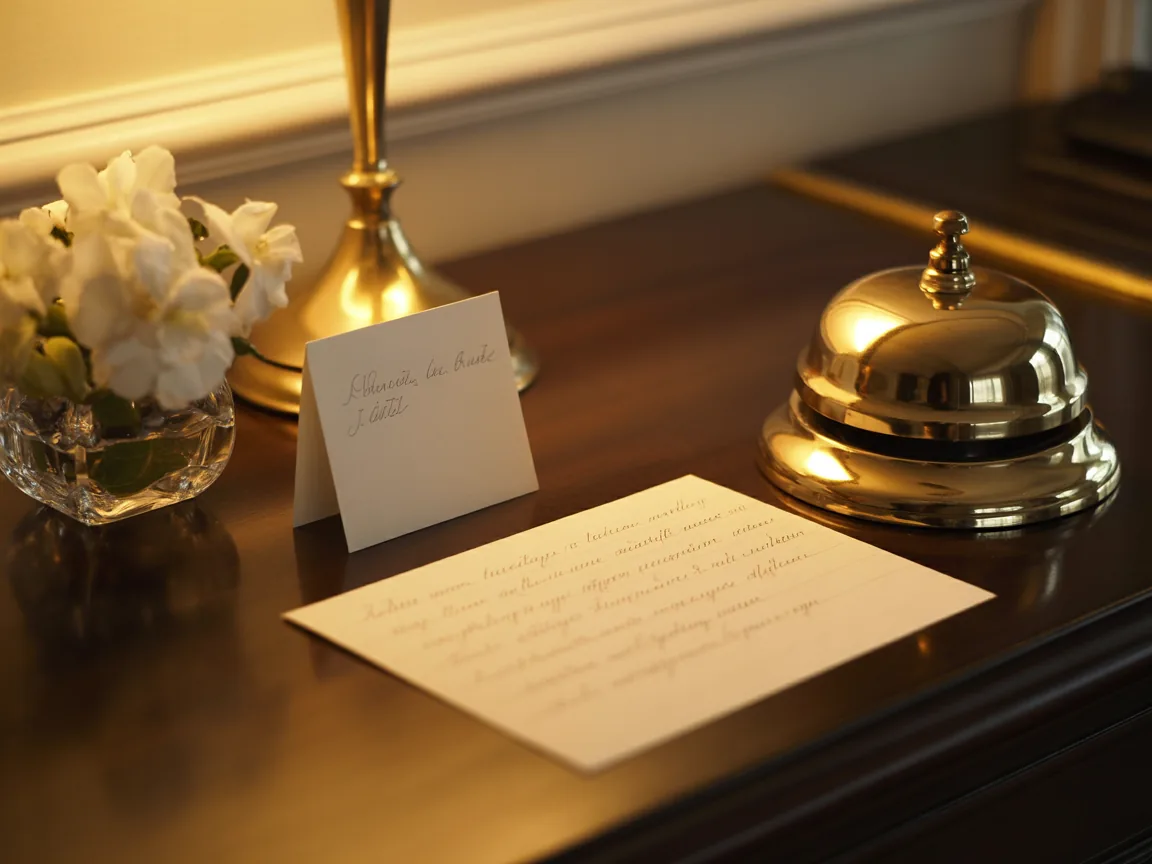
We remember service the way we remember weather — not in facts, but in how it made the day feel.
I. The Checklist and the Gesture
Most service is designed to be reliable, and reliability is a quiet virtue. The towel is replaced, the reservation is held, the name is spelled correctly on the note. None of this is remembered, because none of it was ever in doubt. Competence is the floor, not the story.
What is remembered is the gesture that no procedure required. The pot of tea that arrived because someone noticed the cold, not because a button was pressed. The second chair turned toward the view without a word. These are not larger acts than the checklist. They are smaller. Their power lies precisely in the fact that no one was asked.
II. Attention Is the Currency
A house can spend on marble and orchids and still feel indifferent. Another can offer very little and feel as though it has been thinking about you since morning. The difference is attention, and attention cannot be installed. It can only be practised until it becomes ordinary.
We have watched service that was flawless and forgettable, and service that was imperfect and impossible to forget. The imperfect kind almost always had one thing the flawless kind lacked: someone who was genuinely looking. The gesture followed the looking. It could not have preceded it.
III. What Survives the Stay
Ask a guest, a year later, what they recall of a house, and they will not describe the thread count. They will describe a moment — usually brief, usually unbilled — in which they felt seen. That moment is the return on everything else. It is the only part of the stay that becomes memory rather than receipt.
Memorable service, then, is not a higher grade of procedure. It is a different substance altogether. It is attention made visible, once, at the right time, and never mentioned again.